
On this page
Picking the wrong RS485 cable is the kind of installer mistake that only shows up after commissioning: the bus runs cleanly on day one, and three weeks later the first CRC errors appear even though nothing else changed. This guide skips the wiring side (that lives in the RS485 wiring guide pillar) and focuses purely on which cable to reach for at the panel.
It is written for installers running Modbus RTU buses between energy meters, heat pumps, PV inverters, and a central gateway. By the end you will know which three specifications truly matter, which common cables satisfy them, and whether that spool of CAT6 on the van is an acceptable substitute (spoiler: at 9600 baud over 30 meters yes, at 19200 baud over 800 meters no).
Key takeaways
- A spec RS485 cable has 120 Ω characteristic impedance, twisted pair conductors, and a shield, typically foil plus tinned copper braid.
- Belden 9841 (single pair) and 9842 (dual pair) are the international reference; Alpha Wire 5471C, Lapp UNITRONIC BUS LD, and Helukabel PAAR-TRONIC-CY meet the same spec.
- CAT5e and CAT6 work on short runs at low baud rates, but the 100 Ω impedance creates roughly 9 percent reflection at every junction, so they are not a design choice for new installations.
What is an RS485 cable for Modbus RTU?
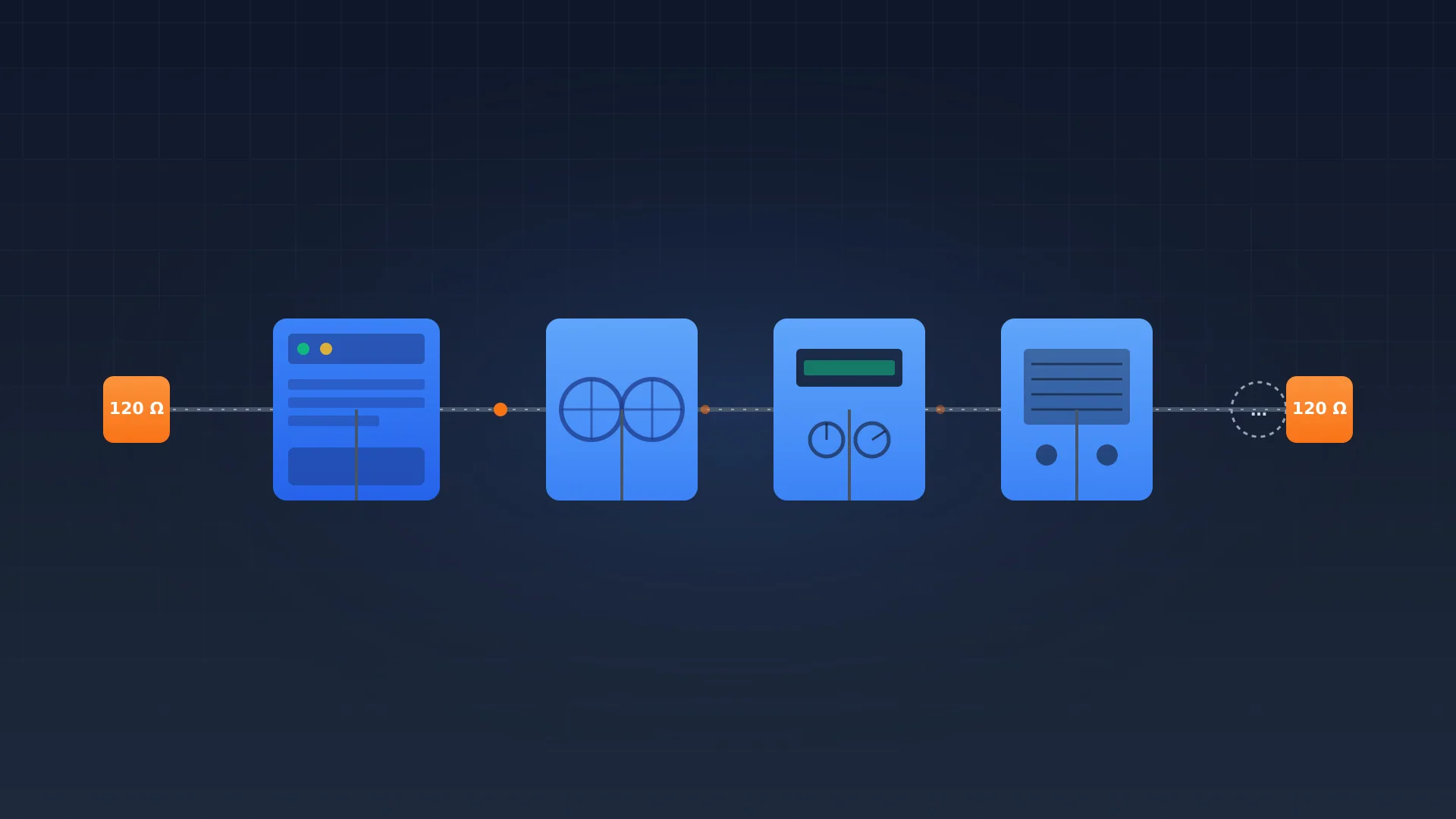
An RS485 cable is a twisted pair conductor with 120 Ω characteristic impedance and a shield, designed for the differential TIA/EIA-485-A transmission layer that Modbus RTU uses as its physical layer. The twist averages out inductively picked up noise, the 120 Ω impedance matches the driver and terminator so nothing reflects, and the shield keeps capacitive 230 V coupling out inside a crowded panel or cable tray.
The Modbus over Serial Line Specification V1.02 from the Modbus Organization (December 2006) states this requirement directly: "shielded twisted pair, characteristic impedance 120 ohm." Belden points at the same standard when marketing its 9841 and 9842 series, and inverter vendors like Solis repeat it in their installation manuals.
Three specifications that matter for Modbus
A spec RS485 cable stacks three protection layers with distinct roles on the bus: two twisted 120 Ω conductors, a foil shield, and an outer copper braid. The cross-section below shows how those layers sit concentrically around the pair.
The 120 Ω characteristic impedance comes from TIA/EIA-485-A. Driver source impedance and the 120 Ω termination resistors at each end of the bus have to match, otherwise the signal reflects and CRC errors appear. The twist ensures that inductively coupled noise lands equally on A and B, so the differential receiver rejects it. And the shield blocks capacitive coupling from parallel 230 V wiring in the same tray.
| Specification | Value | Why |
|---|---|---|
| Characteristic impedance | 120 Ω ±10% | Matches driver and termination, no reflections |
| Conductor arrangement | Twisted pair | Cancels common mode noise |
| Shield | Foil plus tinned copper braid | Blocks capacitive coupling from parallel mains |
| Gauge | Minimum 0.22 mm² (24 AWG) | Enough headroom for a 1200 m bus |
| Capacitance | Below 60 pF/m | Limits slew rate degradation at high baud |
| Fire rating | Cca-s1,d1,a1 (public spaces, EU) | CPR EU 305/2011, LSZH for escape routes |
Which cables installers pick
Three cable families cover most installer inventories internationally, and any of them satisfies the Modbus RTU cable spec. Which one you pick depends mainly on where you buy, whether fire class rules apply, and whether you need one pair or two (for a separate signal common, or a second bus in the same tray).
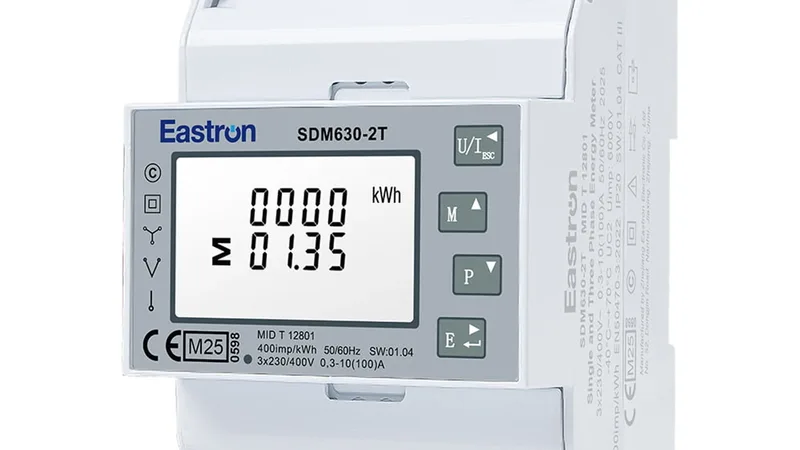
Belden 9841 is the international reference: single twisted pair, 24 AWG tinned copper, foil plus tinned copper braid, 120 Ω ±10%, PVC jacket. Available from Mouser, Farnell, Digi-Key, and every regional distributor. For a single RS485 bus to an Eastron SDM630 or Schneider iEM3155 it is a safe default.
Belden 9842 has the same specs with two twisted pairs. Useful when you want to carry the signal common as a separate conductor, or when you plan to add a second bus in the same conduit. It is also the standard pick for BACnet MS/TP cabling, which shares the same physical requirements.
Alpha Wire 5471C is the closest US-market equivalent to Belden 9841. Same 24 AWG twisted pair, 120 Ω, foil plus braid shield. Available from Digi-Key and Newark; often stocked on North American installer trucks.
Lapp UNITRONIC BUS LD is the European counterpart, dominant across DACH via distributors like Reichelt and Conrad. 22 to 24 AWG, 120 Ω, foil plus braid, PVC or LSZH jacket. Compatible with Modbus RTU and PROFIBUS DP wiring at the same time.
| Cable | Conductors | Impedance | Shield | Jacket | Typical use |
|---|---|---|---|---|---|
| Belden 9841 | 1 pair, 24 AWG | 120 Ω ±10% | foil + braid | PVC | Single RS485 bus, standard install |
| Belden 9842 | 2 pair, 24 AWG | 120 Ω ±10% | foil + braid | PVC | Bus plus signal common, or dual bus |
| Alpha Wire 5471C | 1 pair, 24 AWG | 120 Ω | foil + braid | PVC | US-market Belden 9841 equivalent |
| Lapp UNITRONIC BUS LD | 1 or 2 pair, 22-24 AWG | 120 Ω | foil + braid | PVC / LSZH | European installer standard |
How far can RS485 run? Cable length vs baud rate
The rule of thumb is both simple and non-trivial: up to 100 kbps the allowed length stays flat at 1200 meters. Above that the length scales inversely with baud rate because signal rise times shorten and stub reflections start colliding in time. The curve comes from the TI RS-485 Design Guide SLLA272 and is quoted by most device manufacturers, including Solis and SMA.
For the installer this means: on a typical Modbus RTU installation, cable length only becomes a design constraint if you physically exceed 1200 m, which is rare inside a single building complex. What does matter is that the safety margin only holds with a spec-compliant 120 Ω cable. Deviate (CAT6 or unshielded control cable) and that margin is gone.
Can I use CAT5e or CAT6 for RS485?
Practice says yes on short runs at low baud, the specification says no. CAT6 has 100 Ω characteristic impedance instead of the 120 Ω that RS485 requires. At every junction between a CAT6 segment and a spec RS485 bus, roughly 9 percent of the signal power reflects back to the driver. That reflection compounds with every splice and every terminator, and it becomes a problem at long distances or high baud rates.
Practical rule: at 9600 baud over 30 to 50 meters inside a single room, CAT6 works as an emergency stopgap, provided the FTP shield is properly grounded. For a new installation or a long bus (over 100 m), reach for a spec-grade 120 Ω cable.
LSZH cables and fire ratings for commercial installations
Since the EU Construction Products Regulation CPR EU 305/2011 (implemented through EN 50575), communication cables in EU buildings carry a fire class. Standard office spaces need Cca-s1,d1,a1; public spaces and escape routes need B2ca. Standard PVC RS485 cables like Belden 9841 do not always meet Cca; LSZH variants do. Outside the EU the terminology differs: US installations often reference NFPA CMP (plenum) and CMR (riser) ratings for the same reasons.
LSZH variants of Lapp UNITRONIC BUS LD and Helukabel PAAR-TRONIC-CY are the common installer choice for:
- Residential buildings above 15 meters (fire compartmentation)
- Public buildings (schools, hospitals, sports halls)
- Commercial buildings with core stairs and escape routes
- Data centers and server rooms with their own fire codes
For a single panel in a residential single-family home, PVC is fine; verify the project's fire class requirement before ordering.
RS485 cable mistakes on installer sites
Three cable-selection mistakes show up regularly on service calls. First: using a general-purpose control cable (LiYY, ordinary signal cable) as an RS485 substitute. LiYY has no twist and no shield. Over 5 meters inside a panel it may work, in a cable tray parallel to 230 V you will see CRC errors within 20 meters. Standard practice on the first service call is to replace with Belden 9841 or Alpha Wire 5471C.
Second: CAT6 UTP run through an entire building on the assumption that "twisted pair is twisted pair." The 100 Ω impedance creates reflections and the missing shield lets mains-frequency noise couple in. At 9600 baud in an office with quiet electrical loads it can run for weeks; add a VFD or LED transformer to a nearby tray and it falls over.
Third: PVC where fire class demands LSZH. In a residential complex this is not just a quality lapse, it can be a code violation. Always confirm the project's fire class requirement before ordering RS485 cable.
When a Modbus gateway beats another spool of cable
RS485 works well inside a single site or building complex, but hits physical limits the moment you want to bridge multiple locations. If you want the rooftop PV on Building A to feed a central dashboard for 20 sites, another 500 meters of copper does not solve the problem. That is the point where a Modbus gateway takes over: it speaks RS485 locally to the slaves and transports the data over IP as Modbus TCP, MQTT, or a cloud protocol.
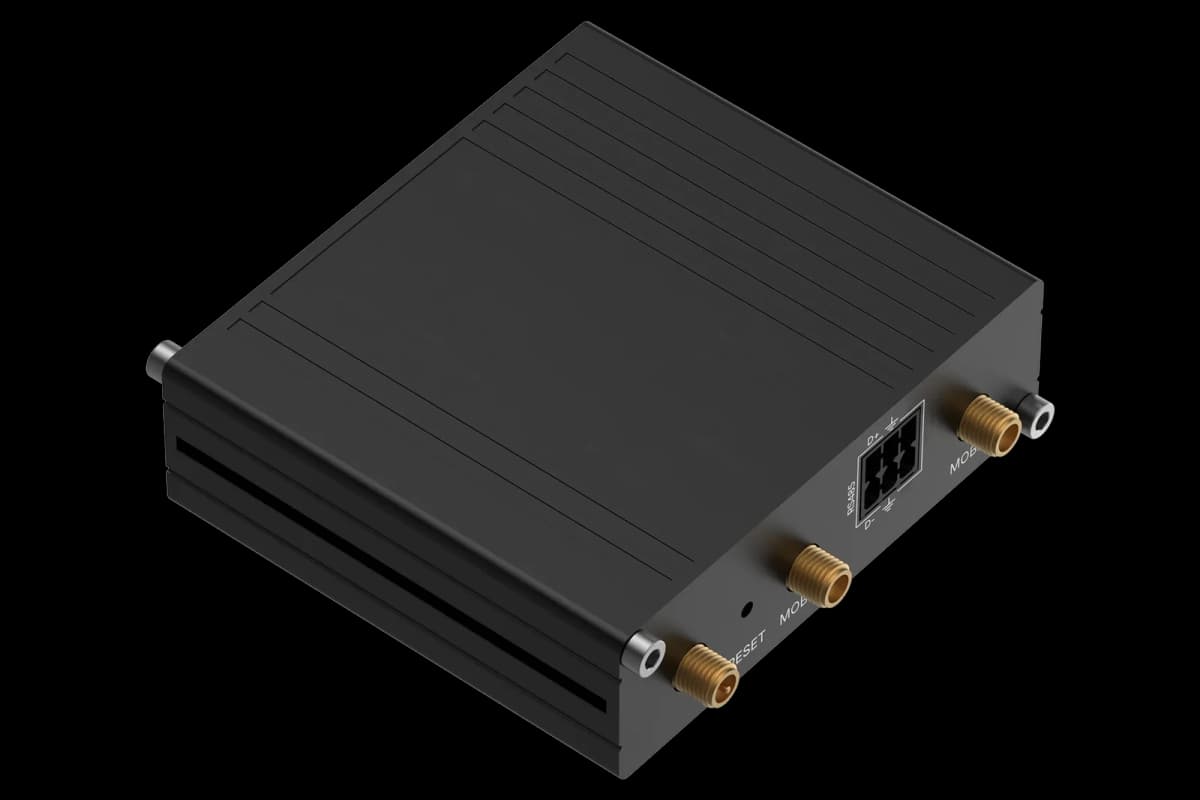
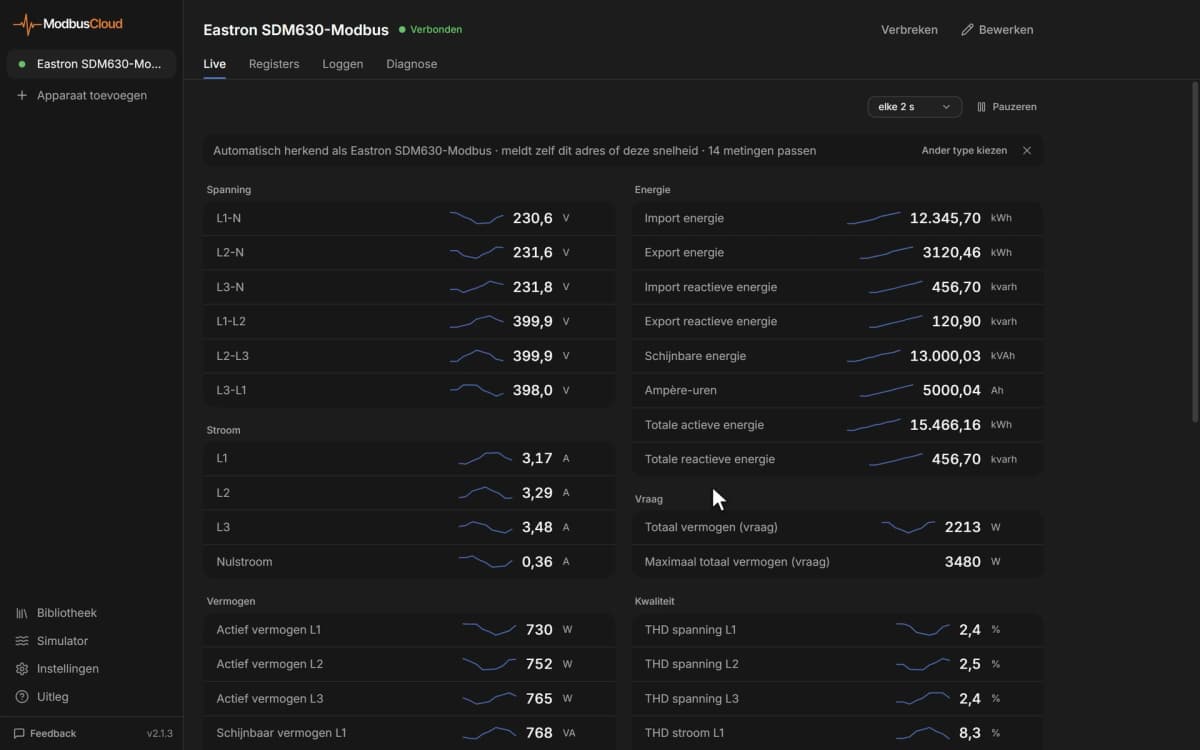
The ModbusCloud Gateway reads your Modbus RTU and TCP devices into a cloud dashboard using ready-made templates. It acts as a local RS485 master, manages the polling cycle, and delivers data over an encrypted link to the ModbusCloud platform without you having to set up a VPN or extra router. The template library already covers common energy meters such as the Eastron SDM630 and Schneider iEM3155. For a broader gateway comparison, see the Modbus gateway buyer guide.
Frequently asked questions
What cable should I use for RS485 with Modbus RTU?
A twisted pair cable with 120 ohm characteristic impedance and a foil plus tinned copper braid shield. Belden 9841 (one pair) and Belden 9842 (two pair) are the international reference; Alpha Wire 5471C and Lapp UNITRONIC BUS LD meet the same specification and cover most regional installer inventories.
What is the maximum length of an RS485 cable?
Around 1200 meters at baud rates up to 100 kbps. Modbus RTU commonly runs at 9600 or 19200 baud, well inside that flat region. Above 100 kbps the allowed length falls inversely with baud rate: at 1 Mbps roughly 120 m is achievable.
Can I use a CAT6 cable for RS485?
On short runs under 50 meters at low baud (9600) CAT6 works as a stopgap. The 100 ohm impedance instead of the specified 120 ohm creates around 9 percent reflection at every junction, so for new installations or long buses you should pick a spec-grade RS485 cable such as Belden 9841.
How many wires does an RS485 cable need?
At minimum two for the A/B differential pair, and often a third as signal common when devices sit on different power groups. Inside a single equipment room on shared PE, one twisted pair is enough; across floors or phases you should carry the signal common by using Belden 9842 or a similar 2-pair cable.
What is the difference between Belden 9841 and 9842?
Belden 9841 has one twisted pair; Belden 9842 has two. Otherwise identical: 24 AWG tinned copper, foil plus tinned copper braid shield, 120 ohm characteristic impedance, PVC jacket. Pick 9841 for a single bus, 9842 when you want to carry the signal common as a separate conductor or add a second bus in the same conduit.
What is LSZH cable and when do I need it?
LSZH means Low Smoke Zero Halogen. During a fire, LSZH emits under 0.5 percent halogen versus roughly 15 percent for PVC, which matches the CPR EU 305/2011 requirement (Cca-s1,d1,a1) for public spaces and escape routes. For a single panel in a home, PVC is fine; for schools, hospitals, and residential complexes pick LSZH.
How many devices can I connect on one RS485 bus?
Up to 32 standard transceivers per bus segment, or 256 with 1/8 unit load drivers. Modbus RTU supports up to 247 logical slave addresses. For larger fleets or long distances, add an active repeater or a second Modbus gateway to break the bus into segments.
Conclusion
RS485 cable selection sounds trivial, but it decides whether your bus runs cleanly or you are back at the site in three weeks chasing intermittent CRC errors. Pick a spec-grade 120 Ω twisted pair with a foil plus braid shield: Belden 9841 or 9842 for standard installations, Alpha Wire 5471C or Lapp UNITRONIC BUS LD as regional equivalents, and LSZH variants when the fire class calls for it. CAT6 works as a stopgap on short runs at low baud, but it does not belong in a design.
For the wiring side (polarity, termination, grounding) the RS485 wiring guide pillar covers the details. If you want to bridge multiple sites onto a single dashboard, the Modbus gateway buyer guide is the next read, or go straight to the ModbusCloud Gateway that handles the RS485 layer locally.