



On this page
The modbus rtu vs tcp question usually surfaces the moment installers need to bring existing field devices, heat pumps, energy meters, refrigeration controllers, into a new monitoring or SCADA setup. RTU has been around since 1979, TCP since 1999, and both live side by side in nearly every industrial site of any size. The right question is not which is "better" but which fits the field you have and what the customer wants on top.
This guide compares Modbus RTU and Modbus TCP the way you meet them in 2026: in a panel board, on a machine floor, or behind a building automation system. You will read what frame structure, speed, range and security each protocol brings, when to pick which, and how a Modbus gateway lets you combine both without replacing existing hardware.
Key points
- Modbus RTU is a binary serial protocol over RS485 (max 32 nodes per segment, up to 1200 m at 19200 baud) with a CRC-16 checksum. Modbus TCP wraps the same function codes in an MBAP header and sends them over TCP port 502 without its own checksum.
- Pick RTU for small field networks with existing RS485 devices (heat pumps, energy meters, refrigeration) and tight hardware budgets. Pick TCP for multi-room deployments, many devices, or multiple concurrent clients (SCADA, cloud, HMI).
- For existing RTU fields plus modern cloud monitoring, an RTU-to-TCP gateway is the standard hybrid. The ModbusCloud Gateway tunnels outbound TLS so Modbus never has to sit on the public internet.
What is Modbus RTU and where did it come from?
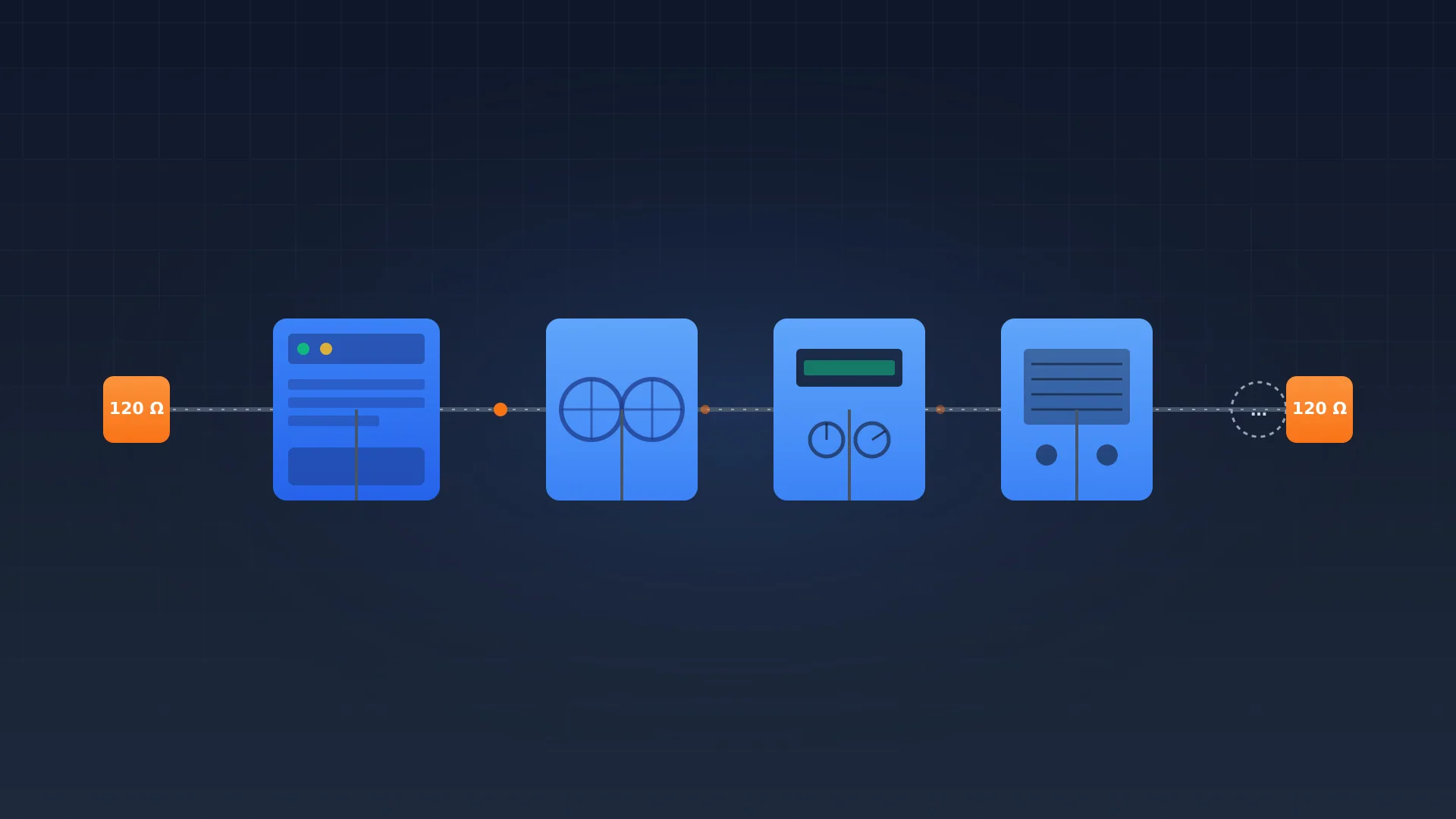
Modbus RTU (Remote Terminal Unit) is the serial flavour of Modbus, originally developed by Modicon in 1979 for PLC-to-device communication, and managed since 2004 by the Modbus Organization as an open specification. It runs on an RS485 bus (TIA/EIA-485-A) with differential signalling over two wires (A and B) plus a shared ground reference.
The Modbus Application Protocol Specification V1.1b3 (modbus.org, 2012) defines the Protocol Data Unit (PDU): one byte function code plus up to 252 bytes of data. The Modbus over Serial Line specification V1.02 adds, for RTU, one byte of slave address and two bytes of CRC-16 with polynomial 0xA001. The full Application Data Unit (ADU) is therefore up to 256 bytes long. A silent interval of 3.5 character times separates one frame from the next on the wire.
Addressing: one byte slave address, valid range 1 to 247. Address 0 is broadcast; 248 to 255 are reserved. Up to 247 slaves fit on one bus logically, but the TIA-485 physical layer limits each segment to 32 nodes without a repeater.
For a deeper serial dive, see our Modbus RTU explained article.
What is Modbus TCP and what changed?
Modbus TCP (also Modbus TCP/IP) wraps the same function codes in an MBAP (Modbus Application Protocol) header and sends them over TCP/IP. The Modbus Messaging on TCP/IP Implementation Guide V1.0b (modbus.org, 2006) defines the MBAP header: 2 bytes Transaction Identifier, 2 bytes Protocol Identifier (fixed 0x0000), 2 bytes Length and 1 byte Unit Identifier, followed by the PDU. The ADU is up to 260 bytes.
Two things stand out compared to RTU:
- No CRC: TCP already supplies a checksum at the transport and data-link layer, so Modbus TCP drops its own CRC.
- Transaction Identifier: clients can fire multiple parallel requests and match responses by transaction ID. This makes multiple concurrent masters possible, which RTU does not allow.
The "mbap" service has been registered with IANA on TCP port 502 (and UDP 502) since 2005. Virtually all modern PLCs, HMIs, variable frequency drives and SCADA packages speak Modbus TCP natively through their Ethernet port.
For TCP specifics, see Modbus TCP explained.
RTU and TCP stack compared
Both protocols describe the same thing, a register that gets read or written, but they diverge on transport and physical layers. The application layer (function codes plus register types) is identical; only the wrapper differs.
A table with the aspects installers ask about most often:
| Aspect | Modbus RTU | Modbus TCP |
|---|---|---|
| Year and standard | 1979 Modicon, modbus.org Serial Line V1.02 | 1999, modbus.org TCP/IP Implementation Guide V1.0b |
| Maximum frame ADU | 256 bytes | 260 bytes |
| Error detection | CRC-16 polynomial 0xA001 | TCP checksum, no own CRC |
| Addressing | 1 byte slave address, 1 to 247 | Unit Identifier 1 byte, IP address + TCP 502 |
| Physical layer | RS485 twisted pair (TIA-485-A) | Ethernet Cat5e/6 RJ45 |
| Nodes per segment | 32 without repeater | practically unlimited via switch |
| Maximum range | 1200 m at 19200 baud, drops to 30 to 120 m at 1 Mbps | 100 m per Cat5e/6 segment, unlimited via routing |
| Throughput | ~7 holding register reads/sec at 19200 baud | hundreds of transactions/sec possible |
| Multiple clients | not supported, strictly master/slave | yes, via Transaction Identifier |
| Security | none | none, unless Modbus Security/TLS (rare) |
| Device cost indication | typically 30 to 50% cheaper than TCP variant | usually pricier, but Ethernet often already present |
Cable length drops as baudrate rises
On RS485 there is a rule of thumb baked into TIA-485-A: below roughly 100 kbps the maximum cable length stays near 1200 m, above that it falls roughly inversely proportional to the bit rate. Texas Instruments captures the curve in application note SLLA272: at 19200 baud (the de facto Modbus RTU standard) you sit comfortably on 1200 m; at 1 Mbps you drop to about 120 m. That is a hard physical ceiling, not a marketing number.
With Modbus TCP this limit does not apply: one Cat5e or Cat6 Ethernet segment runs up to 100 m, and with switches and routers there is no practical distance ceiling. What does matter for TCP is latency once you cross a WAN: LAN typically under 5 ms, WAN or VPN quickly 10 to 50 ms per transaction.
When to pick Modbus RTU
Modbus RTU is the right choice for small field networks with existing RS485 hardware, or when the TCP variant of a meter or drive is significantly pricier than the serial flavour. Concrete signals for RTU:
- Field devices that only speak RTU: heat pumps (Daikin Altherma, Mitsubishi Ecodan, Carel pCO refrigeration controllers) ship with Modbus RTU on the controller.
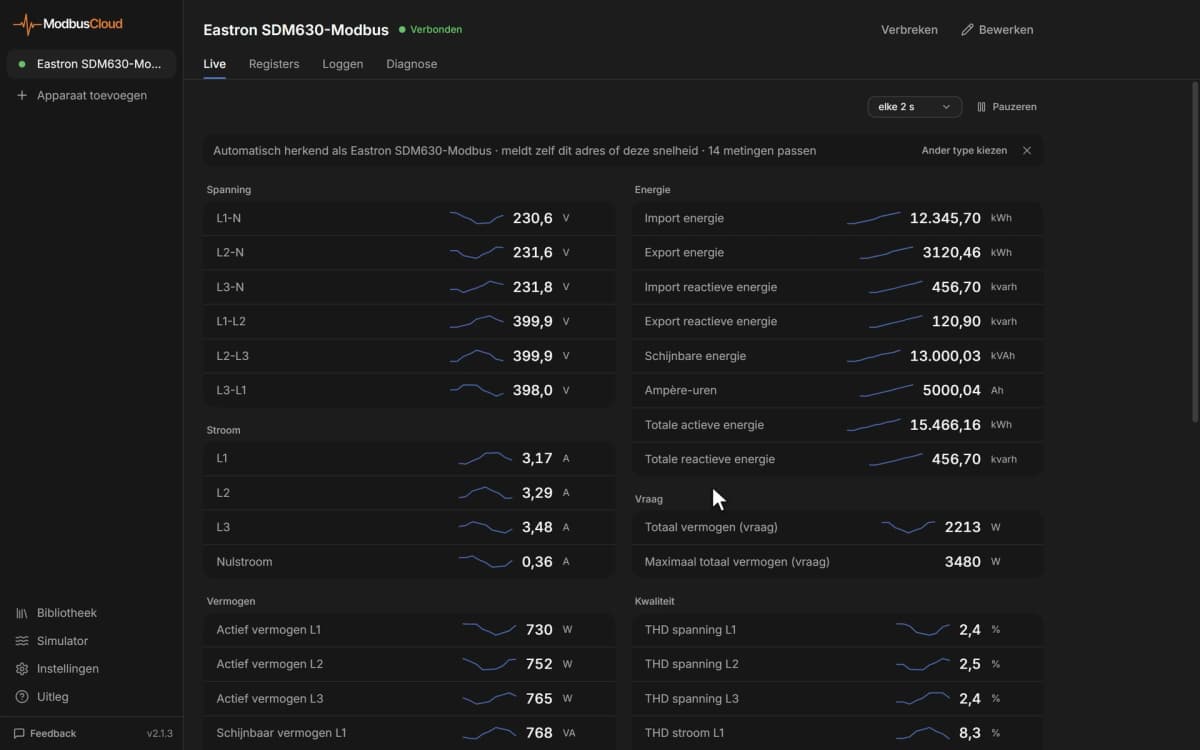
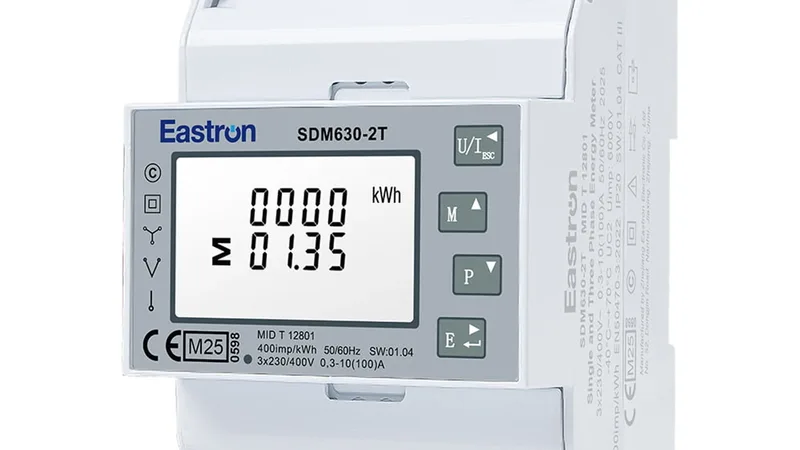
- Energy submetering in a panel board: Eastron SDM630, Janitza UMG, Iskra MT. The RTU variant is typically 30 to 50% cheaper than the TCP variant.
- Variable frequency drives with an RTU option: ABB ACS580 and Danfoss VLT FC202 speak RTU through a serial card.
- Small field network: up to about 20 devices on one segment, in one room or panel.
- No Ethernet available: older buildings or machines without network infrastructure at the field level.
Typical projects: refrigeration plant, heat pump retrofit, BREEAM or LEED submetering, machinery without a site-wide Ethernet.
When to pick Modbus TCP
Modbus TCP is the right choice when you need to span multiple rooms or buildings, have many devices, or want multiple concurrent clients (SCADA plus cloud plus local HMI).
- Devices spread across the building: as soon as Ethernet or fibre is already in place, TCP devices land directly on the switch without separate serial wiring.
- Many devices (>20 to 30): above that scale RTU bus segmentation gets fiddly. An Ethernet star is cleaner.
- Multiple concurrent clients: a SCADA package plus a cloud platform plus a local HMI all want to read the same meter at the same time. Modbus TCP supports this through the Transaction Identifier; RTU is strictly master/slave and cannot.
- PLC with Ethernet as main bus: Beckhoff TwinCAT, Siemens S7-1500, Schneider M580, Rockwell CompactLogix speak Modbus TCP natively through their Ethernet port.
- Cloud integration without a gateway: when the device already has Ethernet and the network is properly segmented.
Typical projects: SCADA on a production line, multi-panel energy management, building-level BAS integration, new build with datacentre-grade network.
When to combine both via a gateway
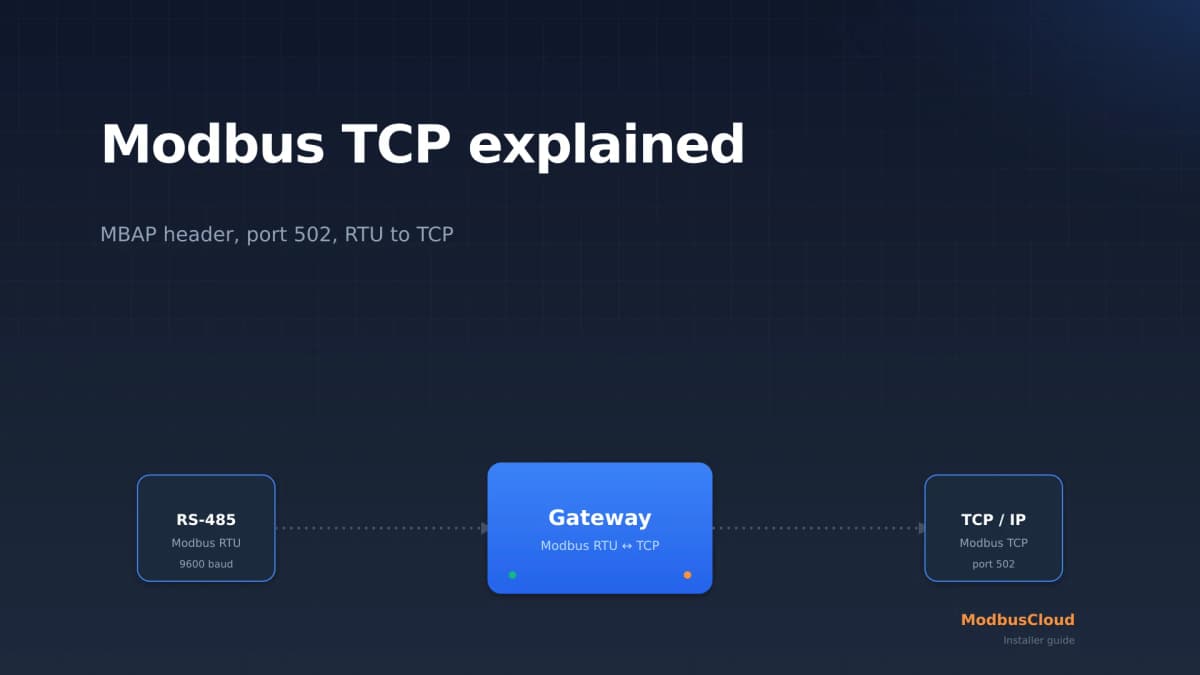
In real-world brownfield installations you almost always live hybrid: a row of RTU devices on an RS485 bus that has worked for years, plus a wish to bring it into a new cloud monitoring or SCADA system. A Modbus gateway (often called RTU-to-TCP gateway) is the standard hybrid: on one side it speaks RTU over RS485 to the existing slaves; on the other side it publishes the same registers as Modbus TCP on port 502 over Ethernet.
The global market offers four gateway categories:
- Serial-to-Ethernet (HMS Anybus Communicator, Moxa MGate MB3170, Sealevel SeaConnect): RTU to TCP only, 200 to 600 EUR.
- Multi-protocol gateway (HMS Anybus X-gateway, Intesis, ProSoft MVI): RTU plus TCP plus BACnet, EtherNet/IP or KNX, 600 to 1500 EUR.
- Cellular gateway (Teltonika RUTX series, Robustel, Digi WR54): RTU plus TCP plus 4G or LTE, 300 to 800 EUR.
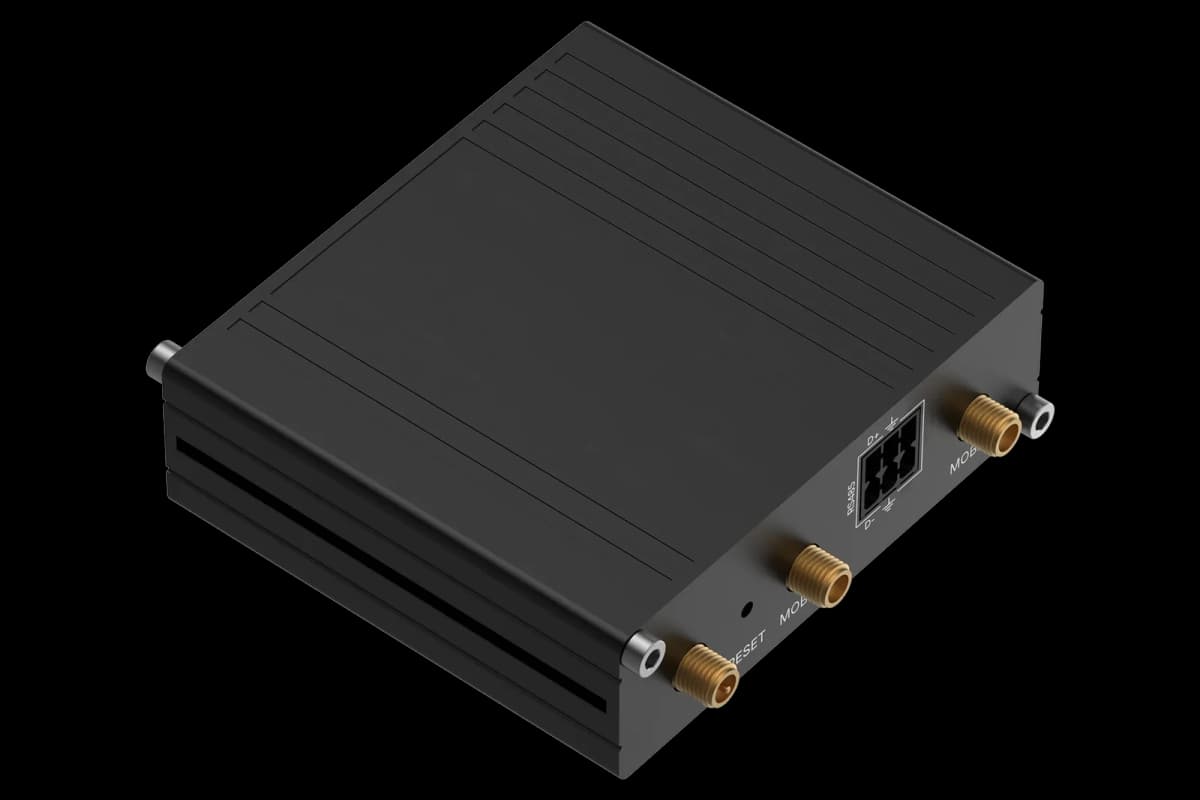
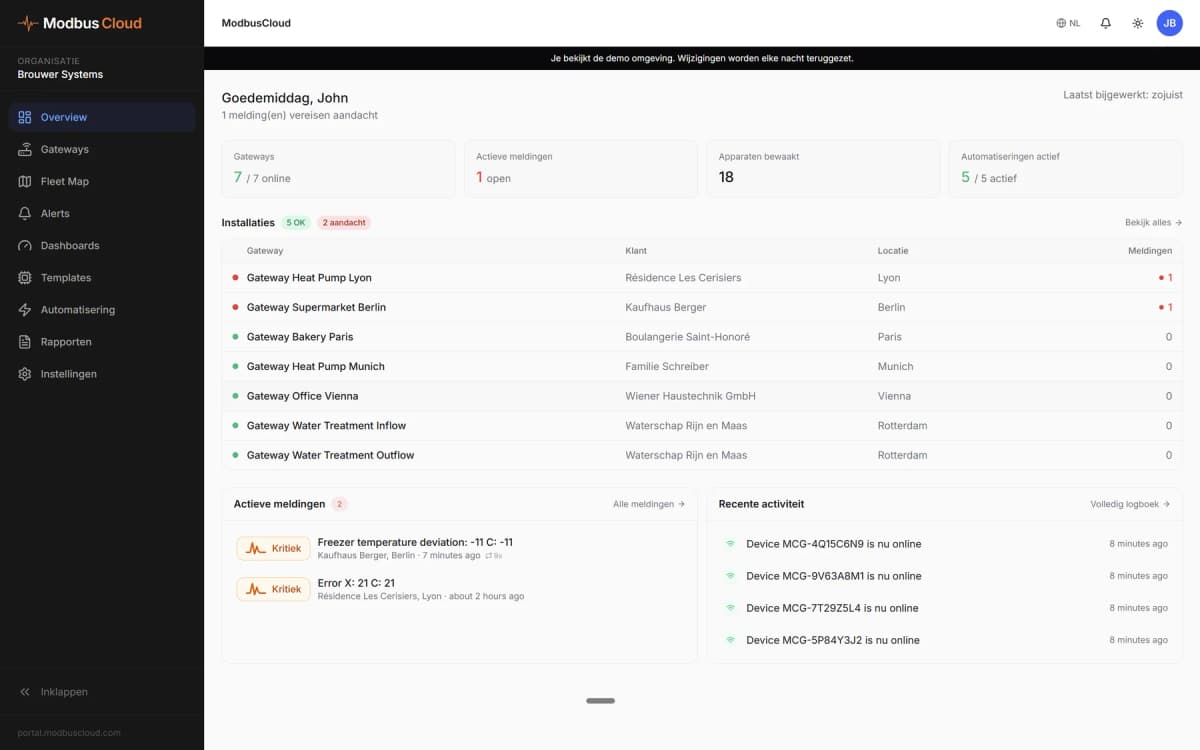
- Cloud MQTT gateway (ModbusCloud Gateway, eWON Cosy, ProSoft PLX31): RTU plus TCP plus outbound MQTT over TLS to a cloud platform.
For a deeper comparison of these four categories, see our Modbus gateway buyer guide and the industrial IoT gateway comparison.
Security: port 502 should not live on the public internet
Modbus was designed in an era when OT and IT were fully separated. Neither variant ships with built-in authentication or encryption. With RTU the situation is straightforward: anyone with physical access to the RS485 cable can read traffic. With TCP it is trickier: port 502 with a direct WAN-facing route shows up in every Shodan scan and figures regularly in CISA ICS-CERT advisories.
The Modbus Organization published a "Modbus Security" specification in 2018 that adds TLS on port 802, but adoption in field devices remains near zero. Practical hardening in 2026 looks like:
- Modbus TCP behind a firewall: port 502 never on WAN, always inside a segmented OT VLAN with ACLs.
- Outbound TLS via a gateway: a gateway that opens an outbound TLS session (MQTT, REST or similar) needs no inbound port at all.
- IEC 62443 / ISA-99 alignment: the OT security framework most often referenced in tenders since 2024. EU NIS2 (2022/2555) implementations across the bloc tighten this further; in the US, TSA Security Directive 2021-02 sets comparable expectations for transport-related OT.
Frequently asked questions
What is the difference between Modbus RTU and Modbus TCP?
Modbus RTU is the 1979 serial variant, binary over RS485 with a CRC-16 checksum and up to 32 nodes per RS485 segment. Modbus TCP wraps the same function codes in an MBAP header and sends them over TCP port 502 without its own CRC. The application layer (registers, function codes) is identical; the difference sits at the transport and physical layers.
Is Modbus TCP faster than Modbus RTU?
Yes, at the network level. RTU at 19200 baud reaches roughly 7 single-register holding reads per second. Modbus TCP on 100 Mbps Ethernet can sustain hundreds of transactions per second, provided the server (PLC or meter) keeps up. RTU at 115200 baud reaches about 40 reads per second, still a fraction of what TCP delivers.
What is the maximum distance for Modbus RTU?
At 19200 baud (the de facto default) an RS485 segment runs up to 1200 m. Above 100 kbps the maximum cable length falls roughly inversely with bit rate, down to around 30 to 120 m at 1 Mbps. For longer runs: place a repeater or move to Modbus TCP through a gateway.
What port does Modbus TCP use?
TCP port 502. The service has been registered with IANA as 'mbap' (Modbus Application Protocol) since 2005. UDP 502 is also registered but rarely used in practice. Modbus Security with TLS uses port 802, but adoption is negligible.
Do I need a gateway to convert RTU to TCP?
Yes. A Modbus RTU-to-TCP gateway talks RS485 to the existing RTU slaves on one side and publishes the same registers as Modbus TCP on port 502 on the other. Expect 200 to 600 EUR for a serial-to-Ethernet gateway, 600 to 1500 EUR for a multi-protocol or cloud gateway.
Can I run Modbus RTU and TCP in the same installation?
Yes, and that is the rule rather than the exception in real-world sites. A typical setup puts RTU at field level (heat pump, energy meter, refrigeration unit) and TCP at the automation level (PLC, SCADA, cloud). A gateway bridges them and presents the RTU slaves as virtual TCP slaves.
Is Modbus TCP secure enough for the public internet?
No. Stock Modbus TCP has no authentication or encryption. Port 502 facing the WAN is in every Shodan scan and figures in nearly every ICS-CERT advisory between 2023 and 2025. For cloud monitoring, use a gateway that opens an outbound TLS session (for example MQTT over TLS) so no inbound port stays open.
Which is cheaper, Modbus RTU or TCP?
Per field device the RTU variant is typically 30 to 50% cheaper than the TCP variant of the same model. Eastron SDM630 RTU versus SDM630 TCP is a known example. Total project cost depends on infrastructure: when Ethernet is already in place and RS485 cabling would be expensive to add, TCP can come out cheaper overall.
Conclusion
Modbus RTU and Modbus TCP are not competitors but two wrappers around the same register protocol. RTU dominates the field layer at heat pumps, refrigeration and energy submetering because it is cheaper and simpler per device. TCP wins at the automation layer for SCADA, cloud monitoring and large device counts because it supports multiple concurrent clients and higher throughput. In real-world brownfield installations they almost always coexist, bridged through a gateway. For cloud monitoring without an existing SCADA, a gateway with outbound TLS offers a fourth route that avoids the complexity, and the risk, of exposing Modbus TCP port 502 to the WAN.