
On this page
The f-gas digital logbook rules changed on 11 March 2024 when Regulation (EU) 2024/573 replaced the older 517/2014. For refrigeration contractors and HVAC installers across the EU and the UK, the practical effect is that a paper file or a scattered Excel sheet is no longer a safe way to document refrigerant work. Inspectors, certification scheme operators (Refcom in the UK, STEK in the Netherlands, VDKF in Germany) and EU competent authorities are increasingly asking for digital exports that show who did what, when, and with which charge.
This guide explains what Article 7 of 2024/573 requires the logbook to contain, the 5 tonne CO2-equivalent threshold expressed in kilograms per refrigerant, the leak-check frequencies under Article 5, and how to feed a digital logbook automatically from Modbus telemetry on Carel, Danfoss, Bitzer or Eliwell controllers. Examples assume installers operating across the EU and UK markets; US references to EPA Section 608 are noted where relevant.
Key takeaways
- Under EU 2024/573, the logbook requirement applies from a 5 tonne CO2-equivalent charge, which is 7.4 kg of R32, 2.4 kg of R410A or just 1.3 kg of R404A.
- The logbook must record eight categories per installation per Article 7: refrigerant type and GWP, charge, additions and recoveries, leak check results, certified personnel, equipment identification, intervention dates, and extended duties above 500 t.
- Feeding the logbook from Modbus data (suction pressure, runtime, alarm status) detects leaks weeks before the next mandatory check and produces an audit-grade record trail.
What is an F-gas digital logbook?
An F-gas digital logbook is the electronic record-keeping system that each operator of stationary refrigeration, air-conditioning or heat-pump equipment must maintain for any unit containing fluorinated greenhouse gases. Article 7 of Regulation (EU) 2024/573 calls this an "operators' record" and allows it to be kept "in physical or electronic form" so long as it stays available to competent authorities on request and is retained for at least five years after the last entry.
In practice, this means a per-installation file (or database row) that lives with the equipment for its entire operating life, plus five years of post-decommissioning retention. Inspectors increasingly request a CSV or PDF export rather than a paper book during audits, and EU certification schemes such as VDKF-LEC in Germany and Refcom in the UK now treat structured digital records as the default.
From what CO2-equivalent charge is a logbook required?
The threshold is 5 tonnes CO2-equivalent, regardless of refrigerant type. Because Global Warming Potential (GWP) varies by two orders of magnitude across common refrigerants, that same threshold falls at very different kilogram quantities. A modern HFO-based system needs many kilograms of charge before triggering logbook duty; a legacy R404A or R410A unit triggers the duty at very small charges.
Concrete examples: a Mitsubishi Electric Ecodan air-to-water heat pump with 4.5 kg of R32 (GWP 675) sits at 3.0 t CO2-eq, just under the threshold. A small commercial chiller with 8 kg of R410A sits at 16.7 t CO2-eq and is firmly logbook-bound. A supermarket cold room with 200 kg of R290 (propane, GWP 3) reaches only 0.6 t CO2-eq and falls below the CO2-eq threshold (although flammable-gas safety rules under EN 378 and ISO 5149 apply separately).
GWP values follow the IPCC Fifth Assessment Report (AR5), which the regulation explicitly designates as the reference. For the installer, this means the nameplate code (R32, R454B, R410A) plus the charge in kg directly determines whether a logbook is required.
What must the logbook contain?
Article 7(2) of EU 2024/573 lists the mandatory contents per installation. A digital logbook must capture these eight categories in a structured format so that records can be reproduced on demand during inspection.
- 1
Refrigerant type and GWP
Commercial designation (e.g. R32, R454B), GWP per AR5, CAS number for blends.
- 2
Initial charge at commissioning
Kilograms plus calculated CO2-equivalent. For subsequent top-ups, charge before and after each intervention.
- 3
Quantities added and recovered
Per service visit: kg added, kg recovered, origin (virgin, reclaimed, recycled).
- 4
Leak check results
Date, method (foam test, electronic sniffer, pressure-trend monitoring), findings.
- 5
Certified personnel data
Name, certification number (Refcom, VDKF, STEK or equivalent national scheme), date, company.
- 6
Equipment identification
Location, serial number, compressor and condenser type, cooling capacity in kW.
- 7
Date and nature of each intervention
Repairs, maintenance, commissioning, decommissioning.
- 8
Additional duties above 500 t CO2-eq
Permanent leak detection system logging, annual report by an independent auditor (Article 5(4) and Article 6 combined with Annex IV).
The refrigeration monitoring and F-gas compliance pillar covers how these eight categories integrate with ERP, field service and cloud-monitoring platforms.
How often are leak checks required under EU 2024/573?
Article 5 ties leak-check frequency to installation size in tonnes CO2-equivalent and to the presence of a permanent leak detection system. The 5 t threshold applies to leak checks just as it does to logbook keeping.
For an installation between 5 and 50 t CO2-eq, that means at least every 12 months, or every 24 months if a permanent leak detection system is fitted. Above 500 t the leak detection system stops being optional and becomes a legal requirement. The doubling rule applies only when the detection system is permanently installed and its measurements are recorded in the logbook; a sniffer brought in for service does not qualify.
Common audit findings across EU member states match three recurring failure modes:
- Frequency calculated against physical kg rather than CO2-equivalent.
- Annual check scheduled on calendar date rather than from the previous check date.
- Leak detection system claimed for the doubling rule, but no data records exist, so auditors disallow the claim.
Is a digital logbook legally accepted?
Yes. Article 7(4) of Regulation (EU) 2024/573 explicitly states that records may be kept "in physical or electronic form" provided they remain accessible to the competent authority on request and are kept for at least five years after the final entry. The UK's retained equivalent of EU 517/2014 (under SI 2015/310) takes the same line, as does EPA Section 608 in the US for charges of 50 lbs (23 kg) or larger under the AIM Act.
Three conditions matter in practice for a digital logbook to be treated as equivalent to a paper logbook:
- Authenticity: every entry maps to a certified individual (with scheme certificate number) and a timestamp that cannot be retro-edited. Audit trail or append-only log.
- Availability: data must be supplied within 24 hours of a request in a machine-readable format (CSV, PDF, XML). An EU-based server is the norm for EU operators.
- Five-year retention: records remain readable even after the equipment is decommissioned.
Widely used digital logbooks include vendor tools (Daikin's digital logbook, Viessmann's app), national-scheme tools (VDKF-LEC in Germany, Refcom's downloadable templates in the UK), and independent SaaS (FGasLog, Field Ascend, Tradify). None of them feeds itself from the installation; every entry still needs the engineer to type in numbers after the visit.
From paper to a Modbus-fed logbook
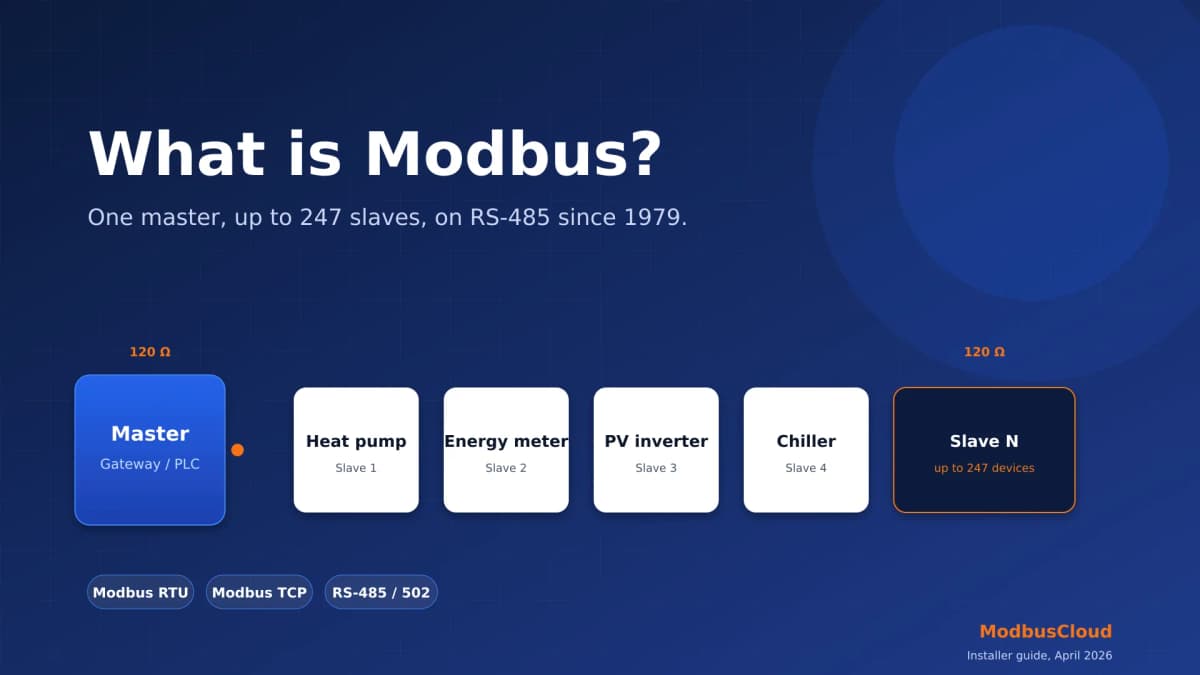
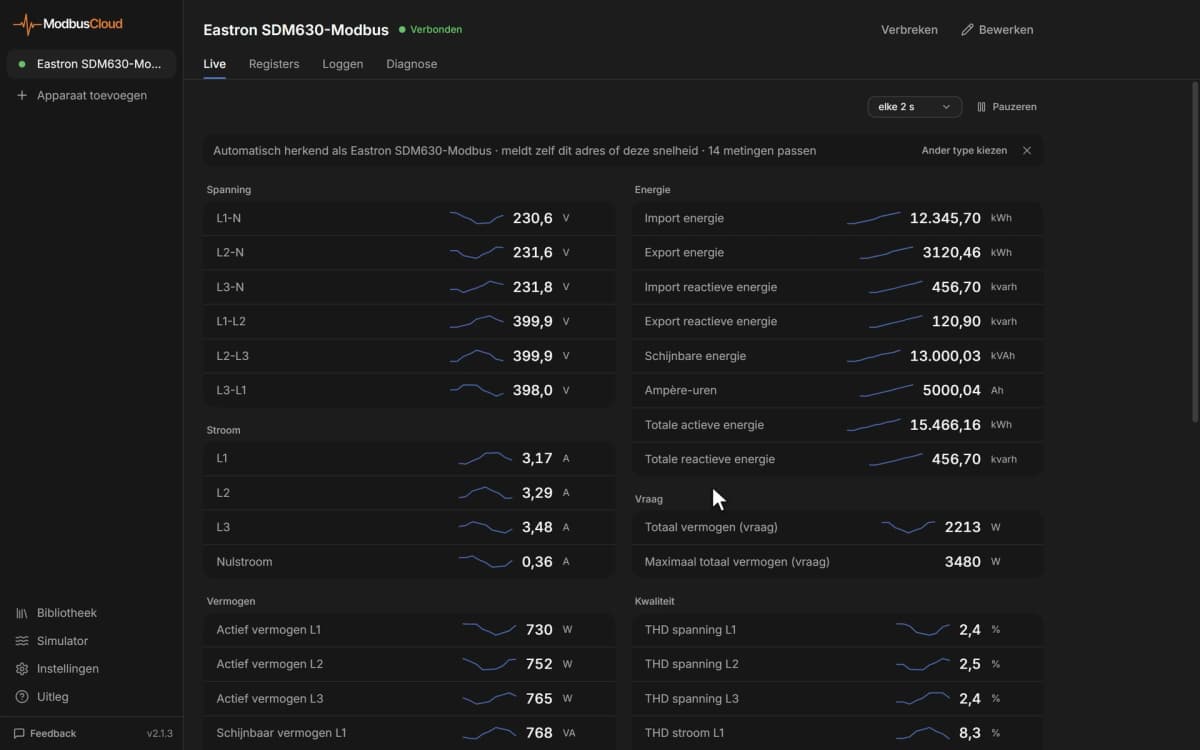
The bigger gain is not in digitising the form, but in connecting the controller of the refrigeration or heat pump installation to the logbook. Practically every modern refrigeration controller (Carel pCO, Danfoss AK-SM 800A, Bitzer BEST, Eliwell EWCM) exposes Modbus RTU or TCP, on which suction pressure, discharge pressure, compressor runtime and alarm status are readable. Those data feed two logbook categories at once:
- Tightness evidence via drift detection: a slow pressure trend at constant load combined with longer compressor runtime predicts a leak weeks before the next scheduled inspection. The drift is logged as a pre-alarm in the logbook.
- Service trigger: an alarm code on the controller opens a logbook row automatically, which the engineer closes after the visit with the type of work, kg moved, and certificate number.
For a typical certified contractor managing 80 to 150 commercial refrigeration installations, the productivity gain is at least 30 minutes per installation per year saved on manual logbook updating, plus on average 35% lower refrigerant loss thanks to earlier leak detection through drift monitoring (source: European Commission impact assessment 2022 for the 2024/573 recast). Across an EU-wide retail estate, refrigerant leak rates currently average 16% per year (source: AREA position paper on 2024/573, areaeur.com), so even a modest reduction translates into meaningful avoided emissions and refilling costs.
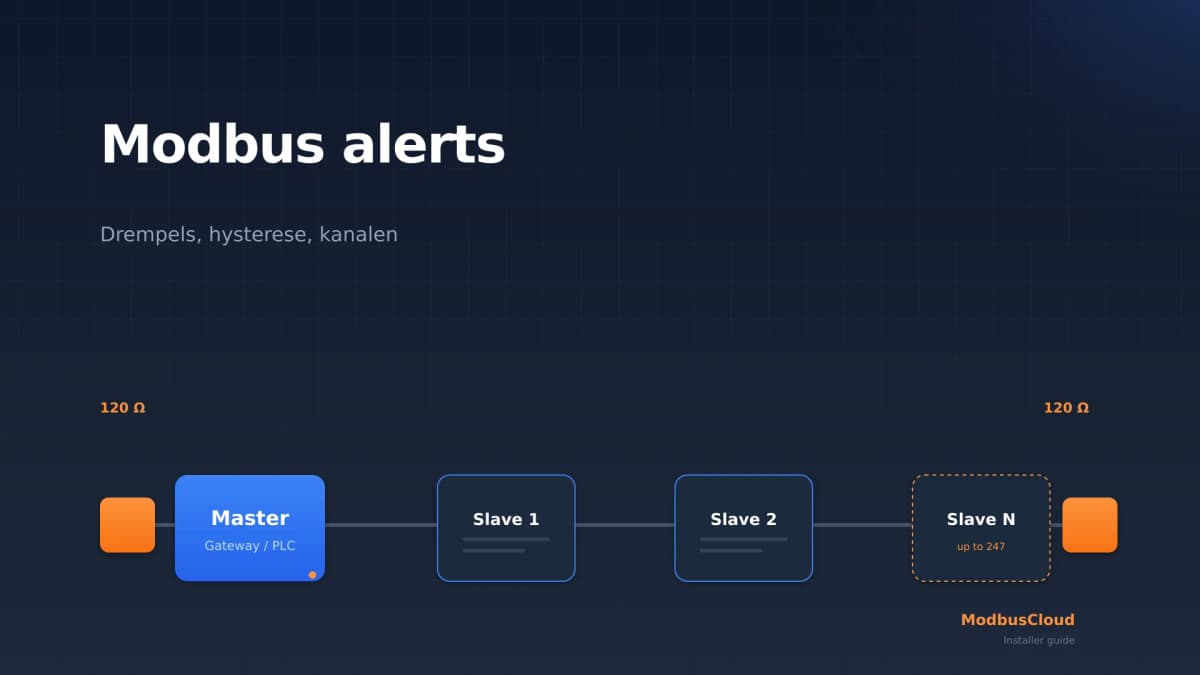
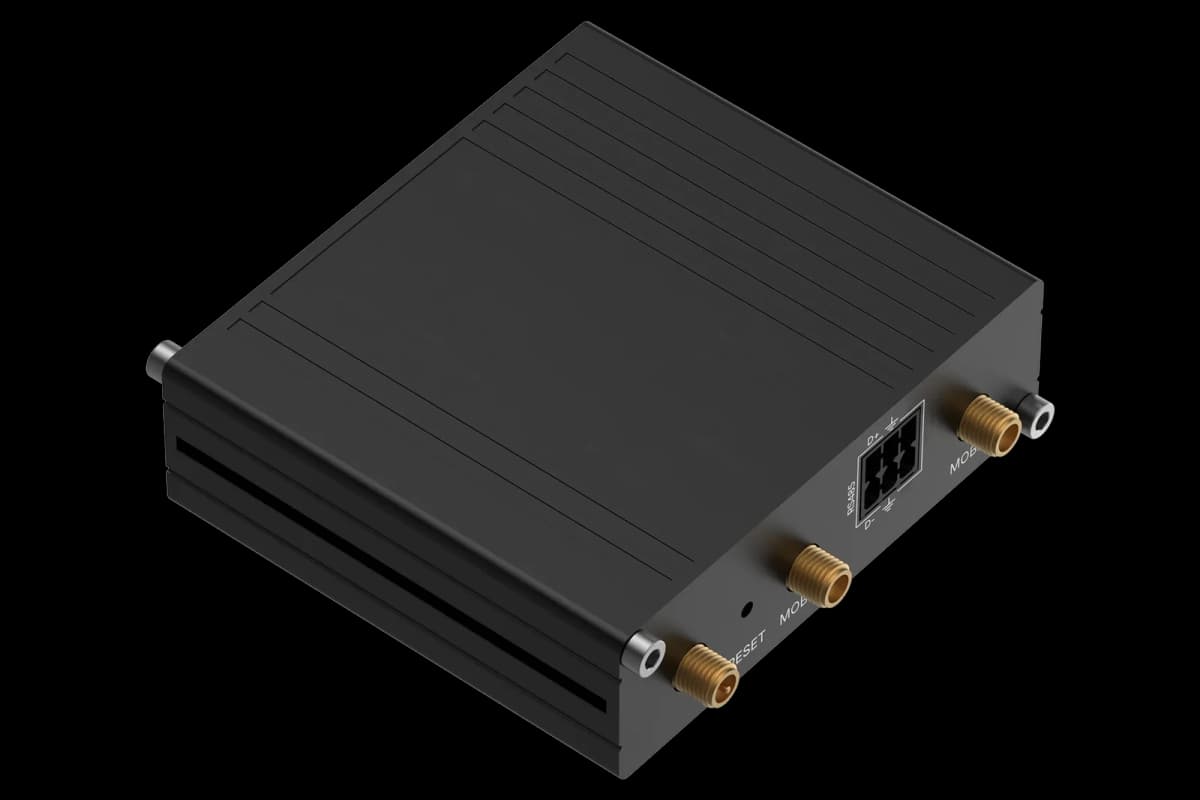
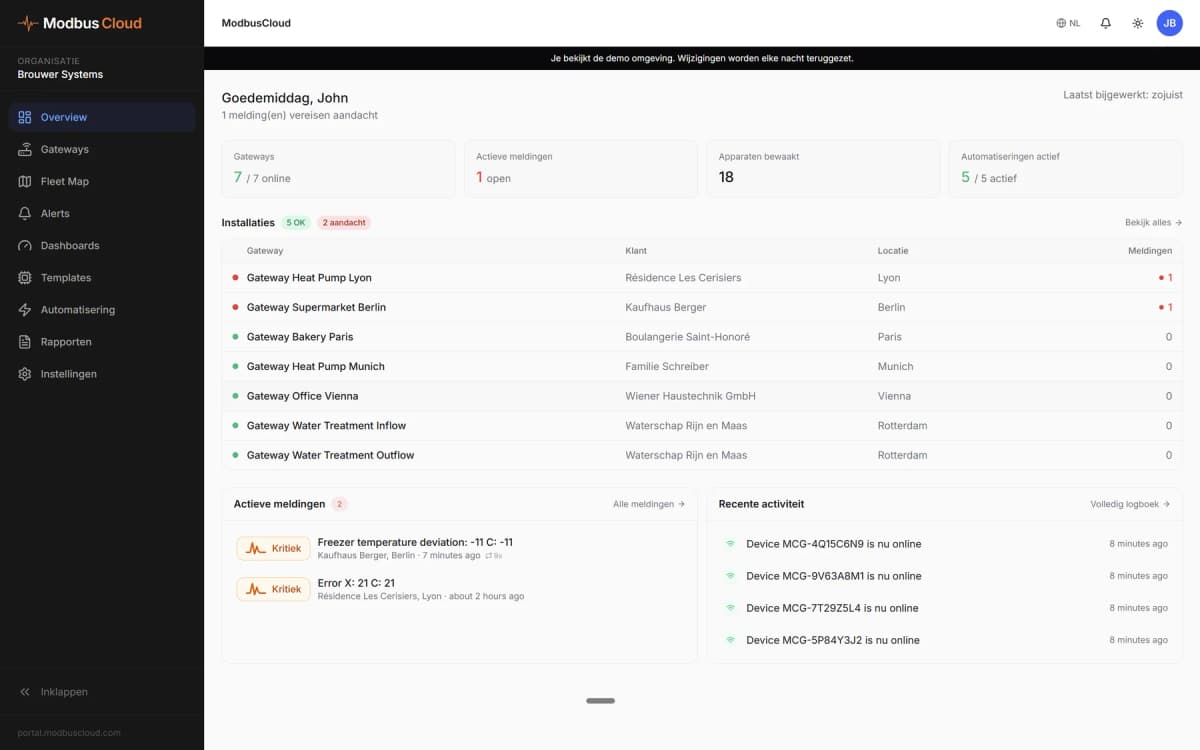
The ModbusCloud Gateway reads Modbus RTU or TCP from almost any refrigeration controller and tunnels telemetry to the ModbusCloud platform over outbound TLS. See also our Modbus automated alerts setup guide for threshold configuration tailored to leak detection.
Penalties and certification scheme implications
Penalty levels vary substantially across the EU and the UK. Germany applies the ChemSanktionsV with fines up to EUR 50,000 per infraction. The Netherlands applies the Economic Offences Act with a maximum of EUR 22,500 per infraction for legal persons. The UK Environment Agency can issue civil sanctions up to GBP 200,000 for serious breaches of the retained F-gas regulations. In the US under EPA Section 608, fines run to USD 56,460 per violation per day (source: epa.gov/section608).
Beyond statutory fines, certification scheme operators can withdraw the company certificate, which removes the legal right to handle F-gas equipment. STEK in the Netherlands, Refcom in the UK and VDKF in Germany all treat missing or inconsistent logbooks as grounds for certificate review during their member audits. The combined effect makes a digital logbook with consistent audit trail a baseline competitive requirement rather than a nice-to-have.
Frequently asked questions
What is a digital F-gas logbook?
An electronic record of refrigerant type, charge, leak checks and service interventions for an installation containing fluorinated greenhouse gases. EU Regulation 2024/573 Article 7 explicitly allows electronic storage as long as records stay available to inspectors and kept for at least five years.
From what charge size is the logbook required?
From 5 tonnes CO2-equivalent. That works out to 7.4 kg of R32 (GWP 675), 2.4 kg of R410A (GWP 2088) or 1.3 kg of R404A (GWP 3922). For natural refrigerants such as R290 (propane) or R744 (CO2), the kilogram threshold sits in the hundreds or thousands.
Is a digital logbook accepted by EU and UK regulators?
Yes. EU 2024/573 Article 7(4) explicitly accepts electronic format, as does the UK's retained equivalent and EPA Section 608 in the US for larger systems. The records must be authentic (audit-trail), available within 24 hours and retained for five years after the last entry.
How often must leak checks be performed?
Every 12 months between 5 and 50 t CO2-eq, every 6 months between 50 and 500 t, and every 3 months above 500 t. A permanent leak detection system doubles each interval, provided detection measurements are recorded in the logbook.
What must the logbook contain?
Eight categories under Article 7: refrigerant type and GWP, charge, additions and recoveries, leak check results, certified personnel data, equipment identification, dates and nature of interventions, plus extended duties for installations above 500 t CO2-eq.
What are the fines for a missing logbook?
EUR 50,000 per infraction in Germany, EUR 22,500 in the Netherlands, up to GBP 200,000 in the UK, and USD 56,460 per day in the US. Beyond statutory fines, the relevant certification scheme can withdraw a company certificate, which suspends the legal right to handle F-gas equipment.
How does Modbus data feed a digital logbook?
A Modbus gateway reads pressure, temperature, runtime and alarm status from the refrigeration controller (Carel pCO, Danfoss AK-SM, Bitzer BEST). Drift detections and alarms become open logbook entries automatically; the engineer closes them after the site visit by adding kg moved and certificate number.