

F-Gas Regulation digital logbook: what you need to prepare by 2029
Complete guide for heat pump and HVAC installers on meeting the logbook requirements of EU 2024/573, with thresholds, deadlines and a practical migration plan.
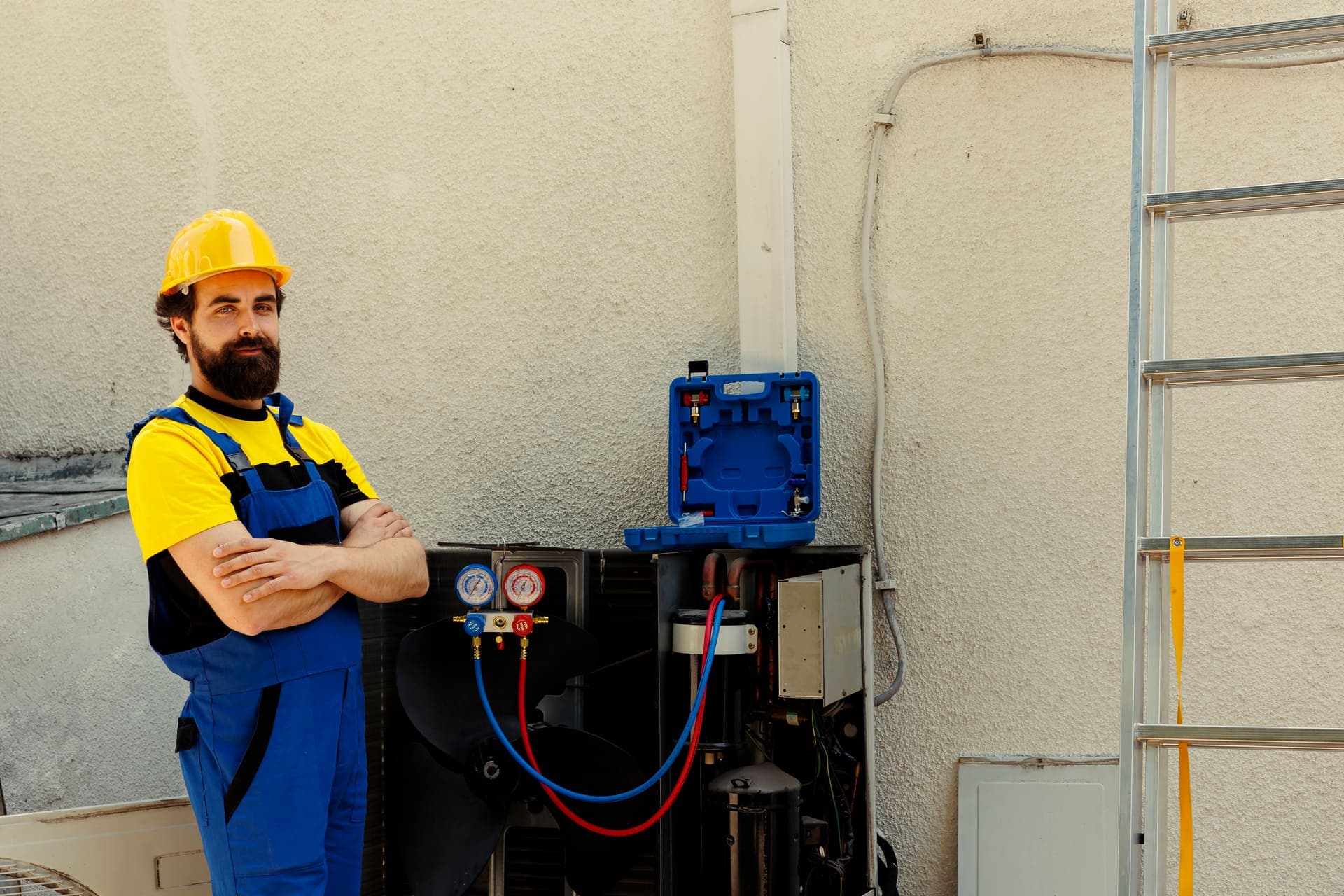
Regulation (EU) 2024/573 has been in force since 11 March 2024. It replaces the old F-Gas Regulation 517/2014 and significantly tightens the rules. For anyone installing and servicing heat pumps, chillers or VRF systems, this means: stricter leak checks, an expanded logbook obligation and an accelerated HFC phase-down. The key question for installers is this - how do you keep your logbook records in order, how do you stay in control of hundreds of installations at once, and how do you digitise the process without duplicating work? In this article we lay out the rules, thresholds and deadlines, and explain how to make the switch to a digital logbook in practice.
What changes under EU 2024/573 for HVAC installers
Regulation (EU) 2024/573 entered into force on 11 March 2024 and applies directly in every EU member state without transposition into national law. The regulation governs the production, placing on the market, use, recovery and destruction of fluorinated greenhouse gases. Six articles are especially relevant for installers: Article 4 (emission prevention and repair obligation), Article 5 (leak checks), Article 6 (leak detection systems), Article 7 (record-keeping and logbook), Article 10 (certification) and Article 13 (bans on servicing with high-GWP refrigerants).
The biggest operational changes for HVAC work:
First, HFO refrigerants (Annex II) now fall under the leak-check rules. Systems with R1234yf, R1234ze and similar refrigerants must now be checked based on weight in kilograms rather than tonnes of CO2-equivalent. Second, the repair verification after a detected leak must take place between 24 hours and 1 month after the repair - never during the same visit. Third, certification has been extended to work with natural refrigerants such as propane (R290), CO2 (R744) and ammonia. Anyone holding only an F-Gas company or personal certificate will not automatically be permitted to work on installations with these refrigerants after 29 March 2026.
In the Netherlands, the revised certification scheme took effect on 29 September 2025. As scheme administrator, Rijkswaterstaat published BRL100 version 3.0 (for companies) and BRL200 version 2.0 (for individuals) on 5 December 2025. From 29 March 2026, certificate holders must demonstrably work according to this new system.
When is a leak check mandatory: thresholds in tonnes of CO2-equivalent
Leak-check frequency is not based on kilograms of refrigerant but on tonnes of CO2-equivalent. That is the amount of refrigerant multiplied by the Global Warming Potential (GWP). The formula is simple: kg refrigerant × GWP ÷ 1,000 = tonnes CO2-equivalent. Article 5 of EU 2024/573 uses three thresholds for HFCs from Annex I:
| Charge (t CO2-eq) | Frequency without leak detection | Frequency with leak detection system |
|---|---|---|
| 5 to 50 | every 12 months | every 24 months |
| 50 to 500 | every 6 months | every 12 months |
| 500 or more | every 3 months | every 6 months |
An exception applies for hermetically sealed equipment: no leak-check obligation if the charge is less than 10 t CO2-equivalent (or 3 kg in residential settings). This must be indicated on the nameplate.
To see what this means for an HVAC system, a few worked examples help. The GWP values are taken from Annex I of the regulation:
| Refrigerant | GWP | 5 t CO2-eq = | 50 t CO2-eq = | 500 t CO2-eq = |
|---|---|---|---|---|
| R410A | 2088 | 2.4 kg | 23.9 kg | 239.5 kg |
| R32 | 675 | 7.4 kg | 74.1 kg | 740.7 kg |
| R134a | 1430 | 3.5 kg | 35.0 kg | 349.6 kg |
| R454B | 466 | 10.7 kg | 107.3 kg | 1,072.9 kg |
| R290 (propane) | 0.02 | n/a | n/a | n/a |
In practical HVAC terms: a large air-cooled R410A chiller with a 30 kg charge sits at roughly 63 t CO2-equivalent, so leak checks every 6 months. A VRF system with 15 kg R32 lands around 10 t CO2-equivalent - annual leak checks. A large office building with a central 250 kg R134a chiller comes in at 358 t CO2-equivalent, so checks every 6 months.
What the logbook must contain under Article 7
Article 7 of EU 2024/573 governs record-keeping. The operator - typically the owner of the installation - must maintain an installation-specific logbook that is retained for at least 5 years. For every installation containing 5 t CO2-equivalent or more of HFCs (or 1 kg or more of HFOs), the following fields are mandatory:
First, the installation baseline: type and quantity of refrigerant expressed in both kg and t CO2-equivalent, the GWP of the refrigerant used, the installation date and the location. Second, every leak check: date, who performed it (name plus certificate number), findings and any follow-up actions. Third, every service action that opens the refrigerant circuit: top-up or recovery in kg, reason for the intervention and the post-repair leak check (between 24 hours and 30 days). Fourth, for leak detection systems: the date of the annual functional check. Fifth, at end of life: which company carried out the recovery and what happened to the refrigerant (reuse, reclamation or destruction under Article 8).
Digital storage is permitted. Industry bodies such as STEK in the Netherlands confirm that a digital logbook has the same legal standing as a paper logbook, provided it is available on site at all times, including during power cuts or out of hours. That is a critical condition - a cloud-only logbook reachable only via login without on-site internet does not strictly comply.
Automatic leak detection: Article 6 for large systems
Article 6 requires stationary equipment with 500 t CO2-equivalent or more of HFCs (or 100 kg or more of HFOs) to have a leak detection system that alerts the operator or service contractor on every leak. For a typical HVAC application, 500 t CO2-equivalent translates to about 240 kg R410A, 740 kg R32 or 1,073 kg R454B. This mainly touches large central chillers in office and hospital buildings, industrial refrigeration and some larger VRF office installations.
The leak detection system itself must be checked for correct operation at least every 12 months. What qualifies as a valid leak detection system? Definition 26 of the regulation describes it as "a calibrated mechanical, electrical or electronic device for detecting leakage of fluorinated greenhouse gases that, on detection, alerts the operator." Three types are common in practice: pressure-based detection (monitoring suction and discharge pressure for deviations from a baseline), mass balance (comparing refrigerant usage against historical reference values) and direct detection using IR or semiconductor sensors in the plant room.
For HVAC installations sitting around the 500 t CO2-equivalent threshold there is an interesting trade-off. A leak detection system doubles the permitted interval between leak checks. For a 500 t CO2-eq system that moves you from 4 checks a year to 2. The labour savings often pay back the investment in sensors and monitoring software within two years.
From paper to digital: how to make the switch
Most installation companies still work with a mix of paper logbooks in the plant room, a spreadsheet in the office and service reports in an ERP system. That model copes with a handful of installations but breaks at 50 or more. An enforcement inspection does not just ask "show me the logbook" - it asks "show me that every leak check of the past year was completed on time across these 37 installations." That is unworkable on paper.
A good digital logbook meets five requirements. First, an unalterable audit trail: changes must be traceable to who edited what and when, without older versions being deleted. Second, tamper-resistant timestamps. Third, installation-level segmentation: each logbook is bound to a single installation, just like the physical paper logbook. Fourth, offline access: during an on-site inspection a technician or inspector must be able to read the logbook without a cloud connection - for example, via a QR code pointing to a local file or via an app with a local cache. Fifth, export and print capability: on a change of ownership the logbook must be exportable in full.
Many installers approach the transition in three phases. In phase 1 you digitise input: technicians fill in leak checks on a tablet or phone in a dedicated logbook app instead of on paper. In phase 2 you digitise the workflow: automatic reminders for upcoming leak checks, alerts when deadlines slip, and generation of inspection reports. In phase 3 you link the logbook to the installation itself via the Modbus controller.
Automatic data capture via Modbus controllers
Modern HVAC controllers have internally been logging all the critical data you need for a compliant logbook for years: suction and discharge pressure, compressor run hours, high- and low-pressure alarms, temperatures at every critical point, and fault codes. The catch is that this data sits inside the controller and doesn't automatically flow to the logbook. The key: the Modbus port that sits on practically every professional HVAC controller as standard.
Well-known HVAC controllers with Modbus support:
The Carel pCO5+ and c.pCO run in large swaths of European chillers and heat pumps. They support Modbus RTU over the BMS port (RS485) and the c.pCO adds Modbus TCP. Relevant registers for F-Gas compliance include suction and discharge pressure (in barg, scale factor 10), compressor run hours (32-bit integer, hours), high- and low-pressure alarms (boolean bits), superheat (in K) and current refrigerant temperature. The Siemens Climatix POL series is common in larger European chillers and AHUs and supports both Modbus RTU and TCP. The register structure varies per application but is always readable with the right object list. The Danfoss AK-SM 800A is widely used in central refrigeration and ships with Modbus TCP as standard. Belimo Energy Valves and similar smart valves expose live flow and energy transfer over Modbus.
What can you infer automatically from this? A rising suction pressure with unchanged ambient temperature is often an early indicator of refrigerant loss. A drop in compressor run hours without a load change points to an anomaly. A recurring low-pressure alarm at night can flag a developing leak well before a classic leak check would catch it. By logging this data 24/7 you automatically build a timestamped audit trail that maps directly onto the requirements of Article 7.
ModbusCloud as the backbone for your F-Gas logbook
ModbusCloud is a universal platform that connects Modbus devices to a cloud logbook. For an F-Gas logbook it works like this. You connect a ModbusCloud Gateway to the RS485 bus of the HVAC controller, or to the local network for Modbus TCP. The gateway continuously reads the relevant registers and streams the values to the ModbusCloud portal. There you configure the refrigerant profile per installation (type, charge in kg, calculated CO2-equivalent) and the threshold values.
The portal automatically builds an installation-specific logbook with every measurement timestamped. When a technician carries out a leak check on site, they record it in the mobile app: date, findings, certificate number. That entry is added to the same logbook timeline. On a change of ownership you export the full logbook as a PDF with a verification QR code. For an enforcement inspection you grant temporary access to the inspector via a shared link, or display the logbook on site via the gateway's local web interface (which works without internet).
The platform approach scales. An installer managing 120 installations can filter the portal on "every installation where the next leak check falls due within 30 days" and schedule them in a single week. When a pressure anomaly begins to develop on one of the chillers, the portal raises an alarm automatically, before the client notices any issue. That is preventative maintenance that directly reinforces F-Gas compliance.
ModbusCloud is brand-agnostic: if it speaks Modbus, it works with ModbusCloud. That means you can manage Daikin heat pumps, Trane chillers, Siemens Climatix AHUs and Mitsubishi VRF systems in a single portal without being locked into any one manufacturer's cloud.
Timeline: deadlines up to 2029 at a glance
The regulation stages its requirements over several years. For HVAC installers the key deadlines are:
Already passed: 11 March 2024 (regulation enters into force), 1 January 2025 (label requirements and ban on servicing with virgin refrigerants GWP ≥ 2,500), 3 March 2025 (F-Gas Portal linked to the EU customs system), 29 September 2025 (Dutch revised certification scheme in force).
Upcoming: 1 January 2026 (ban on servicing air conditioning and heat pumps with virgin refrigerants GWP ≥ 2,500, with exemptions until 2030 for recycled refrigerant). 29 March 2026 (all Dutch F-Gas certificate holders must work according to BRL100 v3.0 and BRL200 v2.0). 1 January 2027 (GWP limit 150 for new split units < 12 kW, which rules out R32). 11 March 2027 (member states must have certification programmes for natural refrigerants operational). 1 January 2030 (ban on monoblock heat pumps with GWP ≥ 150, including chillers). 12 March 2029 (all certificate holders must have completed their first mandatory refresher training). 1 January 2032 (total ban on split air conditioners and heat pumps using F-gases, with exemptions where safety requirements demand otherwise).
The HFC phase-down follows a separate schedule, anchored to a baseline of 176.7 million t CO2-equivalent. Of that baseline, 24.3% remains in 2025, 12.3% from 2027 and 15% from 2036 (Kigali Amendment). In 2050 the permitted quantity is zero. For installers that mostly means: virgin R410A will get scarce and expensive quickly over the next 5 years.
Frequently asked questions
Does the logbook obligation sit with me as the installer or with the owner?
Legally the obligation sits with the operator (usually the owner). As the installer you are responsible for correctly recording your own work in the logbook, including your certificate number. When responsibilities are unclear, document them in your maintenance contract. Many installers take on logbook management contractually as a service, which relieves the customer and improves compliance outcomes.
Can I replace my paper logbook with a digital logbook?
Yes. Industry bodies confirm that digital storage has the same legal standing as paper, provided the logbook is available on site at all times, including during power cuts or when offline. A cloud-only logbook without local readability does not strictly comply. A hybrid setup (cloud plus local offline display) is therefore the safest choice.
How do I calculate the tonnes of CO2-equivalent of my installation?
The formula is: kilograms of refrigerant × GWP divided by 1,000. For a heat pump with 15 kg R32 (GWP 675): 15 × 675 / 1,000 = 10.1 t CO2-equivalent. That sits above the 5-tonne threshold, so an annual leak check is required. Official GWP values are listed in Annex I of EU 2024/573.
From when is automatic leak detection mandatory?
Automatic leak detection is already mandatory for stationary equipment with 500 t CO2-equivalent or more of HFCs (Article 6). This is not new in 2024/573 but remains in force. It is relevant for large chillers, industrial refrigeration and some larger VRF office systems. The detection system itself must be function-tested at least annually.
Does a digital logbook have to meet specific technical requirements?
EU 2024/573 does not prescribe a specific technical standard, but the content must match what a paper logbook would contain (Article 7). Common practice is: tamper-resistant timestamps, per-installation identification, a retention period of at least 5 years, and export functionality for ownership transfers. In Germany, VDKF-LEC is the de-facto standard; in the Netherlands there is no mandated software.
How do I link Modbus data to my logbook?
Modern HVAC controllers such as Carel pCO5+, Siemens Climatix and Danfoss AK-SM support Modbus RTU or TCP. Via a gateway such as the ModbusCloud Gateway you read out registers such as suction and discharge pressure, compressor run hours and alarm status. These values are logged continuously and act as an independent audit trail alongside the manual leak-check notes. See our article on Modbus registers for heat pumps.
What are the penalties for an incomplete F-Gas logbook?
There is no fixed penalty in the regulation itself; enforcement bodies set amounts per offence based on national legislation. In practice, F-Gas fines range from a few thousand euros for administrative shortcomings to tens of thousands for documented leaks without action. Certification can also be withdrawn, which has a larger impact on business operations.
I only work with R32 heat pumps today - do I need to worry about the phase-down?
R32 has a GWP of 675 and falls entirely under the phase-down. For new split units under 12 kW, R32 is excluded from 1 January 2027 by the GWP-150 limit. Service on existing R32 installations remains possible, but virgin R32 will become more expensive in the coming years as quotas tighten. For new installations, R290 (propane) or R454B is often a more future-proof choice.
Conclusion
EU 2024/573 is not just stricter than the old F-Gas Regulation - it also lays the foundation for a digital, shared audit trail between installer, owner and enforcement body. For HVAC companies still running logbook management on paper or scattered spreadsheets, now is the moment to make the switch. A digital logbook lowers the administrative burden, prevents enforcement fines and layers a monitoring capability on top that enables preventative maintenance. By streaming Modbus data directly into the logbook, you build an audit trail that is technically resistant to manipulation and that drops the bar for certifying inspections. Start with one installation, pick a platform that scales, and make sure you are ready in 2029 for the next wave of deadlines.