On this page
BRL 100 certification is the Dutch company certificate that a firm must hold before it may install, service, maintain, repair or decommission stationary refrigeration, air-conditioning and heat-pump equipment containing fluorinated greenhouse gases (F-gases) or their alternatives. It is a process certificate based on ISO/IEC 17065, it is legally required in the Netherlands, and it sits alongside BRL 200, the certificate for the individual technician. If you run a refrigeration or HVAC contracting business that touches the Dutch market, or you are comparing national F-gas schemes across the EU, this guide explains what BRL 100 certification means and how it fits the wider European model.
Updated: July 2026.
What is BRL 100 certification?
BRL 100 certification is a Dutch Beoordelingsrichtlijn (assessment guideline) for the certification of companies that work on stationary refrigeration, air-conditioning and heat-pump systems containing F-gases or their alternatives. It is a process certificate built on the ISO/IEC 17065 standard for product and process certification bodies, which means an accredited body audits your quality system, your tooling and your record-keeping rather than testing a single technician.
In practice, BRL 100 certification confirms that your company has the calibrated instruments, the documented procedures and the certified people needed to handle refrigerant safely and to prevent emissions. Certificates are issued by accredited certifying bodies such as Kiwa, DEKRA and Bureau Veritas, each accredited by the Dutch Accreditation Council (RvA). The scheme is historically associated with STEK (Stichting Emissiepreventie Koudetechniek), and supervision of the F-gas rules in the Netherlands sits with the Inspectie Leefomgeving en Transport (ILT). Certified companies and persons are recorded in the national CRT register, which anyone can consult to verify a certificate.
Who needs BRL 100, and how it differs from BRL 200
The core distinction is simple. BRL 100 certifies the company. BRL 200 certifies the technician. A firm holds one BRL 100 certificate; each of its qualified staff holds a personal BRL 200 certificate. A BRL 100 company must employ BRL 200-certified technicians to carry out the regulated work, and it must keep the tooling and procedures that the company certificate is audited against.
- Quality system, tooling and refrigerant record-keeping
- Audited by an accredited certifying body (Kiwa, DEKRA)
- Required before a firm may perform F-gas work in NL
- Competence of the individual technician
- Needed for installation, servicing and leak checks
- A BRL 100 company employs BRL 200 technicians
This split matters for a sole trader too. A one-person business (a Dutch zzp) usually needs both: BRL 100 for the company entity and BRL 200 for the person doing the work. The two certificates answer different questions. BRL 200 asks "is this person competent?", while BRL 100 asks "does this organisation have the system, the calibrated tools and the records to do the work safely and prevent emissions?"
Validity, audits and what the certificate requires
BRL 100 certification is not a one-off exam. Certifying bodies describe an initial cycle in which a temporary certificate is granted after the first audit, typically valid for around six months, followed by a permanent certificate valid for roughly two years, with periodic audits after that. Treat the exact intervals as something to confirm with your certifying body against the current guideline text, because the cycle can change between versions.
To pass and keep the certificate, your company generally needs calibrated instruments (manometers, thermometers, vacuum gauges, electronic leak detectors and refrigerant scales), documented work procedures, a signed certification agreement with the body, and BRL 200-certified technicians on staff. The audit checks that these are in place and that your refrigerant records are complete and traceable. Good record-keeping is a recurring audit theme, which is where continuous monitoring can earn its place, covered further down.
BRL 100 version 3.0 and the move to EU 2024/573
The guideline is revised over time. The latest revision, referred to as version 3.0, is aligned with the new EU F-gas Regulation (EU) 2024/573. Public communications from certifying bodies indicate it was published around the end of 2025 with an effective date in 2026 and a multi-year transition period. Because the precise dates and transition mechanics can still shift as the final text and guidance settle, confirm them with your certifying body rather than relying on a single figure.
The most visible change is scope. Earlier versions centred on classic F-gases. Version 3.0 widens coverage toward natural refrigerants such as ammonia (NH3), carbon dioxide (CO2) and hydrocarbons (for example propane), reflecting the broader reach of Regulation (EU) 2024/573 and its implementing rules. If your firm is moving customers onto low-GWP or natural refrigerants, this is the direction the certification is following.
How BRL 100 maps to the EU model
BRL 100 is a national label, but the obligation behind it is common to the whole EU. Under Regulation (EU) 2024/573 on fluorinated greenhouse gases (in force since 11 March 2024, replacing Regulation 517/2014), each member state must have a certification system for both companies and personnel that carry out F-gas work. BRL 100 is the Dutch implementation of the company-certification obligation, and BRL 200 the personnel side. For the full picture of that regulation, see our guide to the F-gas Regulation 2024/573.
The minimum requirements for these certificates are now set by Commission Implementing Regulation (EU) 2024/2215 of 6 September 2024, which repealed the earlier Regulation (EU) 2015/2067. It defines the skill sets for the different certificate categories, including certificates that combine F-gases with HFOs and hydrocarbons, and separate certificates for CO2 and for ammonia. So when BRL 100 version 3.0 expands toward natural refrigerants, it is following the shape of the EU rules, not moving ahead of them.
Two practical consequences follow:
- Mutual recognition. F-gas certificates issued in one member state are, in principle, recognised in others where they meet the conditions of Regulation (EU) 2024/573. A technician certified elsewhere in the EU maps onto the Dutch model, and a BRL 200 holder maps onto the equivalent scheme abroad. The label differs by country, the substance is harmonised.
- Different names, same backbone. Other member states run their own national bodies and titles. The United Kingdom is a special case: since Brexit it operates a separate GB F-gas regime, so EU mutual recognition does not automatically apply there. Always confirm cross-border recognition before you send staff to work in another country.
Leak checks and the F-gas digital logbook
Certification is only half the compliance picture. The other half is what you must do and record on each installation. Operators of equipment above certain refrigerant charges must have leak checks carried out by certified personnel at set intervals, and those intervals scale with the refrigerant's global warming impact, expressed in tonnes of CO2-equivalent (t CO2e). The thresholds start at 5 t CO2e, then 50 t CO2e, then 500 t CO2e, and a fixed automatic leak-detection system doubles the interval at each step.
Because the threshold is in CO2-equivalent, the charge in kilograms that trips each band depends on the refrigerant's GWP. A high-GWP refrigerant reaches 5 t CO2e at a low charge (around 2.4 kg of R-410A, GWP near 2088), while a lower-GWP refrigerant needs a larger charge (around 7.4 kg of R-32, GWP near 675). Very low-GWP options such as R-290 (propane) sit outside these leak-check bands in practice. Work out the band for each system from its actual refrigerant and charge.
Alongside the checks, Regulation (EU) 2024/573 requires records. For each system subject to leak checks you must log the refrigerant type and quantity installed, added and recovered, the dates and results of leak checks, who carried out the work (the certified company and person), and any measures taken. These records must be kept for at least five years and made available to the competent authority on request. The move from paper and spreadsheets toward a proper digital logbook is what makes this manageable across a portfolio of sites. Our guide to the F-gas digital logbook goes into the record structure in detail, and the pillar on refrigeration monitoring and F-gas compliance ties the duties together.
How continuous Modbus monitoring supports the logbook
BRL 100 certification is about your company's processes, and no monitoring product can grant it or stand in for it. What monitoring can do is produce continuous, time-stamped evidence around the certified process, which helps at audit time and shortens the time it takes to notice a problem between mandatory checks.
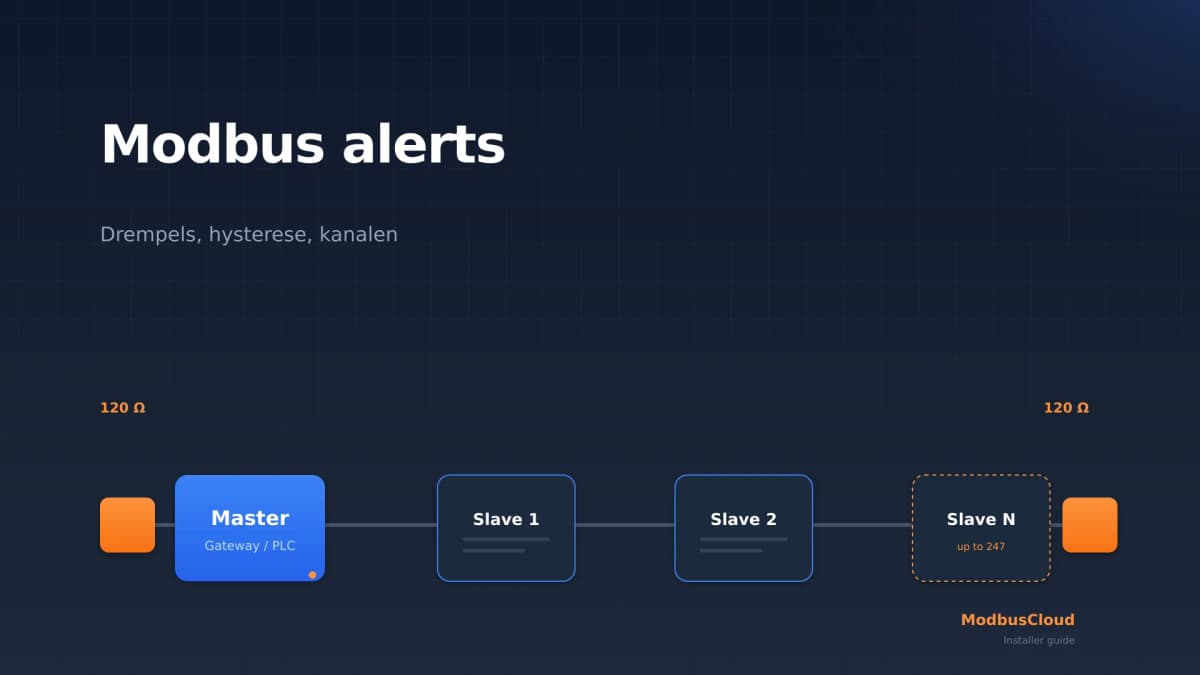
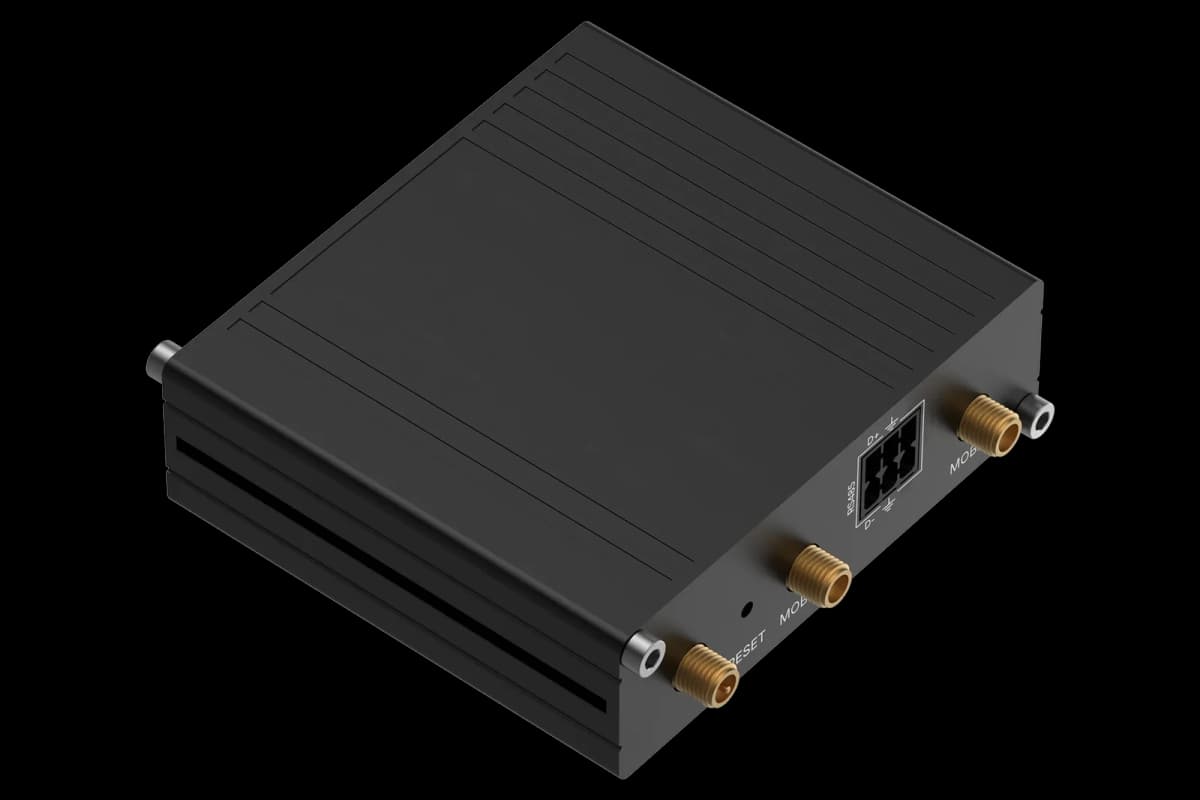
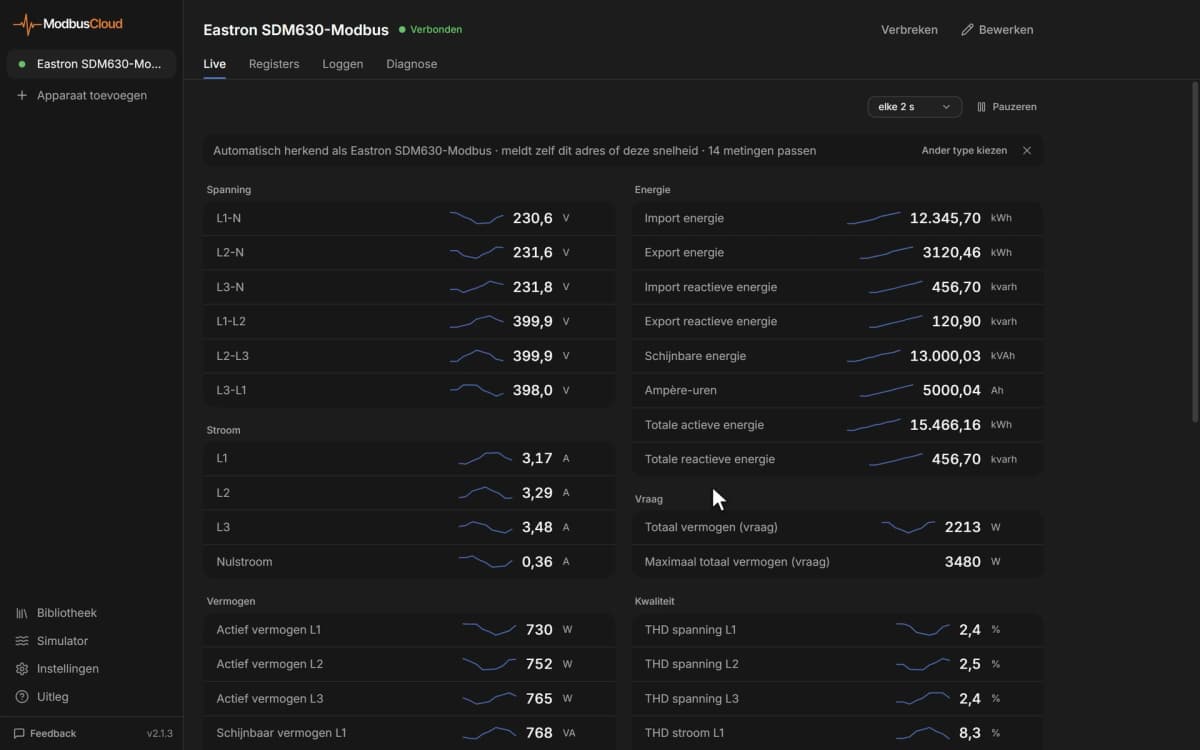
Most refrigeration controllers already speak Modbus. A ModbusCloud Gateway reads the controller registers over Modbus RTU or Modbus TCP and records them centrally. If you are new to the protocol, start with what Modbus is. The Gateway can pull flow and return temperatures, suction and discharge pressure, compressor run state, and the status of a fixed leak-detection contact, then keep that history as a time-stamped record you can export.
- Flow and return temperature from the refrigeration controller (Carel, Danfoss)
- Suction and discharge pressure as an early sign of refrigerant loss
- Fixed leak detection as the detector or controller reports it over Modbus
Continuous monitoring gives time-stamped evidence around the logbook and raises threshold and leak-detector alarms, but it does not replace the statutory leak check by a BRL 200-certified person.
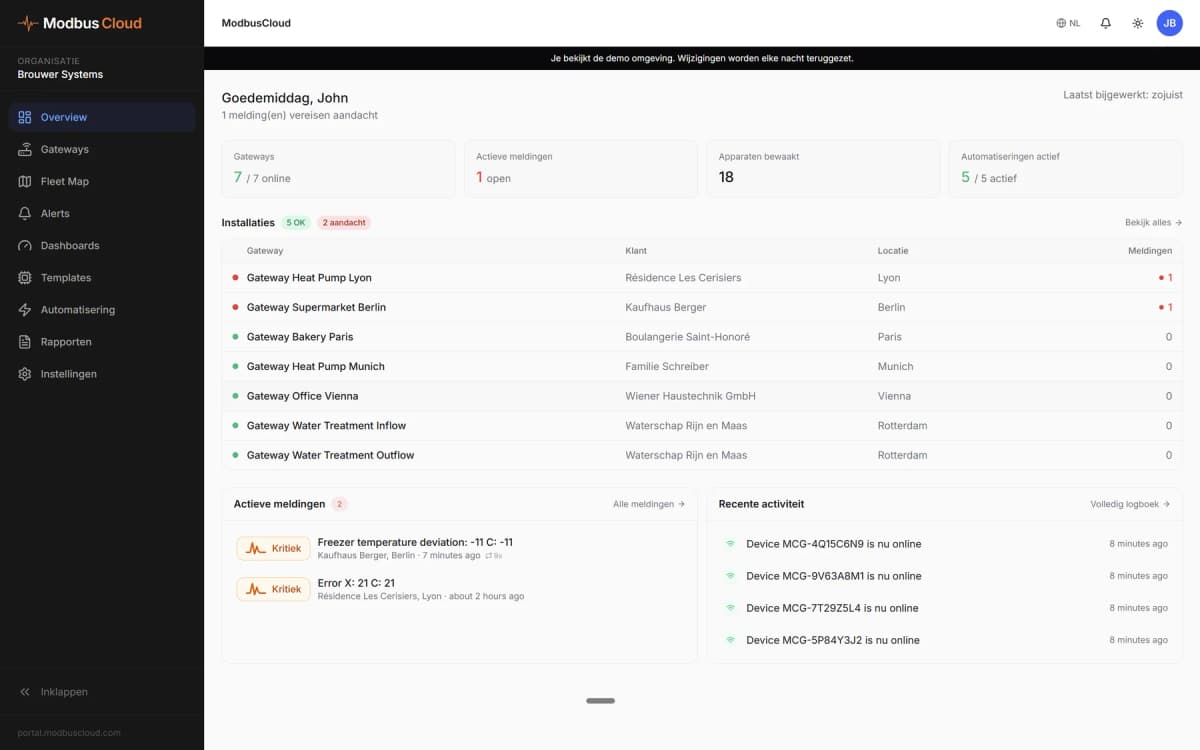
Three honest benefits stand out. The pressure and superheat history lets you spot a slow refrigerant loss well before the next scheduled check, and threshold alerts notify your team by email and in the portal when a limit is crossed (see setting up Modbus alerts). A date-stamped export gives your BRL 100 auditor and any competent-authority request a clean data trail instead of a shoebox of notes. And a single dashboard across sites suits a certified company managing many installations at once.
Frequently asked questions
What is BRL 100 certification?
BRL 100 certification is the Dutch company certificate, based on ISO/IEC 17065, for firms that install, service, maintain or decommission stationary refrigeration, air-conditioning and heat-pump equipment containing F-gases or their alternatives. It is legally required in the Netherlands and is issued by accredited bodies such as Kiwa, DEKRA and Bureau Veritas.
What is the difference between BRL 100 and BRL 200?
BRL 100 certifies the company: its quality system, calibrated tooling and record-keeping. BRL 200 certifies the individual technician's competence. A BRL 100 company must employ BRL 200-certified technicians to carry out the regulated F-gas work.
Is BRL 100 the same as the EU F-gas certificate?
BRL 100 is the Dutch implementation of the EU company-certification obligation under Regulation (EU) 2024/573. The EU minimum requirements for company and personnel certificates are set by Commission Implementing Regulation (EU) 2024/2215, which replaced Regulation (EU) 2015/2067.
Does BRL 100 certification work in other EU countries?
EU mutual recognition applies where certificates meet the conditions of Regulation (EU) 2024/573, so the underlying competence is recognised across member states, each of which uses its own scheme name. The United Kingdom runs a separate GB F-gas regime after Brexit, so confirm recognition before working there.
What refrigerants does BRL 100 version 3.0 cover?
Alongside classic F-gases and HFOs, version 3.0 widens the scope toward natural refrigerants: ammonia (NH3), carbon dioxide (CO2) and hydrocarbons such as propane. This mirrors the broader reach of Regulation (EU) 2024/573 and its implementing rules.
What must the F-gas logbook contain and how long are records kept?
For equipment subject to leak checks, log the refrigerant type and quantity installed, added and recovered, the dates and results of leak checks, the certified company and person who did the work, and any measures taken. Under Regulation (EU) 2024/573 the records must be kept for at least five years and made available to the competent authority on request.
Can digital monitoring help pass a BRL 100 audit?
Yes, indirectly. Continuous Modbus monitoring produces time-stamped, exportable data around the certified process and raises alarms when a pressure threshold is crossed or a leak detector reports a leak. It does not replace certified technicians, calibrated instruments or the statutory leak check, and it never extends a legal inspection interval.
Next step
BRL 100 certification proves your company runs a compliant process; the day-to-day work is proving it on every site. Continuous Modbus monitoring gives you the time-stamped record and the early warning that make the leak-check regime and the five-year logbook far easier to defend at audit. See how the ModbusCloud Gateway reads your refrigeration controllers, or explore the refrigeration and F-gas compliance pillar for the full workflow.