

On this page
The BACS requirement is the duty in the EU Energy Performance of Buildings Directive (EPBD) to fit non-residential buildings with a building automation and control system (BACS). It applies where heating, air conditioning or combined ventilation has an effective rated output over 290 kW, and over 70 kW by 31 December 2029. The system must continuously monitor, log and analyse energy use, detect efficiency losses and communicate with building systems from different manufacturers. Each Member State sets its own date in national law.
For installers and facility engineers the rule matters in two ways. A missing system can mean a fine, and a compliant one removes the periodic HVAC inspection. Below are the buildings covered, the national dates and what an existing site has to measure. The topic is building automation, not the UK Bacs payment system.
The BACS requirement covers non-residential buildings over 290 kW, then 70 kW
Article 13(9) of Directive (EU) 2024/1275 sets two steps, "where technically and economically feasible". Non-residential buildings with heating systems, air-conditioning systems, combined space heating and ventilation, or combined air conditioning and ventilation over 290 kW had to be equipped by 31 December 2024. The same applies over 70 kW by 31 December 2029.
The revised directive entered into force on 28 May 2024, and Member States had to transpose it into national law by 29 May 2026 (European Commission). The 290 kW step was already in the 2018 amendment of the previous EPBD.
Rated output is counted per building, not per boiler. The Dutch agency RVO tells owners to add up the nominal output of all systems that heat or cool rooms where people stay. Heating and cooling are assessed separately. For a heat pump the nominal output follows EN 14511-4:2013. Rooms used only occasionally, or kept below 15 °C or only frost-free, do not count under the Dutch rules.
Article 13(12) adds automatic lighting controls in non-residential buildings with the same thresholds.
A BACS must do four things under Article 13(10)
Article 13(10) lists what the system has to be capable of. A BACS must:
- continuously monitor, log and analyse energy use, and allow for adjusting it;
- benchmark the building's energy efficiency, detect losses in efficiency of technical building systems, and inform the person responsible for the facilities or technical building management about possible improvements;
- allow communication with connected technical building systems and other appliances in the building, and be interoperable across different proprietary technologies, devices and manufacturers;
- from 29 May 2026, monitor indoor environmental quality.
The directive does not name a protocol for point 3. Modbus RTU, Modbus TCP, BACnet and M-Bus are openly documented protocols. BACnet vs Modbus covers where each one fits.
Fault detection is not in the directive text, although vendor summaries such as frostlogic list it. It is function 7.3 of the standard EN ISO 52120-1, which some national rules use to assess a system.
National dates differ from the directive
The thresholds are the same everywhere, but the dates in national law are not. AI answers and older articles often state "70 kW from 2026". No rule in the Netherlands, Germany or Flanders sets that date.
The table gives the legal basis and the main details per country.
| Country | Rule | Thresholds and dates | Who is responsible |
|---|---|---|---|
| Netherlands | Bbl articles 3.145 and 3.146 (GACS) | over 290 kW from 1 January 2026, over 70 kW from 1 January 2030 | building owner, checked by the municipality |
| Germany | § 56 GModG, formerly § 71a GEG, in force since 29 July 2026 | over 70 kW by 31 December 2029; § 71a GEG had over 290 kW by 31 December 2024 | owner; fine up to 5000 euro |
| Flanders | Energiedecreet art. 11.1/1.2, Energiebesluit art. 9.4.1 | over 290 kW by 31 December 2025, over 70 kW by 31 December 2029 | owner of the systems, often the tenant in a shell lease |
Sources: RVO, GModG consolidated text (BBSR), Vlaanderen.be, all read in October 2026.
New buildings face stricter rules. In the Netherlands, a building with a permit after 29 May 2026 needs class B and class A for function 7.4. In Germany, new non-residential buildings need automation grade B over 290 kW and grade C over 70 kW under DIN/TS 18599-11:2025-10. German new buildings also need technical commissioning covering at least one heating period and one cooling period.
An existing site needs a meter per energy carrier and per system
Monitoring energy use and detecting efficiency losses per technical system both need separate metering points. A main meter per energy carrier shows what the building uses. It does not show a loss in the chiller while that loss disappears in the total.
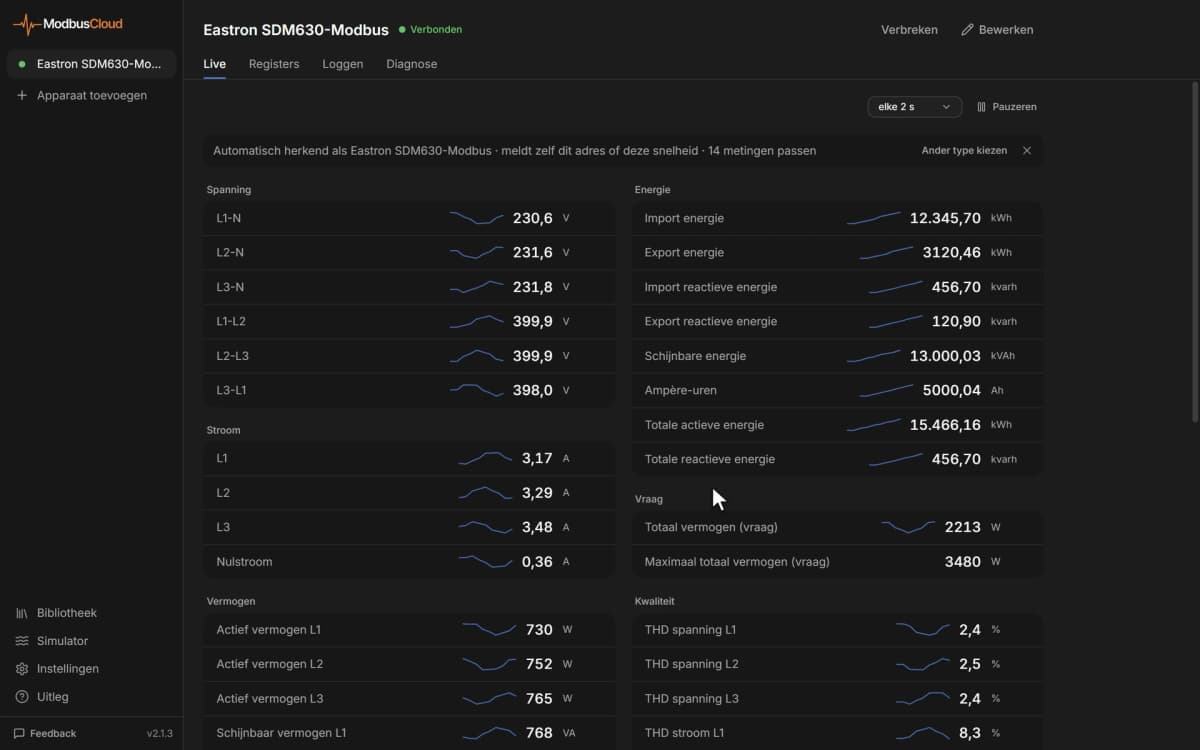
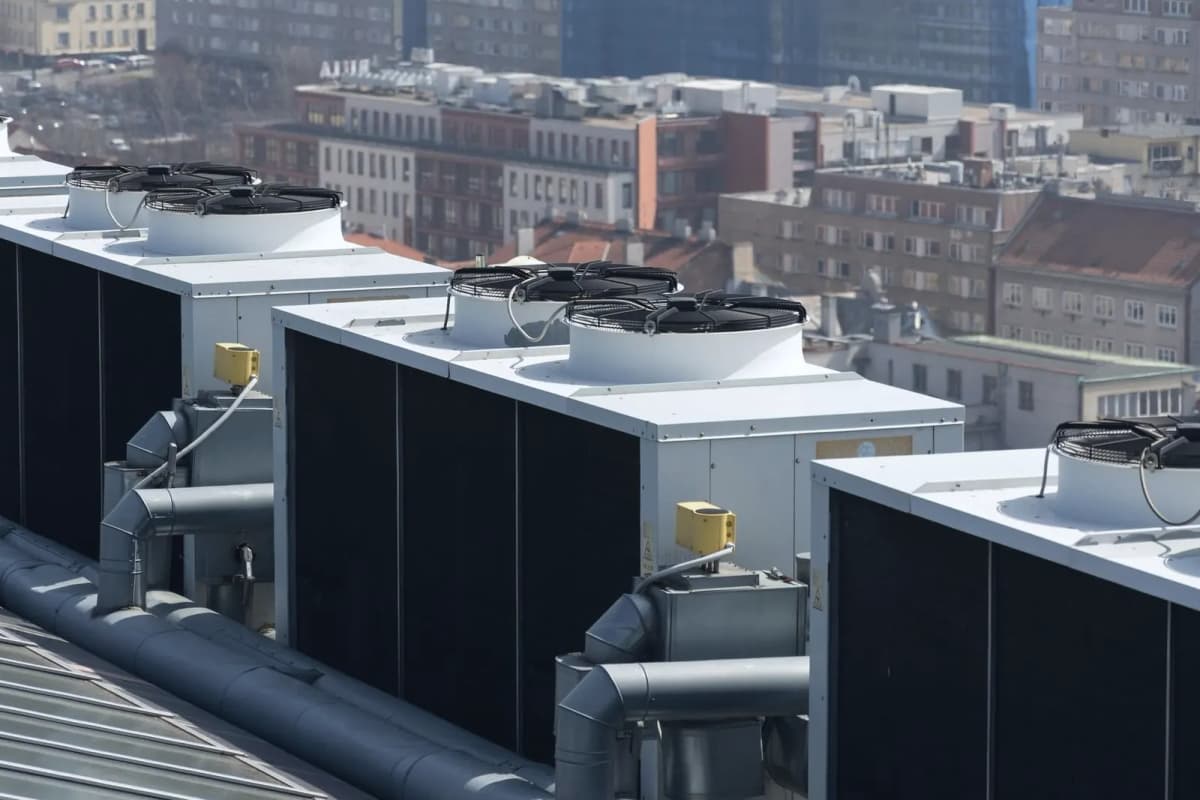
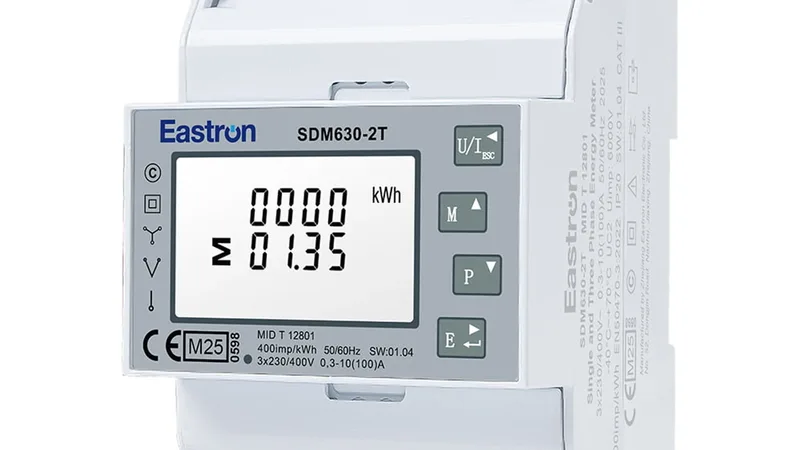
Many of these points already exist on site. Heat pumps, chillers and air handling units often have their own Modbus port with energy counters and fault codes. A submeter per circuit in the distribution board measures electricity per system. Which Modbus energy meter fits depends on current and number of phases. Modbus RTU or Modbus TCP depends on whether the device sits on an RS485 bus or on the network.
The German law states the interface requirement more precisely than the directive. § 56(2) GModG requires access to the data "über eine gängige und frei konfigurierbare Schnittstelle". In English: a common, freely configurable interface, so that analyses can be done independently of any company or manufacturer.
Classes, grades and the exemption from inspections
Two standards turn the four capabilities into checkable levels. The Netherlands uses EN ISO 52120-1 (2022), which rates each control function from class D to A. Germany uses the automation grades of DIN/TS 18599-11 for new buildings.
For an existing Dutch utility building, class C for the whole system with class B for function 7.4 counts as compliant, according to the RVO checklist. An owner may also show compliance another way.
- DNo central display of measured values
- CCurrent values only, such as temperature and meter readings
- BReports trends in measured values and energy use
- AAnalyses measured values, determines energy performance, benchmarks
A building management system that shows live temperatures and meter readings on a screen rates class C for function 7.4. For class B it has to report trends in measured values and energy use.
Article 23(1) requires regular inspection of heating, ventilation and air-conditioning systems over 70 kW. Article 23(7) exempts buildings that meet the criteria of Article 13(10). In practice a compliant BACS replaces the periodic inspection. The Netherlands and Germany both apply that exemption.
What is the BACS requirement?
An EU duty to fit non-residential buildings with a building automation and control system. It comes from Article 13 of the EPBD, Directive (EU) 2024/1275. It applies over 290 kW of heating or air-conditioning output, and over 70 kW by 31 December 2029. National laws set the exact dates.
What are building automation and control systems?
Systems that measure, control and record the technical installations of a building: heating, cooling, ventilation, hot water and lighting. Under the EPBD a BACS must monitor and analyse energy use, detect efficiency losses, inform the operator and work with systems from different manufacturers. Indoor environmental quality monitoring is required from 29 May 2026.
What is the EPBD recast?
Directive (EU) 2024/1275, the revised Energy Performance of Buildings Directive. It entered into force on 28 May 2024, and Member States had to transpose it by 29 May 2026. Article 13 holds the BACS requirement. Earlier versions were Directive 2010/31/EU and its 2018 amendment.
How is the 290 kW or 70 kW output calculated?
Per building, by adding the nominal output of the systems that heat or cool occupied rooms. The Dutch guidance assesses heating and cooling separately and uses EN 14511-4 for heat pumps. Article 23 defines rated output as the sum of the heat and cold generators. Check the national rule, because counting methods differ.
Does a building with a BACS still need HVAC inspections?
No, if the BACS meets Article 13(10). Article 23(7) of the EPBD exempts such buildings from the periodic inspection of heating, ventilation and air-conditioning systems over 70 kW. The Netherlands and Germany apply this exemption. In Germany the owner shows project documents as proof.
Which protocol does the BACS requirement prescribe?
None. The directive asks for interoperability across manufacturers, and the German law asks for a common, freely configurable interface. Open protocols such as Modbus RTU, Modbus TCP, BACnet and M-Bus serve that purpose when the data points are documented and readable by third-party software.
ModbusCloud at the meters of a BACS
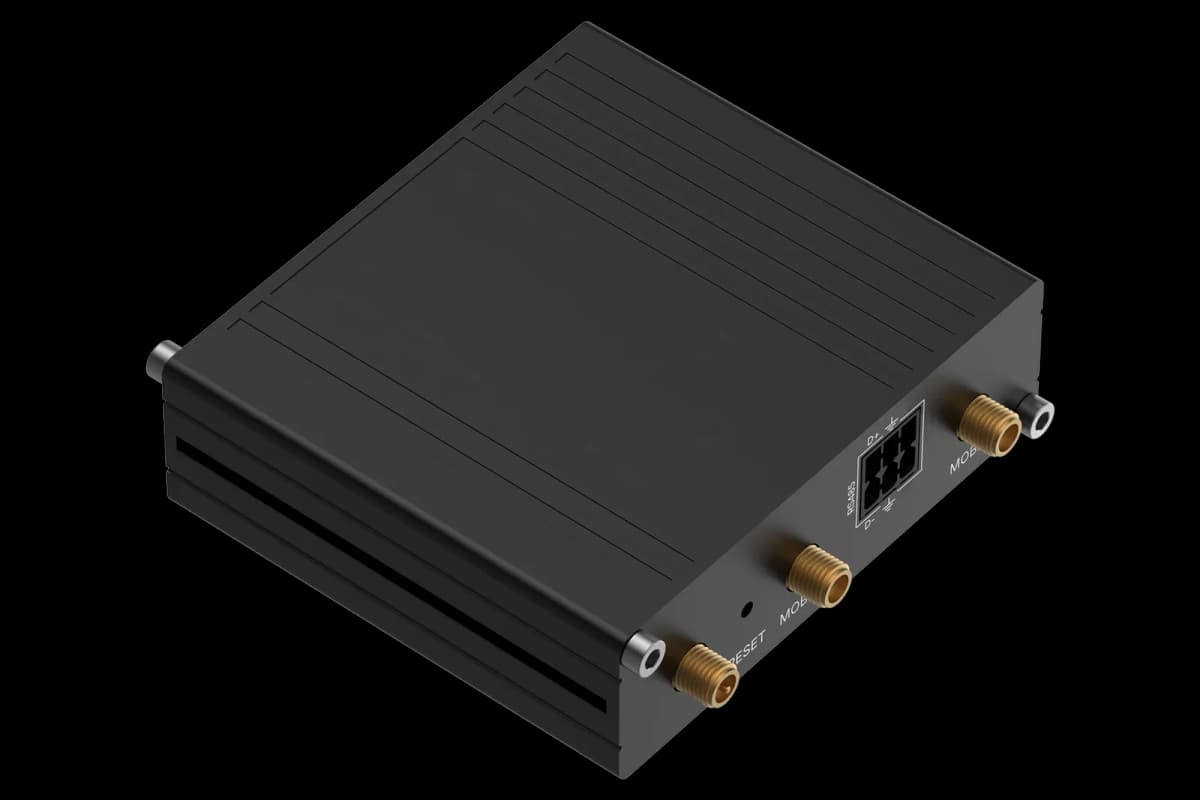
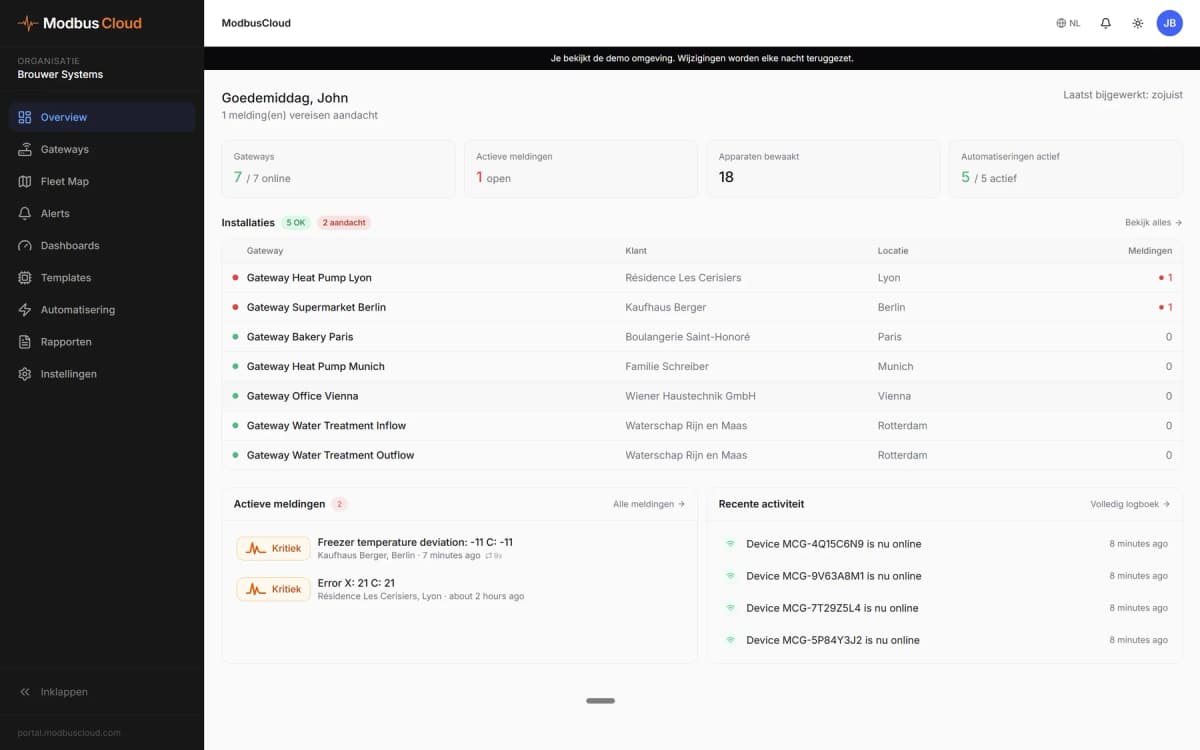
The ModbusCloud Gateway reads Modbus meters, heat pumps and chillers over RS485 (Modbus RTU) or the network (Modbus TCP). The portal keeps the history of each register for 365 days, at most one value per minute. You download the readings as CSV or JSON, per reading or per 15 minutes, hour or day, or read them through the REST API. Alarm rules per register and the Automatic monitoring, which includes a detector for deviation from a register's own norm, report anomalies in the portal, by email or by webhook. Data is stored in the EU, in Ireland. The Gateway and the portal do not control heating, ventilation or lighting and are not a BACS themselves. The hardware is described on the gateway page.