
On this page
A refrigeration monitoring system is a platform that continuously captures the operating data of refrigeration equipment, temperatures, pressures, refrigerant signals and energy, and raises alerts before a fault becomes a loss. If you service a fleet of cold rooms, supermarket cabinets or chillers, the hard part is not whether to monitor but which type of system to buy. This guide compares the four platform categories on the market, gives you a decision rule per situation, and shows where the F-gas Regulation (EU) 2024/573 turns monitoring from a nice-to-have into a business case.
Updated August 2026.
Quick verdict: which refrigeration monitoring system fits you?
There is no single best refrigeration monitoring system, only the right category for your fleet. The market splits into four types, and the honest answer depends on how many brands you service and who owns the data:
- Choose a wireless probe platform (Monnit, SmartSense) if you only need food-safety temperature logs at one or a few sites.
- Choose an enterprise energy platform (Facilio, LoweConex) if you are a large retail chain with an in-house energy team.
- Choose a controller-vendor portal (Danfoss Alsense, Carel) if your whole fleet runs on one manufacturer and you are happy inside it.
- Choose open Modbus-native monitoring such as ModbusCloud if you service a mixed-brand fleet across sites and want one live view plus F-gas evidence.
What should a refrigeration monitoring system measure?
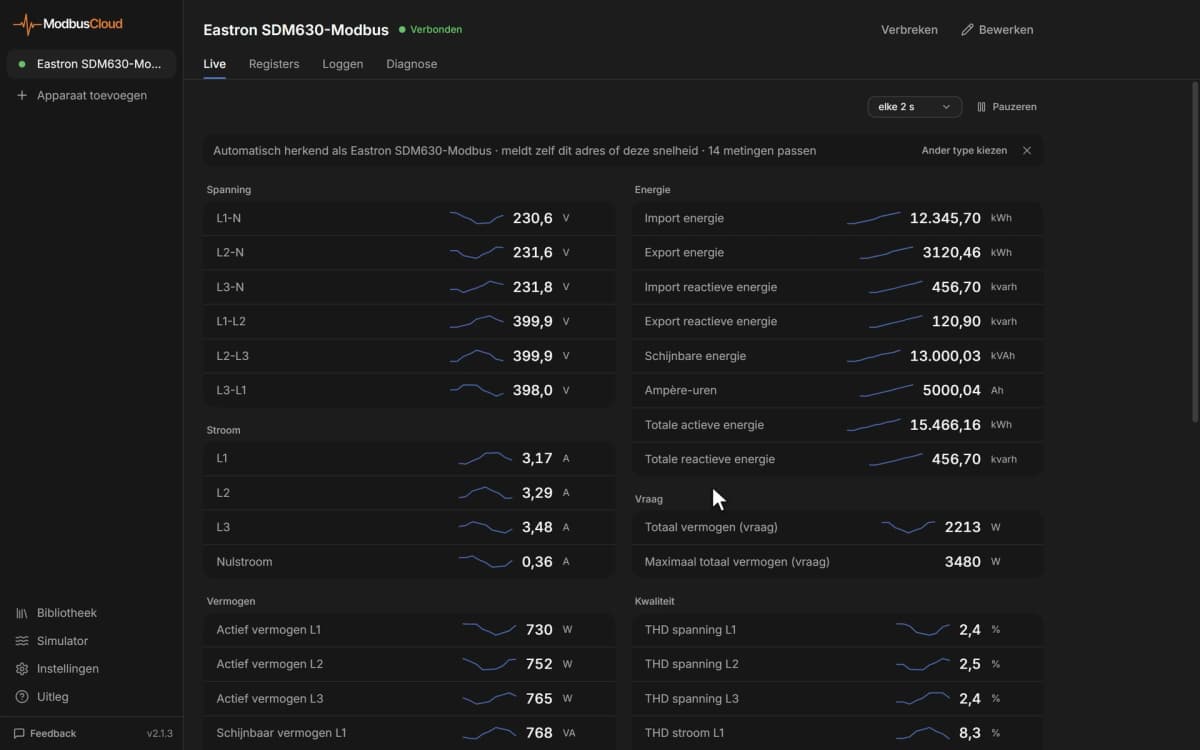
A refrigeration monitoring system earns its keep only when it reads the plant, not just the air around it. Temperature alone tells you a case is warm; it does not tell you why. The values that predict a failure sit inside the refrigeration controller: suction and discharge pressure, evaporating and condensing temperature, superheat, compressor runtime, and energy draw.
This distinction matters because refrigeration is the single largest energy user in a food store. Cooling accounts for 50% to over 80% of a supermarket's total energy consumption, according to the IHKS Fachjournal. A system that watches only cabinet air temperature is blind to the compressor that drives that bill. Compressor failures account for 47% of all refrigeration breakdowns in food retail (IOR Technical Report, 2023), and almost all of them announce themselves in pressure and superheat trends first.
The four categories of refrigeration monitoring system
The platforms competing for your budget are not interchangeable. They were built for different buyers. Sorting them into four categories makes the trade-offs visible.
Wireless temperature and food-safety probes
Wireless probe platforms are battery-sensor systems that log temperature and humidity for food-safety compliance. Monnit, SmartSense by Digi and SensoScientific are typical. You stick a sensor in each cabinet, it phones home over its own gateway, and you get HACCP logs and over-temperature alerts. Deployment is fast and needs no wiring into the plant.
The limit is depth. These probes measure the symptom, warm air, not the cause. They do not see suction pressure, superheat or compressor state, so they cannot warn you that a slow refrigerant leak is starving the evaporator days before the temperature drifts.
Enterprise energy and fault-detection platforms
Enterprise FDD platforms such as Facilio and LoweConex connect to store controllers and building systems to deliver energy analytics, fault detection and refrigerant-compliance workflows at chain scale. They are powerful and genuinely deep. The catch is that they are priced and scoped for a retail group with an energy department, not for a refrigeration contractor running a service fleet.
Controller-vendor portals
A controller-vendor portal is the manufacturer's own cloud for its own hardware, for example Danfoss Alsense or a Carel system manager. If every plant you touch runs Danfoss, that portal is excellent. The problem appears the moment your fleet is mixed. A service company that maintains Danfoss, Carel, Wurm and Dixell controllers ends up juggling four portals, four logins and four data formats, with no single fleet view.
Open Modbus-native monitoring
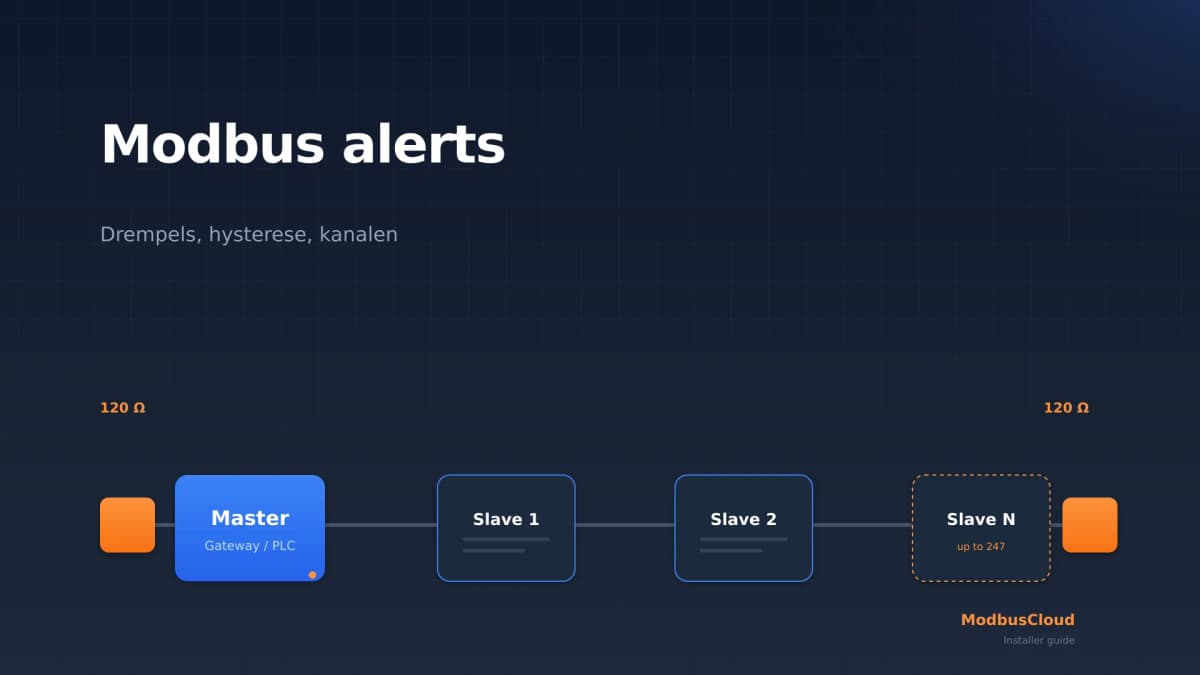
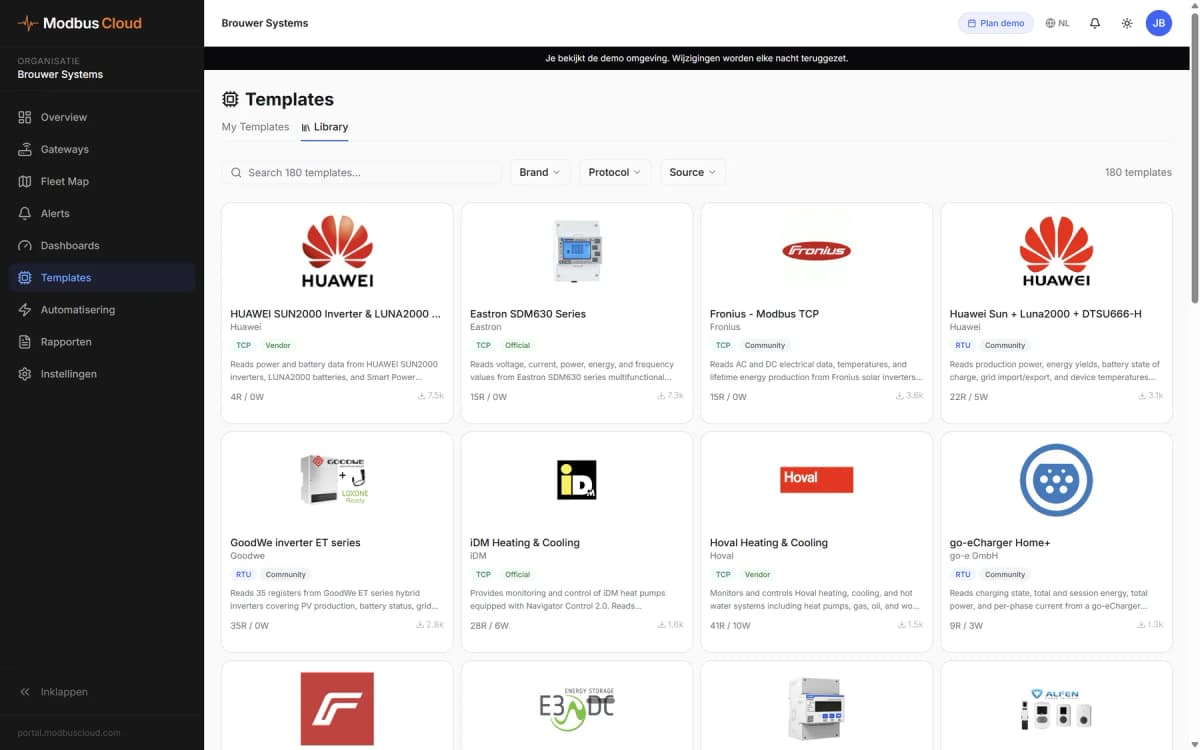
Open Modbus-native monitoring reads the controllers you already have over a shared protocol instead of through each brand's cloud. Almost every commercial refrigeration controller speaks Modbus: Carel pCO, Danfoss AK and ADAP-KOOL, Wurm, Eliwell and Dixell. A gateway on site polls them over Modbus RTU or Modbus TCP and streams the values to one dashboard. For the protocol basics, see What is Modbus.
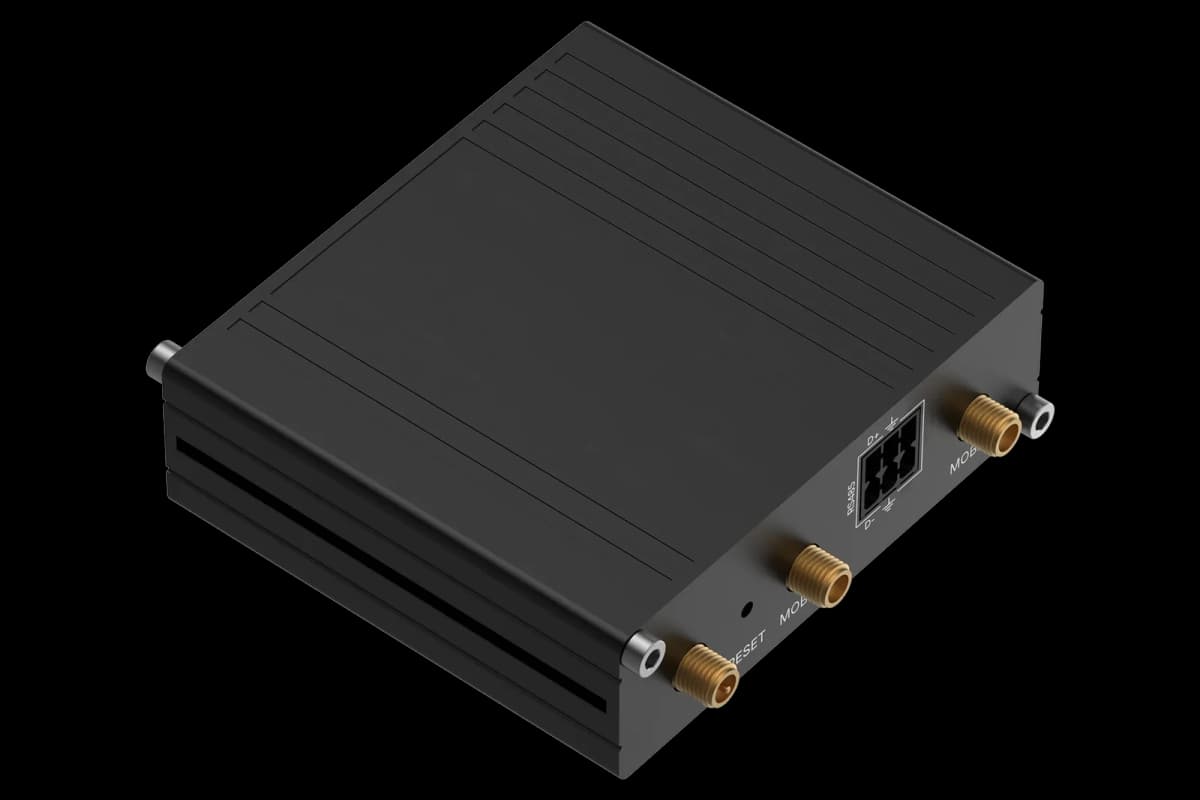
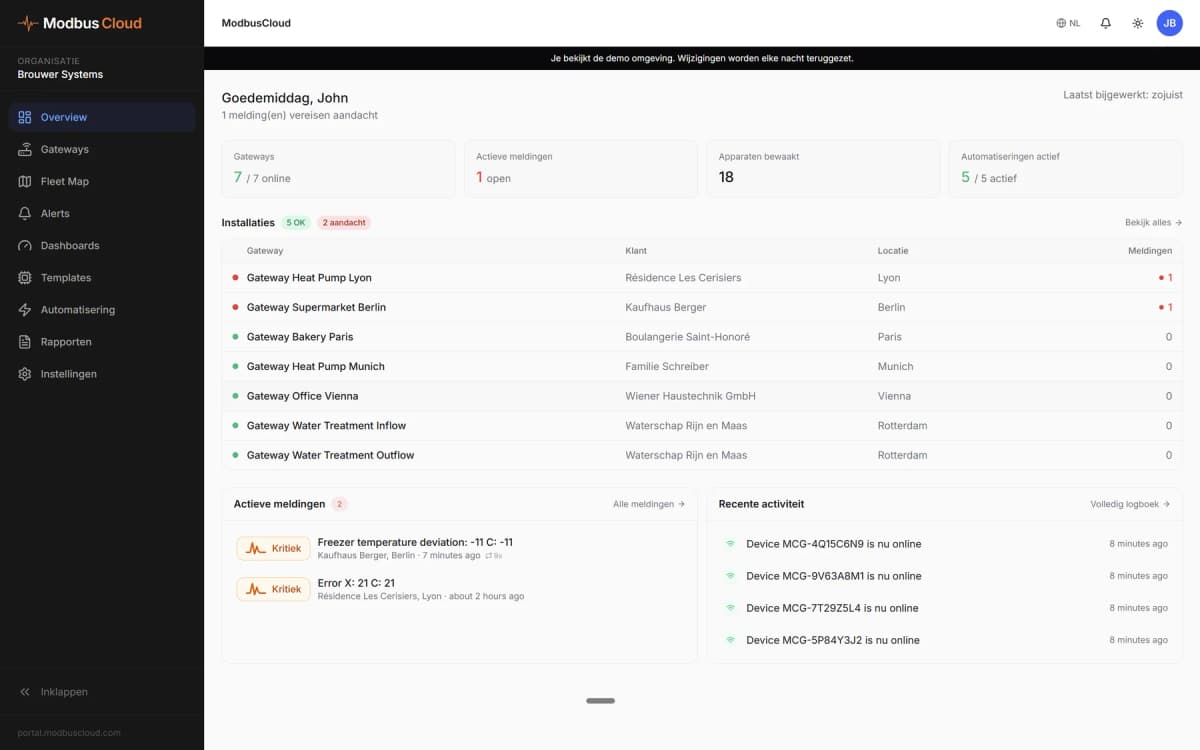
The ModbusCloud Gateway is one such device. It connects to the RS485 bus or the controller's TCP port, reads pressure, temperature, superheat, runtime and energy, and puts every site of every brand into a single fleet view. The picture below shows why that matters for a mixed fleet.
Why early detection is the real return
The business case for any refrigeration monitoring system is early detection, and this is where reading the plant pays off. A slow refrigerant loss shows up as falling suction pressure and rising superheat long before a cabinet goes warm or a compressor trips. A monitoring platform that reads those registers can flag the drift on day one instead of at the next service visit.
The numbers make the case. Supermarket direct-expansion systems lose around 10% of their refrigerant charge per year through leakage (Die Kaelte), while the Dutch average sits nearer 3% (NVKL). Refrigerant is expensive and getting more so as the F-gas quota tightens. Catching a leak two weeks earlier saves the top-up charge, a second call-out, and in a cold store the stock inside it. Remote fault detection cuts the average service-call cost by EUR 120 to EUR 180 per incident (REHVA Journal, 2024).
To turn raw registers into useful warnings you need alarm rules, not just charts. See Setting up automated Modbus alerts for how to build alarm rules that do not cry wolf on every defrost cycle.
The F-gas compliance angle most systems miss
Here is the crossover that separates a refrigeration monitoring system from a plain temperature logger: regulation. The F-gas Regulation (EU) 2024/573 entered into force on 11 March 2024 and cut the HFC quota hard. The 2025 to 2026 quota stands at 42.9 million tonnes of CO2 equivalent, a 48% reduction from the 2023 level of 82.3 million tonnes, and it roughly halves again to about 21.7 million tonnes for 2027 to 2029 (European Environment Agency). Under the earlier Regulation (EU) 517/2014, Article 11(4), new stationary equipment using refrigerants with a GWP of 2,500 or higher has been banned since 1 January 2020.
Two practical consequences follow. First, refrigerant you lose is refrigerant you may struggle to replace and will certainly pay a premium for. Second, equipment from a charge of 500 tonnes of CO2 equivalent must carry a fixed automatic leak-detection system. A monitoring platform that already reads the plant can supply the continuous evidence between the statutory tightness checks.
- Evaporating and condensing temperature per circuit
- Suction and discharge pressure as a leak indicator
- Superheat drift as an early warning of refrigerant loss
The audit export complements the statutory tightness check and the F-gas logbook, it does not replace them. The mandatory inspection under EU 2024/573 remains obligatory.
Refrigeration monitoring systems compared
The table sets the four categories against the criteria that decide a fleet purchase. Read it by your own situation, not as a scoreboard.
| Criterion | Wireless probes | Enterprise FDD | Vendor portal | Open Modbus (ModbusCloud) |
|---|---|---|---|---|
| Reads controller data (pressure, superheat) | No | Yes | Yes (own brand) | Yes |
| Multi-brand fleet in one view | Partly | Yes | No | Yes |
| Early leak detection | No | Yes | Yes (own brand) | Threshold alarms |
| Deployment effort | Low | High | Medium | Medium |
| F-gas evidence export | Limited | Yes | Varies | Yes |
| Typical buyer | Single site | Retail chain | Single-brand fleet | Service fleet |
| Pricing model | Per sensor | Enterprise | Bundled with hardware | Licence per Gateway |
Cost and total cost of ownership
Do not compare a refrigeration monitoring system on subscription price alone. Weigh it against avoided loss. A wireless probe platform looks cheap per sensor until you multiply it across every cabinet and realise it still cannot see the compressor. An enterprise platform looks complete until the onboarding quote arrives. A vendor portal looks free until your fleet turns mixed and you are paying in wasted time across four logins.
Open Modbus monitoring is priced as a licence per Gateway (at ModbusCloud EUR 149 per year or EUR 495 lifetime) plus the one-off Gateway hardware. The real comparison is against a single prevented incident. One undetected leak across a few months costs several hundred euro in refrigerant and call-outs, and a cold-store failure adds the stock inside. For a fleet, one prevented incident a year typically covers the annual monitoring cost. The Modbus gateway buyer guide walks through the hardware side of that decision.
Verdict: match the system to the fleet, not the hype
The right refrigeration monitoring system is the one that matches how you work. For a single site that only needs food-safety logs, a wireless probe platform is enough. For a retail group with an energy team, an enterprise FDD platform earns its cost. For a fleet locked to one controller brand, that vendor's portal is the path of least resistance.
For the case most installers are actually in, a mixed-brand service fleet spread across sites, open Modbus-native monitoring is the honest fit. It reads the controllers you already service, puts every brand and site in one view, catches leaks early, and hands you the F-gas evidence trail. To see it against a documentation-only tool, read the VDKF-LEC alternative comparison, and for the regulatory backdrop, the F-gas Regulation 2024/573 explained.
Frequently asked questions
What is a refrigeration monitoring system?
It is a platform that continuously captures a refrigeration plant's operating data, temperatures, pressures, refrigerant signals and energy, and raises alerts when values drift. The best systems read the controller directly, so they catch faults early rather than only logging that a case has gone warm.
What should a refrigeration monitoring system measure beyond temperature?
Suction and discharge pressure, evaporating and condensing temperature, superheat, compressor runtime and energy draw. These plant values predict failures. Air temperature alone only confirms a problem after it has already reached the product, which is too late for a cold store.
Does a refrigeration monitoring system replace the F-gas tightness check?
No. Monitoring is early warning and supporting evidence, not a legal record. The mandatory tightness check under the F-gas Regulation (EU) 2024/573 must be carried out by certified personnel and entered in the statutory logbook. Monitoring lowers the leak volume you later have to record.
Can one system monitor mixed-brand refrigeration controllers?
Yes, if it is Modbus-native. Carel, Danfoss, Wurm, Eliwell and Dixell controllers all speak Modbus RTU or TCP, so a Modbus platform reads them all in one dashboard. Vendor portals, by contrast, cover only their own brand and force one login per manufacturer.
How does monitoring cut refrigerant loss and energy cost?
It raises an alarm when suction pressure falls or superheat rises past the threshold you set, days before a leak becomes a failure. Catching it early saves the top-up charge, a second call-out and any stock loss. Remote fault detection cuts the average service-call cost by EUR 120 to 180 per incident.
Wireless sensors or Modbus for an existing plant?
Use Modbus wherever the controller supports it, which on refrigeration plant is almost everywhere. It reads the real operating data without adding hardware. Reserve wireless probes for the few points that have no bus, such as an open cold room with no controller interface.