On this page
An HVAC service contract is an agreement in which an installer maintains a customer's heating, cooling and ventilation equipment on a fixed plan, with a fixed response to faults. A remote monitoring service contract adds three clauses to that maintenance agreement. It names the reading or fault code that counts as an alarm, the people who receive that alarm, and the number of hours between the alarm and your response. Planned visits and legal checks such as EU F-gas leak checks stay in the plan. The monitoring adds visits based on measured condition and makes the response time measurable. The reader here is the installer who wants to offer such a contract to commercial customers.
What a service contract with remote monitoring covers
A service contract with remote monitoring keeps the usual parts of any maintenance agreement: scope, responsibilities, term, termination and governing law. The table lists what the monitoring adds.
| Clause | What you define |
|---|---|
| Equipment | Which HVAC system and devices are covered, with brand, model and location |
| Readings | Which registers you read: fault code, temperatures, pressure, energy |
| Alarms | Which value or code is an alarm, and which is only a notice |
| Recipients | Who receives the alarm, inside and outside office hours |
| Response time | Hours from the alarm until the engineer is on site or acts remotely |
| Visits | Planned maintenance, legal checks and visits triggered by readings |
| Data | Ownership, retention period, a GDPR processing agreement where needed |
| Exclusions | Replacement parts, damage by third parties, failure of the customer's own network |
The clause most often missing is the definition of a fault. "Fault" in the contract has to mean the same thing as "alarm" in the monitoring. If it does not, you end up arguing over what should have been reported.
Preventive, condition based and corrective maintenance
EN 13306 is the European standard for maintenance terminology. Its introduction says the terms "may be of particular importance in the formulation of maintenance contracts". Clause 7 splits maintenance into preventive maintenance, which includes predetermined and condition based maintenance, and corrective maintenance after a failure.
All three appear in a contract with remote monitoring. The annual visit and the legal checks are predetermined maintenance, booked on the calendar as the preventative maintenance plan. A condition based visit happens because a reading gives a reason, such as a temperature that drifts over several weeks. The on-call service after an alarm is corrective maintenance.
Remote monitoring mostly changes the second and third types. Without readings there is no condition based maintenance, and a corrective visit starts only when the customer calls. State in the contract which visits the fee covers and which you charge separately. A visit triggered by a reading otherwise falls between two clauses.
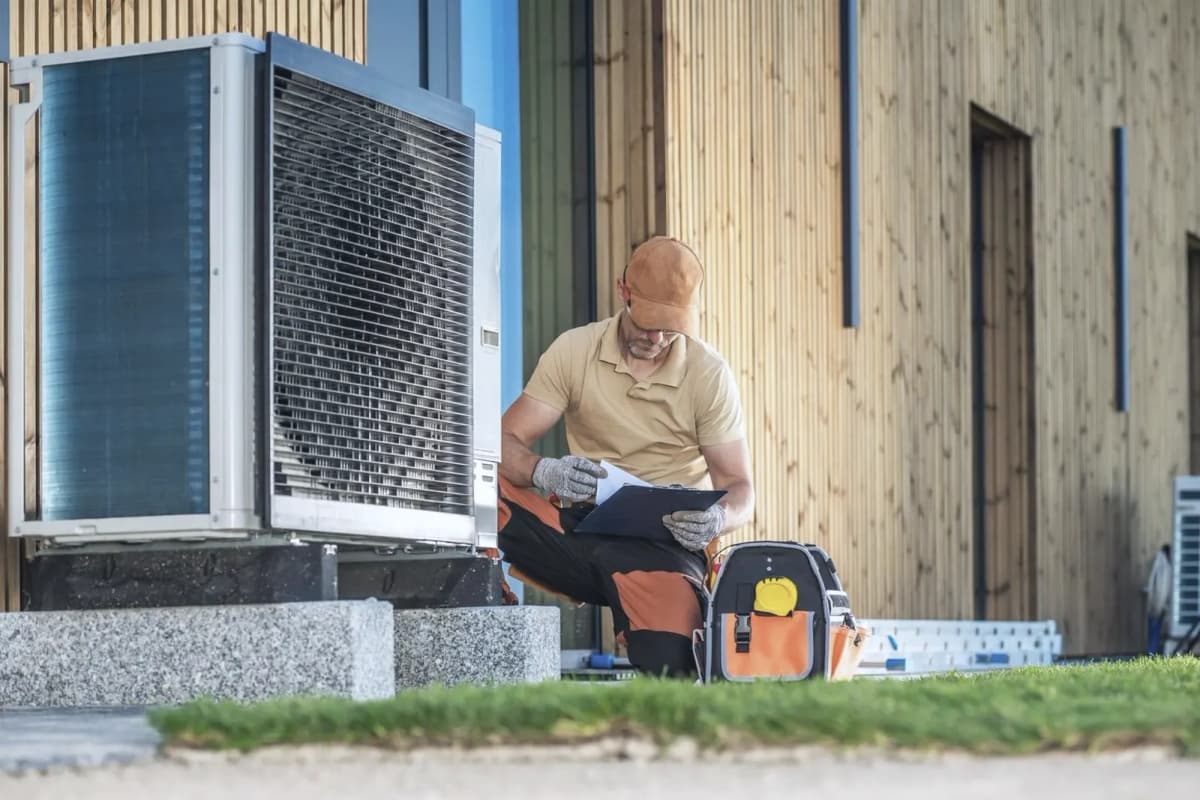
The "two tune-ups a year" that many HVAC contract pages promise has a narrower source. The ENERGY STAR maintenance checklist from the US EPA says "it's best to check the cooling system in the spring and the heating system in the fall". That is one pre-season check per system, before the heating or cooling season. A heat pump that heats and cools gets two; a boiler alone gets one. The same checklist lists the tasks for each visit: "Tighten all electrical connections", check the refrigerant level, check thermostat settings and controls, and inspect the condensate drain.
Legal checks belong in the visit plan
Remote monitoring does not replace a legal inspection. Two rules come up most often for installers in the EU.
Article 5 of Regulation (EU) 2024/573 requires leak checks on equipment containing 5 tonnes CO2 equivalent or more. Labelled hermetically sealed equipment is exempt below 10 tonnes. The interval depends on the charge, and a leakage detection system doubles it:
From 500 tonnes, Article 6 requires a leakage detection system that alerts the operator or a service company. You check that system at least every 12 months. A pressure alarm on a Modbus register is not automatically a leakage detection system under the regulation, so do not plan the longer intervals just because you monitor. Certified personnel carry out the checks (Article 10). For the full set of duties, see the F-gas Regulation 2024/573 article. Great Britain runs its own retained F-gas rules; check those separately for sites there.
In Germany, remote monitoring now changes a legal duty. Section 60a of the Building Modernisation Act (GModG) has applied since 29 July 2026. It covers heat pumps installed after 31 December 2023 in buildings with at least six dwellings or units. They get an operational check after one full heating season, at the latest two years after commissioning. That check must be repeated at least every five years "for heat pumps that are not subject to remote monitoring". The law does not define what remote monitoring has to include, so describe it in the contract.
Response time measured from the alarm
With remote monitoring, the contract response time starts at the alarm timestamp, not at the customer's phone call. Without monitoring nobody knows exactly when the fault began. With monitoring the alarm history records it to the minute.
- Alarm
fault code not equal to 0, email to the on-call engineer - Acknowledged
engineer takes the alarm, with name and time - On site
engineer at the installation - Resolved
value back to normal, alarm closed
"Priority service" is a common promise in HVAC maintenance contracts, and it only means something with a number. Set the response time in hours and per severity. A critical fault in a cold room needs a different answer from a filter notice on an air handling unit. "As soon as possible" cannot be measured. "Within 4 hours of the alarm, also at night" can. Define what counts as a response: an engineer on site, or a remote action such as resetting a setpoint.
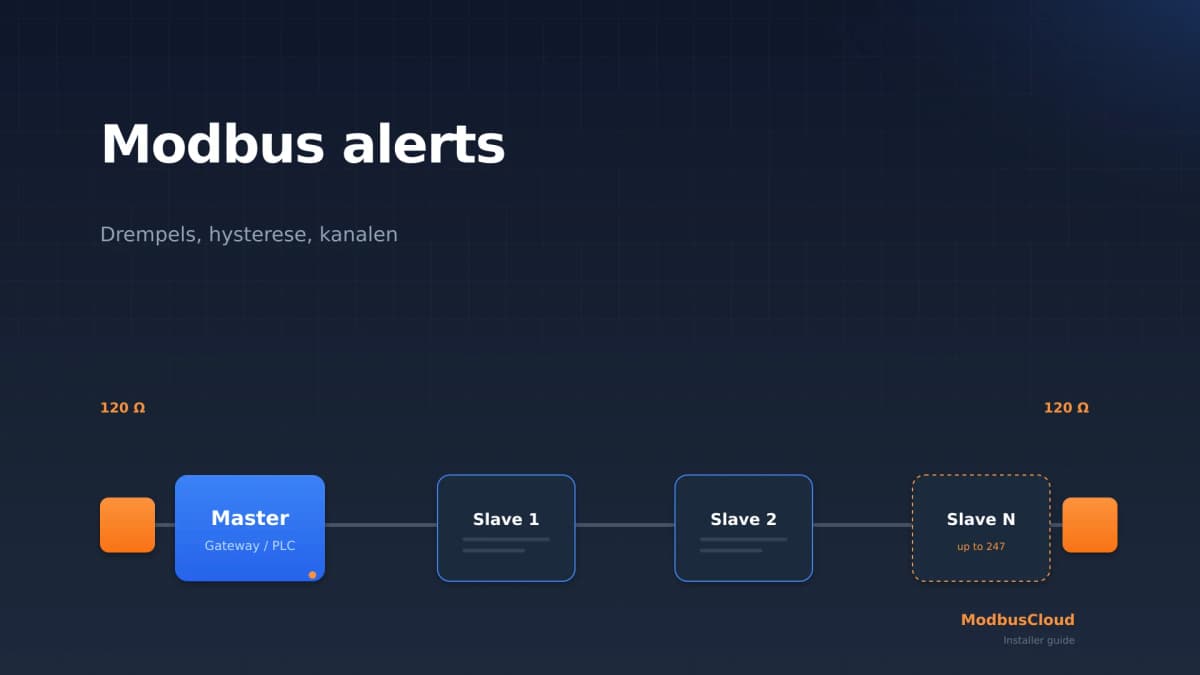
Test every alarm when the contract starts, so you know it reaches the right HVAC technician. Ask the on-call engineer to acknowledge every alarm, even when the visit is the next morning. Then a dispute has a time and a name to work from, and every follow up visit links back to an alarm. The rule setup itself is covered in Modbus alerts setup.
When the monitoring itself goes quiet
Monitoring has a failure mode of its own: when the connection drops, no alarm arrives. A router the customer replaces, a new firewall rule or a power cut in the meter cupboard is enough. Add two notices about the monitoring itself to the contract. The first fires when the gateway stops reporting to the portal. The second fires when the gateway is online but a Modbus device no longer answers.
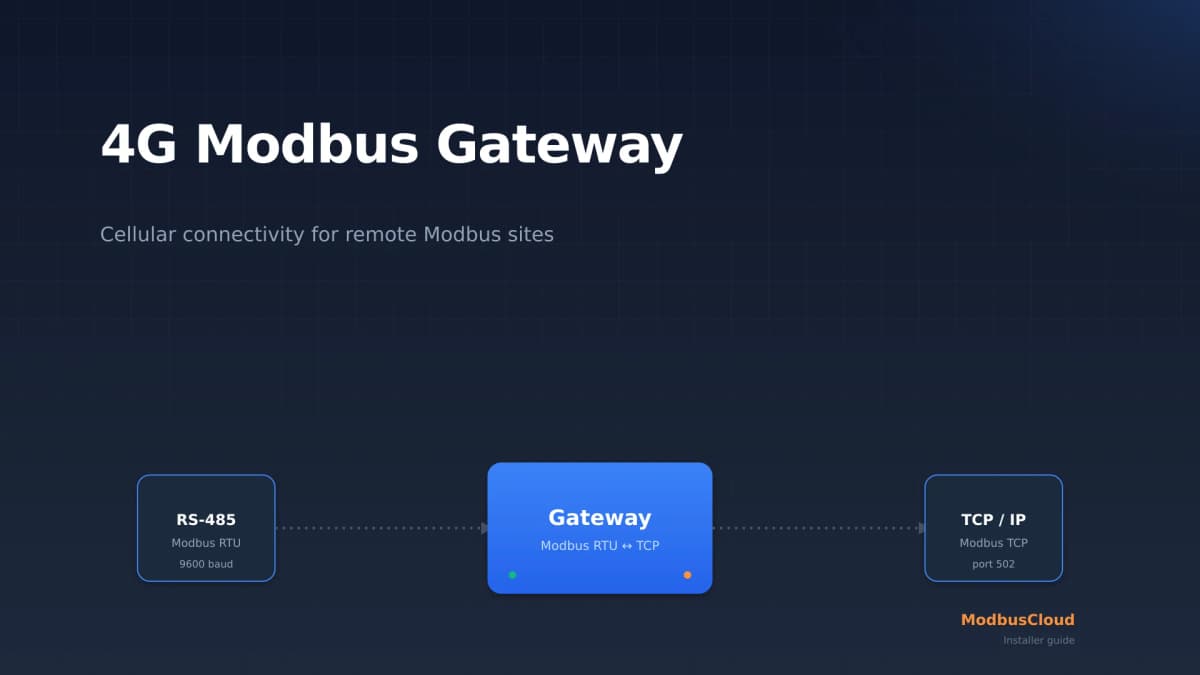
Agree how you respond to these notices and whether the response time applies to them. A 4G backup link makes the first notice rarer; see the 4G Modbus gateway article.
Watch the quiet hours. If notices are muted at night while the contract promises a night-time response, nobody hears the fault. The contract and the monitoring settings must name the same hours.
Vendor portals and one view per customer
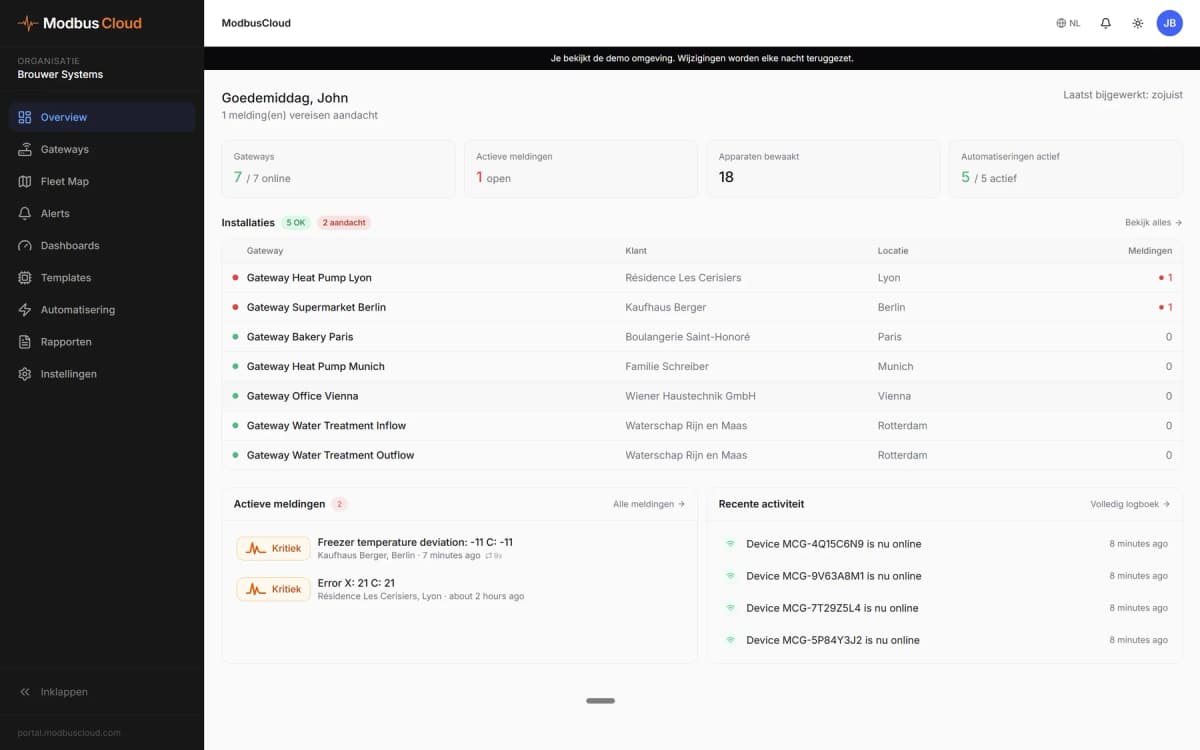
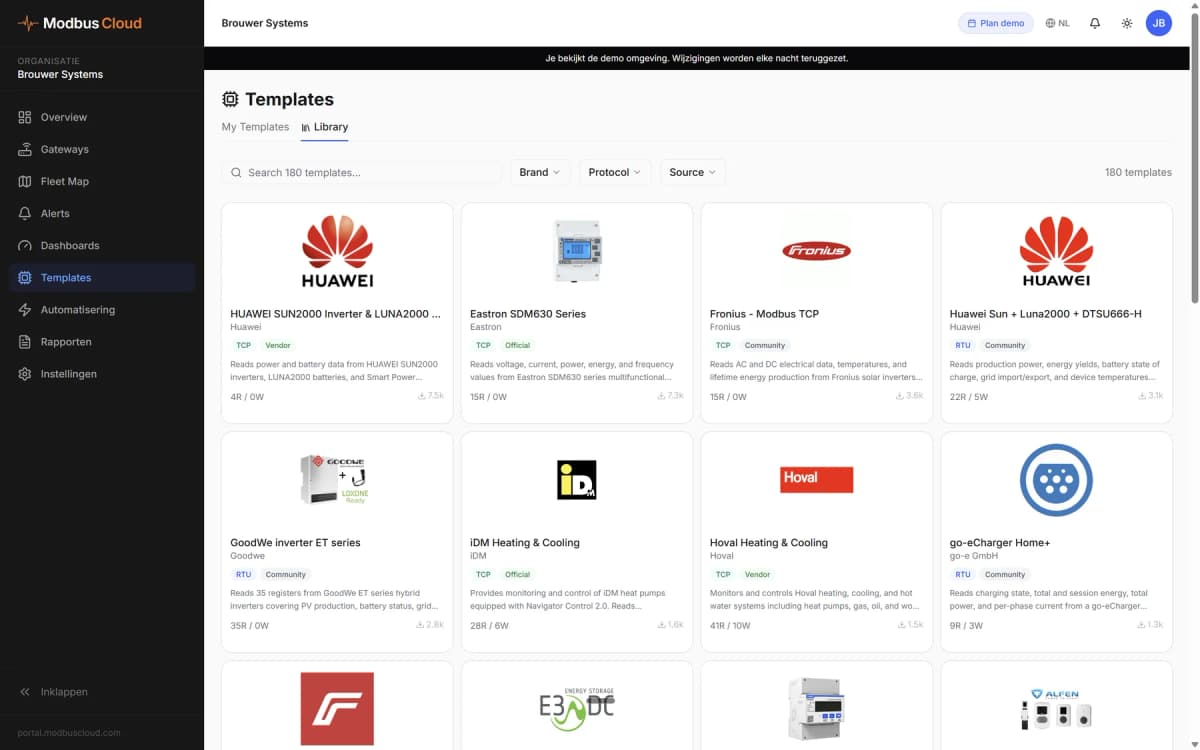
A vendor portal shows only that vendor's equipment. A customer with a heat pump, a ventilation unit, an inverter, and an energy meter from four brands means four logins and four kinds of alarm.
Over Modbus you read the registers of all those devices the same way, whatever the brand. That lets the contract carry one alarm list per customer. The registers a heat pump exposes are listed in heat pump Modbus monitoring.
Customer data and GDPR
State in the contract that the readings belong to the customer, and how long you keep them. For equipment under the F-gas Regulation, written records of each leak check are a legal duty as well. On a commercial site the data is usually technical, with no personal data in it. If you process data that can be linked to people, such as a household's energy use, Article 28 GDPR applies. Your processing on the customer's behalf then has to be "governed by a contract", which you attach as a data processing agreement.
Pricing the contract
The fee for a service contract with remote monitoring follows from four cost items, not from a market rate:
- the number of planned visits, including the leak checks at the intervals above;
- the on-call service for emergency repairs, with out-of-hours cover and the promised response time;
- the monitoring itself: hardware on site, software licence and any 4G data;
- the time to review alarms and write the report for the customer.
Price the monitoring per site, not per device. The cost sits in the gateway and the licence per location, not in the number of registers.
What should be included in a maintenance contract?
The equipment covered, the visit schedule, what the fee includes, exclusions and the response time after a fault. With remote monitoring, add which reading or fault code raises an alarm, who receives it inside and outside office hours, and what happens when the monitoring itself goes offline.
Is an HVAC service contract worth it?
It depends on what the customer loses during a fault. For a cold room or a heat pump in an apartment block, a contract with a defined response time is easier to plan than ad hoc call-outs. Remote monitoring adds proof of when the fault started and when you responded.
How often should a heat pump be serviced?
Once before each season it runs in. ENERGY STAR advises checking cooling in spring and heating in autumn, so a heat pump that does both gets two checks. EU F-gas rules add leak checks every 12, 6 or 3 months above 5 tonnes CO2 equivalent, unless the unit is hermetically sealed and below 10 tonnes.
What is condition based maintenance?
Maintenance triggered by the measured condition of the equipment rather than by the calendar. EN 13306 treats it as a form of preventive maintenance. A temperature that drifts over weeks or a pressure that keeps rising is a reason for a visit before the equipment fails.
Does remote monitoring extend the F-gas leak check interval?
No, not on its own. Regulation (EU) 2024/573 doubles the interval only with a leakage detection system. A pressure alarm on a Modbus register is not automatically one. From 500 tonnes CO2 equivalent a leakage detection system is mandatory and must itself be checked every 12 months.
How does remote monitoring work?
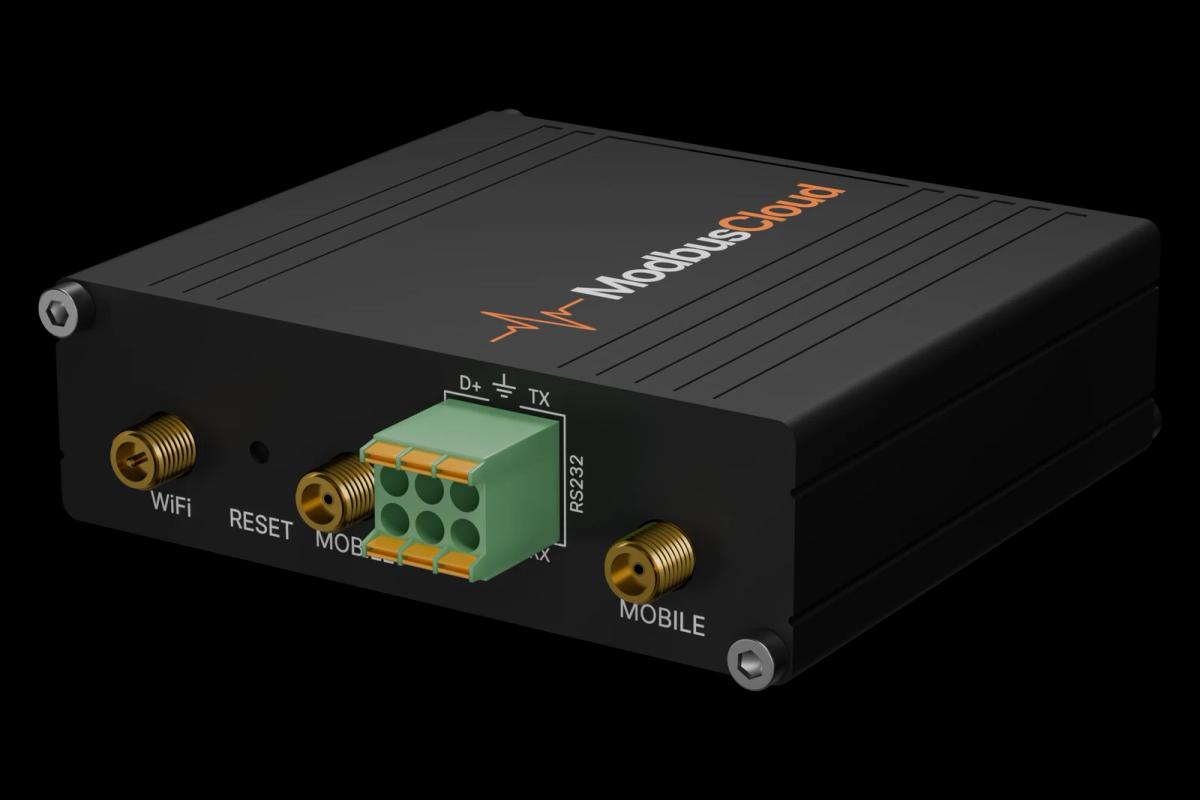
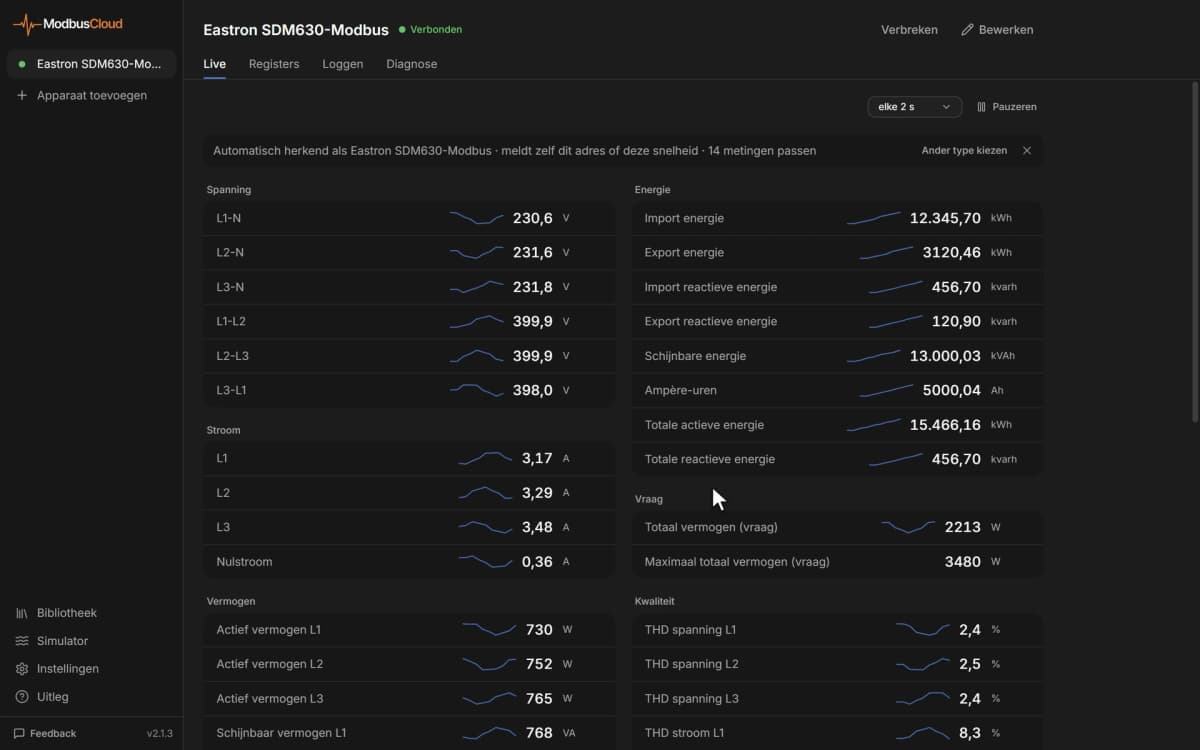
A gateway on site reads values from the equipment, for example Modbus registers, and sends them to a portal. Rules in the portal compare each value with a limit or a fault code and send an alarm when it is exceeded. The alarm history records when each alarm started and who handled it.