






Bio Instruments SMTE-3T-485M
Phyto-Sensor soil and substrate sensor for water content, EC and temperature, read over RS485.
The Bio Instruments SMTE-3T-485M is a Phyto-Sensor substrate sensor that measures volumetric water content, electrical conductivity and temperature in the root zone of soil and pot crops. This Modbus RTU template reads water content, EC, temperature and permittivity, and lets you set the soil type, temperature unit and serial settings from ModbusCloud.
- Protocol
- Modbus RTU
- Connection
- RS485, 9600 baud
- Registers
- 10, read and write
- Brand
- Bio Instruments
- Key readings
- Volumetric water content · Electrical conductivity · Temperature · Permittivity
- Available commands
- Soil type · Temperature unit · Modbus address · Baud rate · Parity · Stop bits
- Compatible models
- SMTE-3T-485M
- Last updated
Registers (10)
10 read, 6 write
| Name | Unit | Access | Address (Hidden until you enter your email) | Function (hidden) | Type (hidden) |
|---|---|---|---|---|---|
| Volumetric Water Content | % | Read | |||
| Electrical Conductivity | mS/cm | Read | |||
| Temperature | °C | Read | |||
| Permittivity | Read | ||||
| Soil Type | Read and write | ||||
| Temperature Unit | Read and write | ||||
| Slave ID | Read and write | ||||
| Baud Rate Code | Read and write | ||||
| Parity Code | Read and write | ||||
| Stop Bits Code | Read and write |
Loading registers…
Send your device list
If a device is not in the library yet, we build the template for free as soon as we have the register data.
Use cases
- Show water content, EC and substrate temperature per greenhouse section on a dashboard and follow drying and irrigation cycles.
- Get an email or webhook when water content drops below the level you set, so a missed irrigation does not go unnoticed.
- Track EC in the root zone over 365 days to follow salt build-up under different irrigation strategies.
- Set the soil type from ModbusCloud so water content uses the factory equation that fits the medium.
- Compare substrate temperature with greenhouse air temperature to see how the root zone follows heating and sun.
Installation
Insert the needles into the side of the root ball, horizontal and in a vertical row, or into the top of the substrate when you do not irrigate from above.
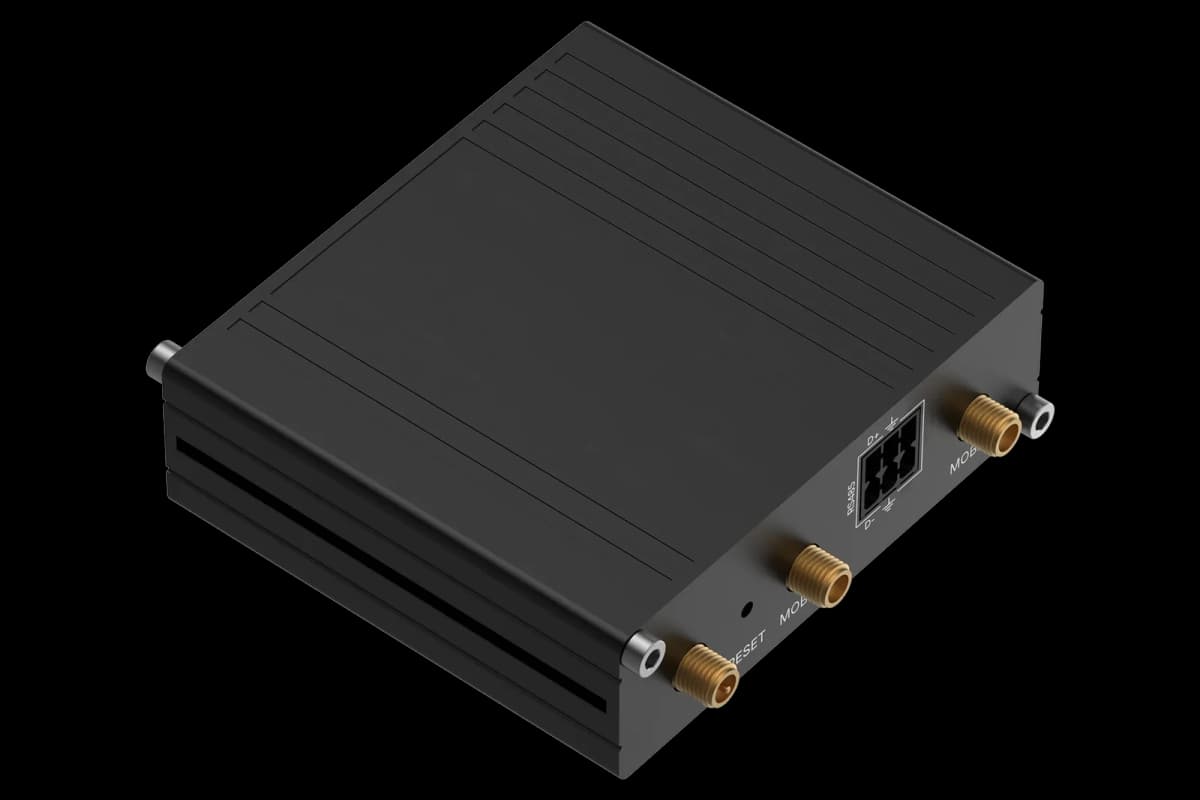
Connect black to ground, yellow to RS485 B and white to RS485 A of the ModbusCloud Gateway, and red to a 3.6 to 30 Vdc supply. Terminate both ends of the bus.
In ModbusCloud, add a Modbus device with protocol RTU, address 1, 9600 baud and 8N1, and import this template.
Set Soil Type to the medium (mineral, sandy, clay or organic) and check that Volumetric Water Content and Temperature show plausible values.
Things to watch for
The sensor does not answer on address 1.
Check 9600 baud, no parity and 1 stop bit, swap A and B if nothing comes back, and connect the black ground wire to the bus ground. If address 1 still gets no answer, try address 247, or set the address with the Bio Instruments address tool.
The EC value looks ten times too low or too high.
Check one reading against a solution or handheld meter with a known EC. The template reads EC with two decimals in dS/m, which equals mS/cm. If the reading is off by exactly a factor of ten, the EC and permittivity registers need scale 0.1 instead of 0.01.
Temperature suddenly reads much higher than expected.
Temperature Unit is probably set to 1, so the sensor reports °F. Write 0 to Temperature Unit to return to °C. Water content and EC are not affected by this setting.
Can I change the soil type or serial settings from ModbusCloud?
Yes, soil type, temperature unit, address, baud rate, parity and stop bits are writable. Writing is off per gateway by default; request it for the gateway in the portal. When you change the address or a serial setting, update the Modbus device in ModbusCloud to match and keep all devices on the bus on the same speed and parity.

Want to see how it works?