

On this page
Water treatment remote monitoring works by reading the Modbus registers of the treatment controller. A gateway reads the fault bits, measured values such as pH, free chlorine, and flow rate, and counters such as the volume of softened water. It talks to the controller over Modbus RTU on an RS-485 line or over Modbus TCP on the local network. An alarm rule per register then tells you when a fault bit is set or a limit is crossed. If the controller has no Modbus port, you read its volt-free fault contact instead.
What to read from a water treatment unit
Every treatment controller exposes three kinds of registers: faults, measured values, and counters. Which ones exist depends on the unit, and register maps differ between different manufacturers. The table shows what two common controllers expose according to their manuals.
| Unit | Values over Modbus | Example from the manual |
|---|---|---|
| Water softener (ion exchange) | faults, warnings, remaining capacity, flow rate, regenerations, days to maintenance | Grünbeck softliQ:LB, registers 40001 to 40019 |
| Chlorine and pH dosing | pH, free chlorine, ORP, temperature, error bits per measurement | ProMinent DULCOMARIN 3, registers from 2000 |
| Reverse osmosis unit | permeate conductivity in µS/cm, pressures, faults | depends on the manufacturer |
Sources: Grünbeck operating manual softliQ:LB/LBi (BA_100254950000_de_094), chapter 7.5; ProMinent, Technical Description DULCOMARIN 3 Modbus RTU, version 1.3, 18 October 2019.
A water softener works by ion exchange. The resin takes up calcium and magnesium ions and releases sodium ions. When the resin is exhausted, the unit regenerates with salt. Salt level, remaining capacity, and the regeneration count are therefore the first values you want from a softener. On a dosing controller, the water quality values come from its sensors: pH, free chlorine, and ORP.
Not every softener or dosing controller has Modbus
Modbus is found mainly on units for commercial buildings and industry. Grünbeck gives the softliQ:LB and LBi an RS-485 port for Modbus RTU and an RJ45 port for Modbus TCP. The residential models in Grünbeck's 2026 brochure list an app, Wi-Fi, and LAN, but no Modbus.
A controller with relays only can still report a fault. The softliQ:LB has a volt-free contact for faults (relay 1, terminal 17) and one for warnings (terminal 20). A Modbus input module on the bus then shows that something is wrong. It cannot show which fault it is.
Connecting the controller to the RS-485 bus
The gateway is the master on the RS-485 bus, and the treatment controller is a slave. Grünbeck states that the softliQ:LB cannot act as the host, and the DULCOMARIN 3 also works as a slave. A Modbus RTU line takes one master only. If a building management system already polls the softener, use its Modbus TCP port (port 502) for the second reader.
Factory defaults are the usual reason a first poll gets no answer. The DULCOMARIN 3 ships with slave address 10, 19200 baud, and even parity (8E1). On the softliQ:LB you set the address, the baud rate (9600, 19200, or 38400), and the parity under Menu, Service, Interfaces, RS485 #2. In the same menu, switch on "interface active" and "write access".
Grünbeck recommends twisted cable of type LiYCY 2x0.5 mm² or 3x0.5 mm². The RS-485 wiring guide and choosing an RS-485 cable cover the cable and the wiring.
A 120 Ω termination resistor belongs only at the two ends of the bus. The softliQ:LB has one built in: set switch S01 to ON when the softener is the last device, otherwise OFF. ProMinent writes for the DULCOMARIN 3 that "the bus needs an external termination", so there you fit the resistor yourself.
The number of devices on one line has a condition. Texas Instruments explains in its RS-485 Design Guide (SLLA272D, revised May 2021) that a standard driver must drive 32 unit loads. Transceivers rated at 1/8 unit load allow up to 256 devices. Failsafe biasing uses up to 20 unit loads of that budget.
Reading status registers without false alarms
An alarm on the wrong status register fires all day. On the softliQ:LB, register 40015 is the general process state, stored as a bit field. Bit 2 is the collective fault, but bit 0 is a 1 Hz heartbeat that toggles every second. A "not equal to 0" rule on 40015 treats that heartbeat as a fault.
Register 40018 holds faults only, one bit per fault. Grünbeck lists 16 of them, among them a power failure longer than 5 minutes, a drive fault on the regeneration valve, salt used up, and nominal flow exceeded. Register 40019 holds the warnings, such as maintenance due, salt low, water pressure too low, and a leak at the installation site. Two "not equal to 0" rules on 40018 and 40019 cover every message the softener sends.
The DULCOMARIN 3 keeps a 32-bit error register per pool. Bit 0 flags an invalid pH value, bit 1 the pH minimum, and bit 2 the pH maximum. Bits 9 to 11 do the same for free chlorine. More on register types and bit fields is in Modbus register maps explained.
Converting counters and measured values
A Modbus register holds an integer, and the manual gives the conversion. On the softliQ:LB you read with function code 03 from start address 0, which is register 40001. The current flow rate in 40008 is stored in m³/h/100, so a value of 250 means 2.5 m³/h.
The softened water volume is split over 40004 and 40005. The manual labels it uint32, yet describes the high register as digits 8 to 5 and the low register as digits 4 to 1. You calculate high × 10 000 + low. Read the pair as a binary 32-bit integer and the total comes out far too high.
The DULCOMARIN 3 sends measured values as INT16 without a decimal point. The pH of pool 1 sits in register 2000 with a range of 0.00 to 14.00, and free chlorine in 2006 with 0.00 to 10.00 ppm. The document does not state the divisor in words. Compare the first reading with the controller display before you set an alarm limit on it.
SCADA and remote monitoring do different jobs
SCADA stands for supervisory control and data acquisition. At a water treatment plant, SCADA systems run the process from a control room. Operators see the plant in HMI software and change set points through PLCs. A service company that looks after a softener or an RO unit at a customer's site needs less than that. It reads the controller's registers and gets an alarm when a bit or a limit trips.
Keep the controller off the open internet
Remote access to an HMI that is reachable from the internet is a risk to the treatment process. The US EPA and CISA reported in a fact sheet dated 13 December 2024 that hacktivists manipulated HMIs at water and wastewater systems in 2024. Pumps and blower equipment ran outside their normal parameters. They "maxed out set points, altered other settings, turned off alarm mechanisms, and changed administrative passwords". The first mitigation in the fact sheet is to disconnect HMIs from the public internet where possible.
Reading values needs no open port on the controller. A gateway that opens the connection outward sends the data without port forwarding. The controller and its HMI stay on the local network.
Reading a treatment unit with the ModbusCloud Gateway
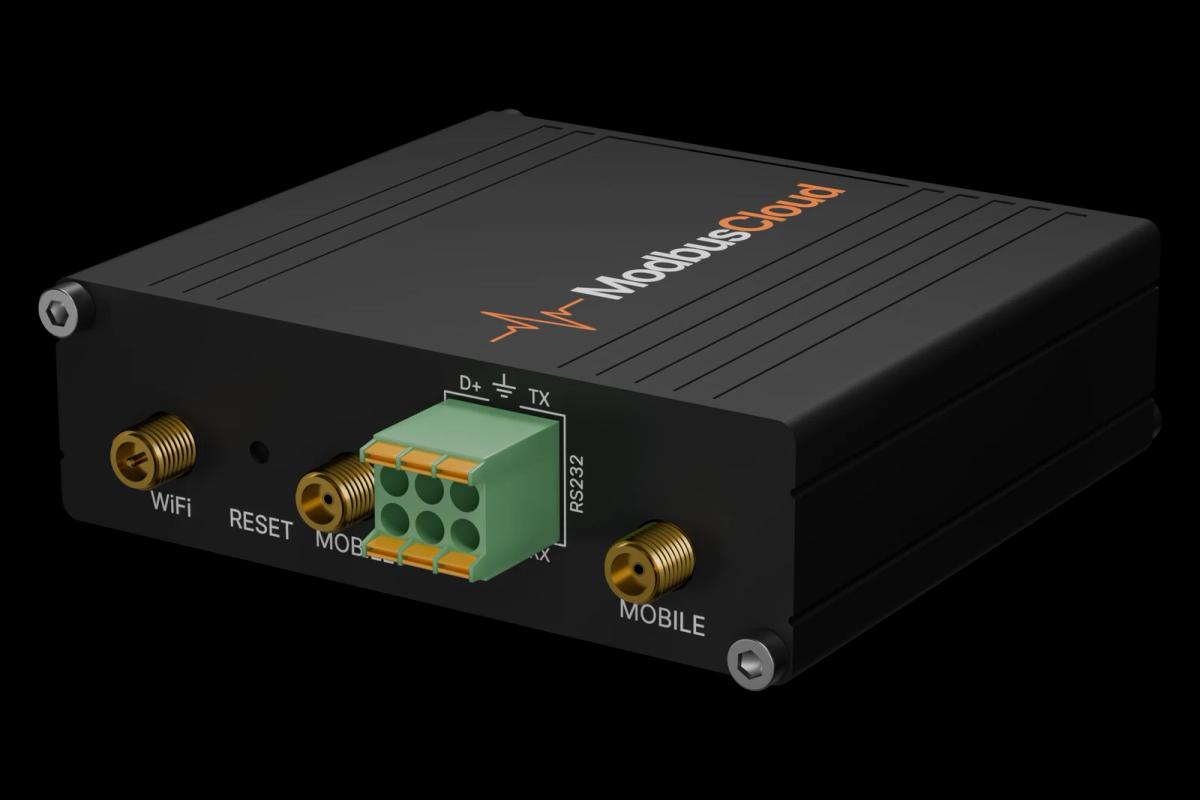
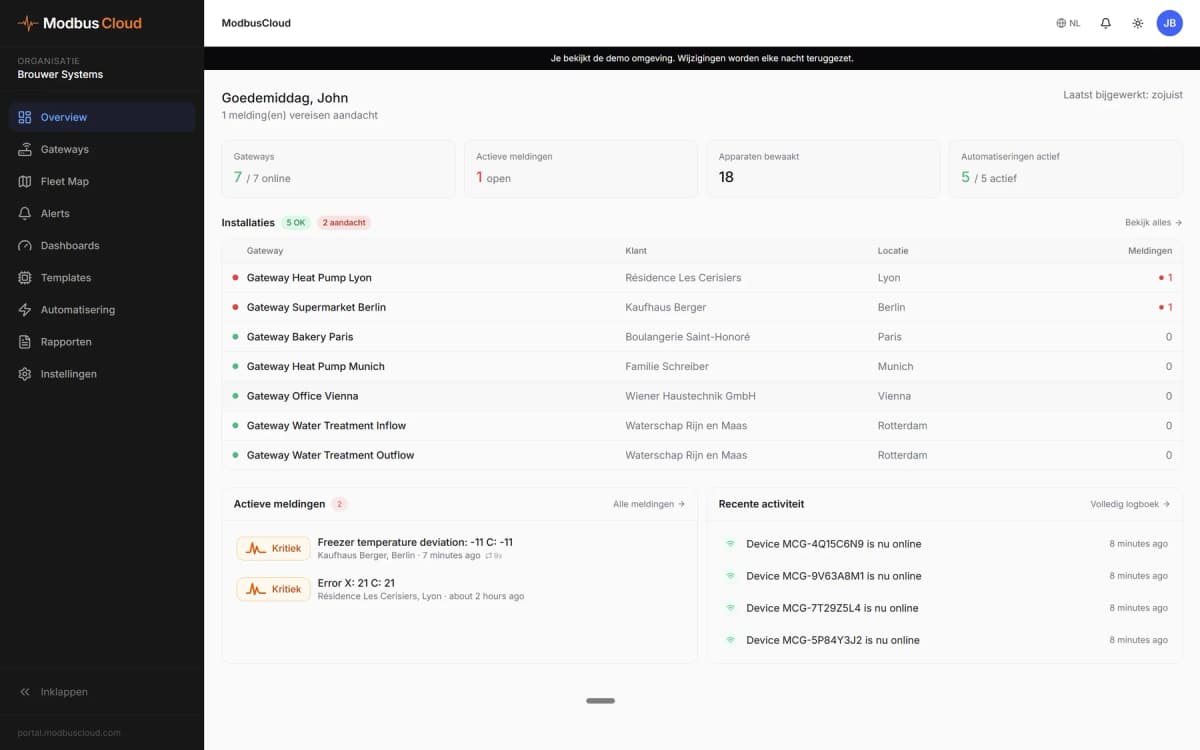
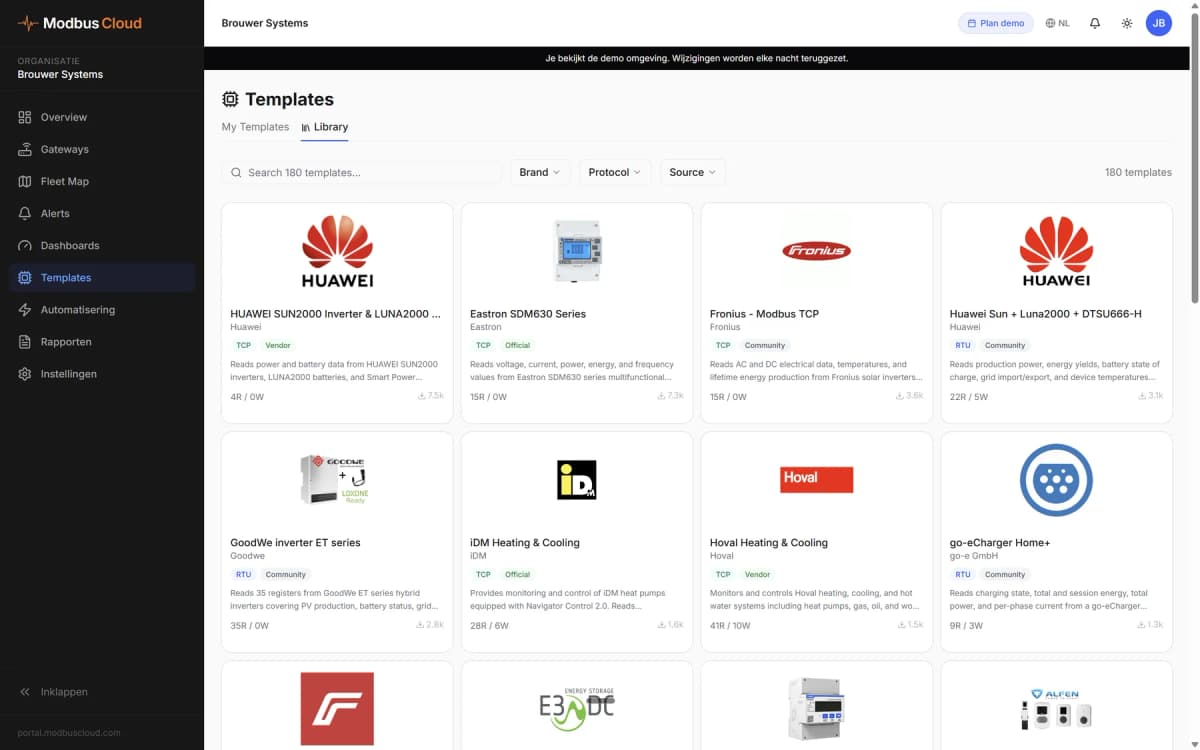
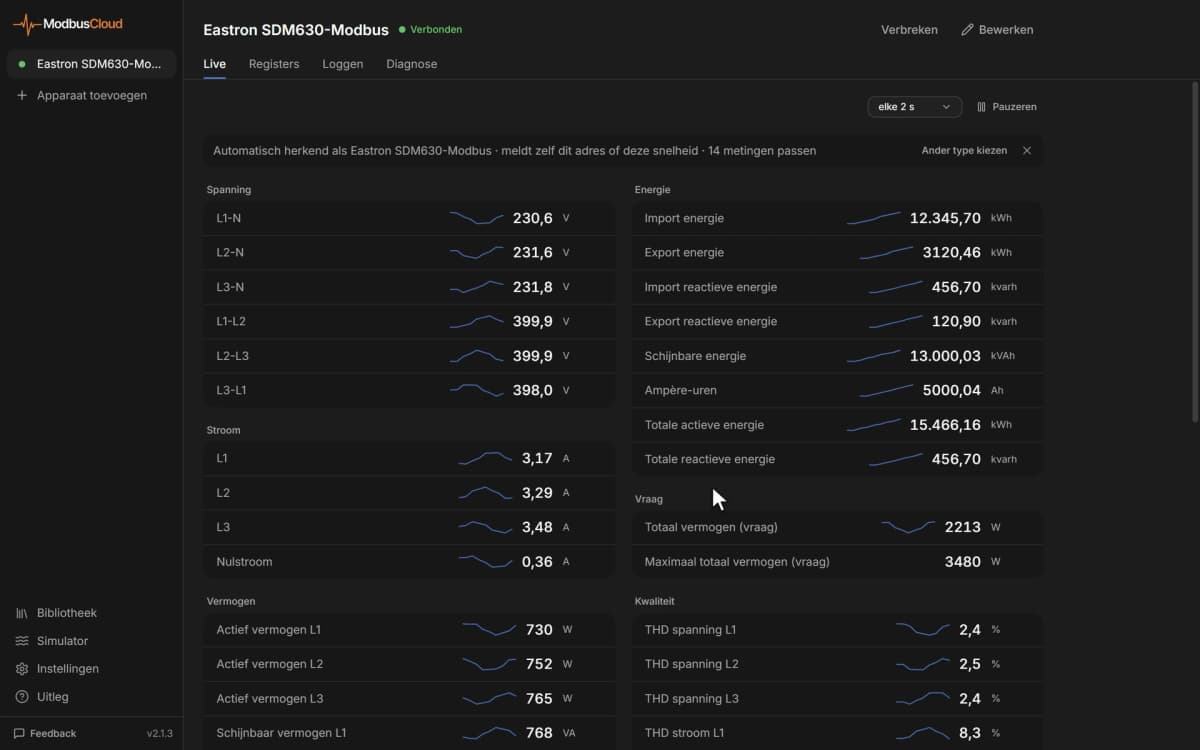
The ModbusCloud Gateway reads Modbus RTU over RS-485 and Modbus TCP over its LAN or WAN port. It sends the values over MQTT with TLS on port 8883 and sets up that connection itself, so the site needs no port forwarding or fixed IP address. Writing registers is off by default for each gateway. In the portal you set an alarm rule per register, such as "not equal to 0" on 40018. Another rule reports when a register has sent no data for a number of minutes. Alerts go out by email, in the portal, and by webhook, and the offline alarm reports a lost Gateway after 120 seconds by default. History is kept for 365 days, and you can download the readings as CSV. Building thresholds and alerts is covered in setting up Modbus alerts.
Frequently asked questions
What is SCADA in water treatment?
SCADA is the control system that runs a water treatment plant from a control room. It collects data through PLCs and RTUs, shows it on an HMI, and lets operators change set points. Monitoring a single softener or RO unit at a customer's site only needs the registers read and an alarm per register.
Is RS485 and Modbus the same?
No. RS-485 is the electrical layer: a twisted pair with a 120 Ω termination resistor at each end. Modbus RTU is the protocol that runs over it and defines how the master asks for registers. Modbus TCP carries the same register model over an Ethernet network on port 502.
What are the two types of Modbus?
Modbus RTU and Modbus TCP. Modbus RTU runs over a serial line, usually RS-485, with one master and up to 247 slave addresses. Modbus TCP runs over Ethernet on port 502. The Grünbeck softliQ:LB offers both; the DULCOMARIN 3 technical description covers Modbus RTU.
Why does my DULCOMARIN 3 not answer?
Usually because of the factory defaults. The DULCOMARIN 3 ships with slave address 10, 19200 baud, and even parity (8E1). Set the gateway to the same values. Then check that the far end of the bus has an external termination resistor, because the controller has none built in.
Does every water softener have a Modbus port?
No. Modbus is found mainly on commercial and industrial units. Grünbeck gives the softliQ:LB and LBi Modbus RTU and Modbus TCP, while its residential models list an app, Wi-Fi, and LAN only. Without Modbus, you read the volt-free fault contact through a Modbus input module.
How many devices can share one RS-485 line?
32 unit loads with standard transceivers, according to the Texas Instruments RS-485 Design Guide. Transceivers rated at 1/8 unit load allow up to 256 devices, and failsafe biasing takes up to 20 unit loads. Modbus RTU addressing allows slave addresses 1 to 247.