








Microcare SDM630
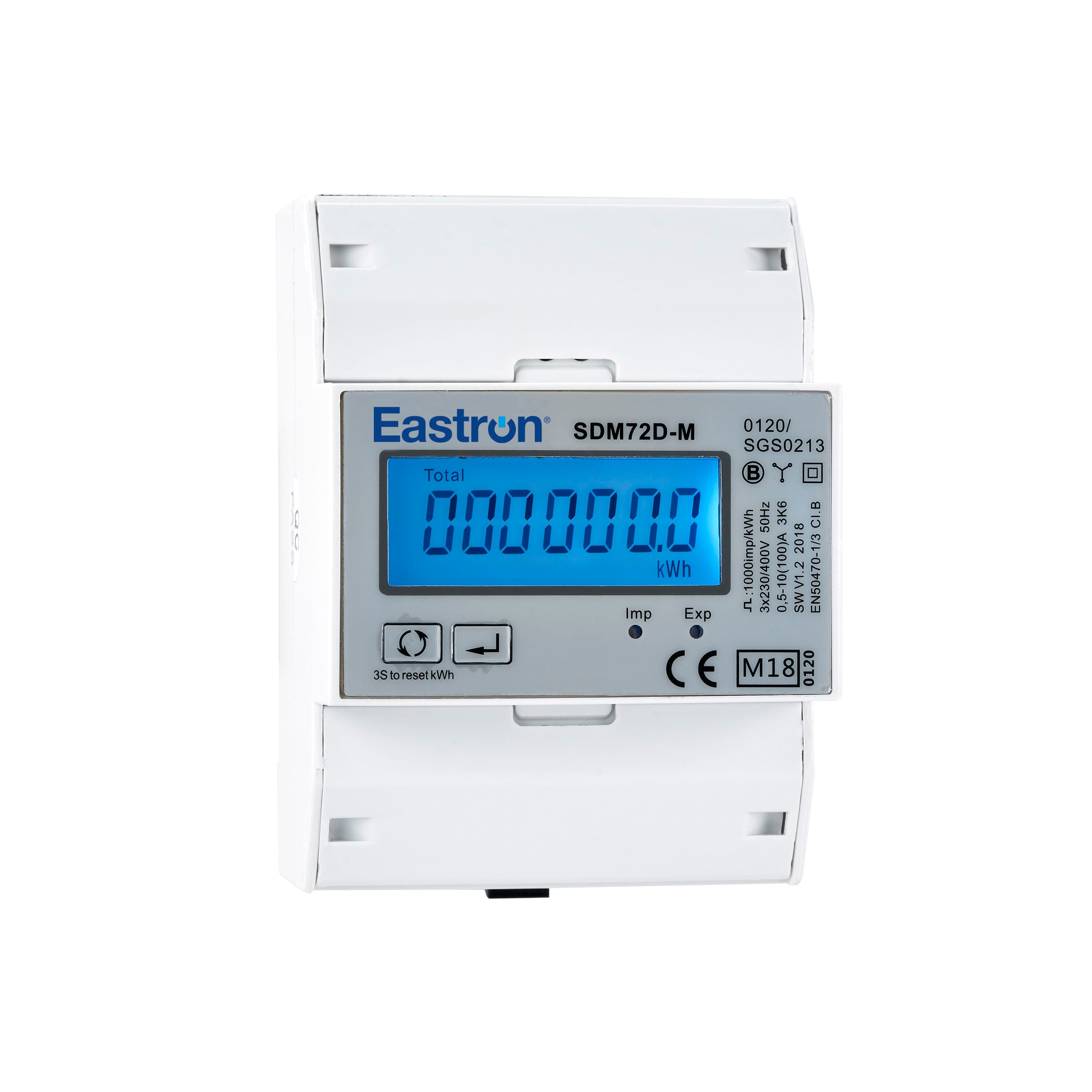
The Microcare SDM630 is a three-phase multifunction energy meter mounted on a DIN rail, used for sub-billing, grid monitoring, and PV system measurement. This Modbus RTU template reads per-phase reactive power on L1, L2, and L3, plus total system current, total active power, total reactive power, grid frequency, and cumulative reactive energy in both import and export directions. Connecting it through the ModbusCloud Gateway gives installers a continuous record of power quality and energy flows without manual meter reads.
- Protocol
- Modbus RTU
- Connection
- RS485
- Registers
- 9, read only
- Brand
- Microcare
- Last updated
Registers (9)
9 read, 0 write
| Name | Unit | Access | Address (Hidden until you enter your email) | Function (hidden) | Type (hidden) |
|---|---|---|---|---|---|
| reactive_power_l1 | W | Read | |||
| reactive_power_l2 | W | Read | |||
| reactive_power_l3 | W | Read | |||
| current | A | Read | |||
| active_power | W | Read | |||
| reactive_power | var | Read | |||
| frequency | Hz | Read | |||
| reactive_production_energy | Wh | Read | |||
| reactive_consumption_energy | Wh | Read |
Loading registers…
Send your device list
If a device is not in the library yet, we build the template for free as soon as we have the register data.
Use cases
- Monitor total active power in real time to detect unexpected load increases across three-phase circuits.
- Track cumulative reactive consumption and production energy to verify power factor correction equipment performance.
- Alert on grid frequency deviations to identify supply quality issues before they affect sensitive equipment.
- Compare per-phase reactive power on L1, L2, and L3 to spot phase imbalance in commercial installations.
- Report total system current over time to verify that installed cable ratings are not being exceeded.
Installation
Confirm that your SDM630 unit is the Modbus version: check the front label for 'Modbus' or 'RS485', then set the Modbus address (default 1) and baud rate (default 9600) using the front-panel buttons under the communication settings menu.
Wire the RS485 A and B terminals of the SDM630 to the corresponding A and B terminals on the ModbusCloud Gateway using a shielded twisted-pair cable; add a 120-ohm termination resistor at each end of the bus if the meter is the last device on the line.
In the ModbusCloud portal, add a new gateway, import the Microcare SDM630 template, and assign the Modbus unit ID that matches the address configured on the meter front panel.
Spot-check the connection by opening the live register view in the portal and confirming that the frequency register reads approximately 50 Hz and total active power reflects the known load on the circuit.
Things to watch for
All register values read zero or NaN. What is wrong?
The SDM630 returns all values as 32-bit IEEE 754 floats spread across two consecutive 16-bit registers. Requests must start on an even address and request an even number of registers. If your gateway polls a single 16-bit register instead of a pair, every reading will be corrupt. Confirm the template uses FC4 with register-pair requests.
The gateway connects but phase reactive-power values look wrong.
The SDM630 sends the most significant register first by default, but this word order can be auto-reversed by the firmware. Verify that your ModbusCloud Gateway and the meter agree on big-endian (high word first) byte order. A byte-swapped float32 will produce a nonsensical large or near-zero value rather than an obvious error.
No Modbus response at all, even though wiring looks correct.
Check that baud rate, parity, and stop-bit settings on the SDM630 front panel match those configured in the ModbusCloud Gateway. The meter supports 2400, 4800, 9600, 19200, and 38400 baud; the factory default is 9600 8N1. A single mismatch will prevent any response. Also verify the RS485 A/B polarity is not reversed.
Readings are intermittent on a bus with several meters.
The SDM630 protocol documentation states that each request must be limited to 40 parameters or fewer. If the gateway sends one large block read covering too many registers in a single request, the meter returns a Modbus exception and drops the poll. Split polls into smaller requests, and ensure each meter on the bus has a unique address between 1 and 247.




Want to see how it works?
