


Diehl Metering SHARKY 775
Ultrasonic heat and cooling meter for energy, power, flow, volume and flow and return temperatures.
The Diehl Metering SHARKY 775 is an ultrasonic compact heat and cooling meter that measures thermal energy, power, flow and flow and return temperature, for example for greenhouse heat from CHP, geothermal and district heating. This Modbus RTU template reads energy, power, flow, temperatures, volume, tariff registers and the error code, and lets you set the module address, serial settings and update period from ModbusCloud.
- Protocol
- Modbus RTU
- Connection
- RS485, 9600 baud
- Registers
- 108, read and write
- Brand
- Diehl Metering
- Key readings
- Energy · Power · Flow rate · Volume · Flow temperature · Return temperature · Temperature difference · Error code
- Available commands
- Modbus slave ID · Baud rate, parity and stop bits · Meter data update period · Periodic log 0
- Compatible models
- SHARKY 775 · SCYLAR INT 8 · Diehl Metering Modbus RTU communication module for SHARKY 775 and SCYLAR INT 8
- Last updated
Registers (108)
108 read, 7 write
| Name | Unit | Access | Address (Hidden until you enter your email) | Function (hidden) | Type (hidden) |
|---|---|---|---|---|---|
| Energy | Read | ||||
| Energy Coefficient | Read | ||||
| Energy Unit | Read | ||||
| Energy Unit Code | Read | ||||
| Energy Float | Read | ||||
| Volume | Read | ||||
| Volume Coefficient | Read | ||||
| Volume Unit | Read | ||||
| Volume Unit Code | Read | ||||
| Volume Float | Read | ||||
| Power | Read | ||||
| Power Coefficient | Read | ||||
| Power Unit | Read | ||||
| Power Unit Code | Read | ||||
| Power Float | Read | ||||
| Flow | Read | ||||
| Flow Coefficient | Read | ||||
| Flow Unit | Read | ||||
| Flow Unit Code | Read | ||||
| Flow Float | Read | ||||
| Flow Temperature | °C | Read | |||
| Flow Temperature Unit | Read | ||||
| Flow Temperature Unit Code | Read | ||||
| Flow Temperature Float | °C | Read | |||
| Return Temperature | °C | Read | |||
| Return Temperature Unit | Read | ||||
| Return Temperature Unit Code | Read | ||||
| Return Temperature Float | °C | Read | |||
| Temperature Difference | K | Read | |||
| Temperature Difference Unit | Read | ||||
| Temperature Difference Unit Code | Read | ||||
| Temperature Difference Float | K | Read | |||
| Error Code | Read | ||||
| Tariff 1 Energy | Read | ||||
| Tariff 1 Energy Coefficient | Read | ||||
| Tariff 1 Energy Unit | Read | ||||
| Tariff 1 Energy Unit Code | Read | ||||
| Tariff 1 Energy Float | Read | ||||
| Tariff 1 Volume | Read | ||||
| Tariff 1 Volume Coefficient | Read | ||||
| Tariff 1 Volume Unit | Read | ||||
| Tariff 1 Volume Unit Code | Read | ||||
| Tariff 1 Volume Float | Read | ||||
| Tariff 2 Energy | Read | ||||
| Tariff 2 Energy Coefficient | Read | ||||
| Tariff 2 Energy Unit | Read | ||||
| Tariff 2 Energy Unit Code | Read | ||||
| Tariff 2 Energy Float | Read | ||||
| Tariff 2 Volume | Read | ||||
| Tariff 2 Volume Coefficient | Read | ||||
| Tariff 2 Volume Unit | Read | ||||
| Tariff 2 Volume Unit Code | Read | ||||
| Tariff 2 Volume Float | Read | ||||
| Tariff 3 Energy | Read | ||||
| Tariff 3 Energy Coefficient | Read | ||||
| Tariff 3 Energy Unit | Read | ||||
| Tariff 3 Energy Unit Code | Read | ||||
| Tariff 3 Energy Float | Read | ||||
| Tariff 3 Volume | Read | ||||
| Tariff 3 Volume Coefficient | Read | ||||
| Tariff 3 Volume Unit | Read | ||||
| Tariff 3 Volume Unit Code | Read | ||||
| Tariff 3 Volume Float | Read | ||||
| Tariff 4 Energy | Read | ||||
| Tariff 4 Energy Coefficient | Read | ||||
| Tariff 4 Energy Unit | Read | ||||
| Tariff 4 Energy Unit Code | Read | ||||
| Tariff 4 Energy Float | Read | ||||
| Tariff 4 Volume | Read | ||||
| Tariff 4 Volume Coefficient | Read | ||||
| Tariff 4 Volume Unit | Read | ||||
| Tariff 4 Volume Unit Code | Read | ||||
| Tariff 4 Volume Float | Read | ||||
| Pulse Input 1 Volume | Read | ||||
| Pulse Input 1 Volume Coefficient | Read | ||||
| Pulse Input 1 Volume Unit | Read | ||||
| Pulse Input 1 Volume Unit Code | Read | ||||
| Pulse Input 1 Volume Float | Read | ||||
| Pulse Input 2 Volume | Read | ||||
| Pulse Input 2 Volume Coefficient | Read | ||||
| Pulse Input 2 Volume Unit | Read | ||||
| Pulse Input 2 Volume Unit Code | Read | ||||
| Pulse Input 2 Volume Float | Read | ||||
| Periodic Log 0 Day | Read | ||||
| Periodic Log 0 Month | Read | ||||
| Periodic Log 0 Year | Read | ||||
| Periodic Log 0 Energy | Read | ||||
| Periodic Log 0 Energy Coefficient | Read | ||||
| Periodic Log 0 Energy Unit | Read | ||||
| Periodic Log 0 Energy Unit Code | Read | ||||
| Periodic Log 0 Energy Float | Read | ||||
| Periodic Log 0 Volume | Read | ||||
| Periodic Log 0 Volume Coefficient | Read | ||||
| Periodic Log 0 Volume Unit | Read | ||||
| Periodic Log 0 Volume Unit Code | Read | ||||
| Periodic Log 0 Volume Float | Read | ||||
| Meter ID Number | Read | ||||
| Meter ID ASCII | Read | ||||
| Slave ID Address | Read and write | ||||
| Meter Data Update Period | s | Read and write | |||
| Baud Rate | Read and write | ||||
| Data Bits | Read and write | ||||
| Parity | Read and write | ||||
| Stop Bits | Read and write | ||||
| Periodic Log 0 Enable | Read and write | ||||
| Module Serial Number | Read | ||||
| Module Model Number | Read | ||||
| Module Firmware Version | Read |
Loading registers…
Send your device list
If a device is not in the library yet, we build the template for free as soon as we have the register data.
Use cases
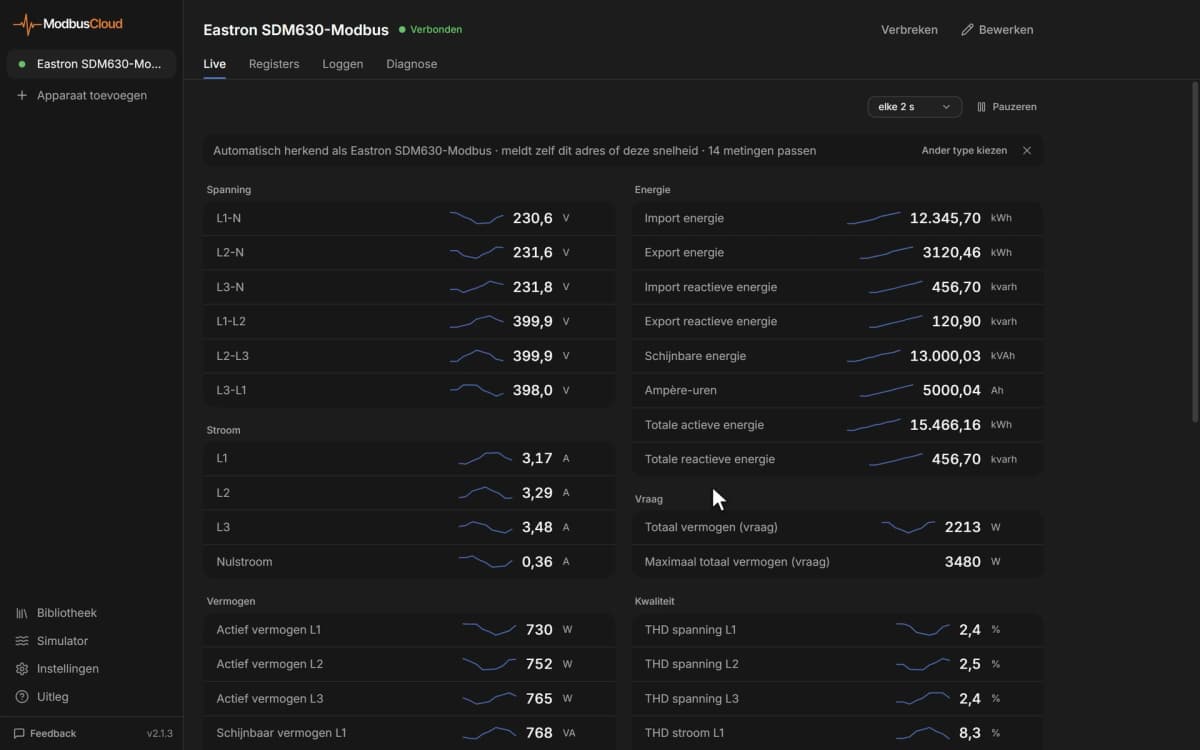
- Show heat power, flow and flow and return temperature of each heat meter on a dashboard, for example per CHP unit, geothermal well or district heating connection.
- Keep a year of energy and volume history to compare daily and monthly heat use per greenhouse section or heating circuit.
- Get an email alert when the error code is no longer zero, so air in the flow sensor, a sensor fault, a leak or an empty battery is noticed quickly.
- Set an alarm when the temperature difference or the power drops below a threshold you choose, for example to spot a heat source that delivers too little.
- Download energy and volume readings as CSV for your own heat delivery reports.
- Read the meter ID and module serial number remotely to match each meter to its location in your documentation.
Installation
Fit the Modbus RTU module in a free module slot of the SHARKY 775 or SCYLAR INT 8 and connect it to the meter with the ribbon cable.
Power the module from its own 12 to 24 V AC/DC SELV supply on terminals 60 and 61, with a cable shorter than 1 m and preferably a 100 mA fuse.
Wire terminals 90 (+) and 91 (-) to the RS485 port of the ModbusCloud Gateway with twisted pair cable. Leave the shield unconnected and terminate both ends of the bus with 120 Ohm.
Switch on before you close the meter. The status LED blinks once. With automatic addressing the slave ID is the last three digits of the meter serial number, for example 026 gives 26.
In ModbusCloud, add a Modbus device with protocol RTU, that slave ID and 9600 8N1, import this template and compare Energy Float and the temperatures with the meter display.
Things to watch for
The module does not answer. What should I check?
Check the module supply on terminals 60 and 61 and the RS485 wiring on 90 (+) and 91 (-). The default is 9600 baud, 8 data bits, no parity, 1 stop bit. With automatic addressing meter 51241026 answers on 26. Endings above 247 use the last two digits, and 000, 247 to 250 or 00 give 247. Holding the module button for at least 15 seconds restores the defaults.
Why do energy, volume, power and flow have no unit?
The module reports each value in the unit that follows from the meter resolution, which is not always the unit on the display. A meter that shows 12.345 GJ can report 12345 MJ. Read the Unit or Unit Code register of that value once, for example 3 = kWh, 8 = MJ, 19 = l, 27 = m³/h or 34 = kW, and enter that unit on the register in ModbusCloud.
Should I use the integer values or the float values?
The integer values are exact, but you multiply them by the Coefficient register of the same value. The float values are calculated by the module and can differ slightly from the display, but they are ready to use. For dashboards and alarms the float is the easiest choice, for billing use the integer.
The meter display shows error 5 or the Error Code reads E-5. What now?
The module reads the meter once per update period, 60 seconds by default. On a battery powered meter, set Meter Data Update Period above 3 minutes, so a value above 1800. A longer period also solves E-5, a data buffer overflow. A period of 0 stops the meter reading, so the values no longer change.
Can I change the address or serial settings from ModbusCloud?
Yes, the configuration registers are writable. Read them first. After a change of slave ID, baud rate, parity or stop bits, set the same values on the Modbus device in ModbusCloud, otherwise the module no longer answers. A static address 5 is the value 5, with automatic addressing off. Writing is off per gateway by default, so request it for the gateway in the portal first.




Want to see how it works?