

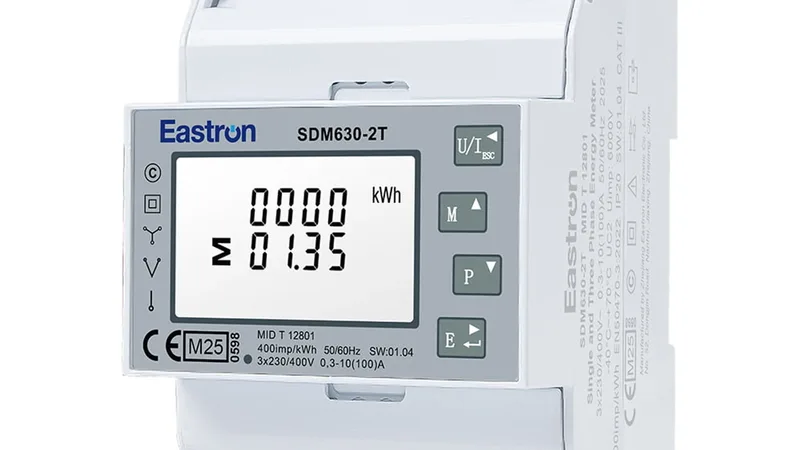

Lovato DMED330
Three-phase CT energy meter for the DIN rail, read over Modbus RTU.
The Lovato DMED330 is a three-phase energy meter for the DIN rail that measures through current transformers and has RS485 on board. This Modbus RTU template reads voltages, currents, power, power factor and energy per phase and per tariff in ModbusCloud, and lets you send reset commands and select the tariff.
- Protocol
- Modbus RTU
- Connection
- RS485, 9600 baud
- Registers
- 261, read and write
- Brand
- Lovato
- Key readings
- Phase voltages · Phase currents · Total active power · Power factor · Imported active energy · Exported active energy
- Available commands
- Reset commands · Active energy tariff
- Compatible models
- DMED330
- Last updated
Registers (261)
257 read, 8 write
| Name | Unit | Access | Address (Hidden until you enter your email) | Function (hidden) | Type (hidden) |
|---|---|---|---|---|---|
| L1-N Voltage | V | Read | 1 | FC04 | uint32 |
| L2-N Voltage | V | Read | 3 | FC04 | uint32 |
| L3-N Voltage | V | Read | 5 | FC04 | uint32 |
| L1 Current | A | Read | 7 | FC04 | uint32 |
| L2 Current | A | Read | 9 | FC04 | uint32 |
| L3 Current | A | Read | |||
| L1-L2 Voltage | V | Read | |||
| L2-L3 Voltage | V | Read | |||
| L3-L1 Voltage | V | Read | |||
| L1 Active Power | W | Read | |||
| L2 Active Power | W | Read | |||
| L3 Active Power | W | Read | |||
| L1 Reactive Power | var | Read | |||
| L2 Reactive Power | var | Read | |||
| L3 Reactive Power | var | Read | |||
| L1 Apparent Power | VA | Read | |||
| L2 Apparent Power | VA | Read | |||
| L3 Apparent Power | VA | Read | |||
| L1 Power Factor | Read | ||||
| L2 Power Factor | Read | ||||
| L3 Power Factor | Read | ||||
| Frequency | Hz | Read | |||
| Equivalent Phase Voltage | V | Read | |||
| Equivalent Line Voltage | V | Read | |||
| Equivalent Current | A | Read | |||
| Total Active Power | W | Read | |||
| Total Reactive Power | var | Read | |||
| Total Apparent Power | VA | Read | |||
| Equivalent Power Factor | Read | ||||
| Line Voltage Asymmetry | % | Read | |||
| Phase Voltage Asymmetry | % | Read | |||
| Current Asymmetry | % | Read | |||
| Neutral Current | A | Read | |||
| Max L1-N Voltage | V | Read | |||
| Max L2-N Voltage | V | Read | |||
| Max L3-N Voltage | V | Read | |||
| Max L1 Current | A | Read | |||
| Max L2 Current | A | Read | |||
| Max L3 Current | A | Read | |||
| Max L1-L2 Voltage | V | Read | |||
| Max L2-L3 Voltage | V | Read | |||
| Max L3-L1 Voltage | V | Read | |||
| Max L1 Active Power | W | Read | |||
| Max L2 Active Power | W | Read | |||
| Max L3 Active Power | W | Read | |||
| Max L1 Reactive Power | var | Read | |||
| Max L2 Reactive Power | var | Read | |||
| Max L3 Reactive Power | var | Read | |||
| Max L1 Apparent Power | VA | Read | |||
| Max L2 Apparent Power | VA | Read | |||
| Max L3 Apparent Power | VA | Read | |||
| Max L1 Power Factor | Read | ||||
| Max L2 Power Factor | Read | ||||
| Max L3 Power Factor | Read | ||||
| Max Frequency | Hz | Read | |||
| Max Equivalent Phase Voltage | V | Read | |||
| Max Equivalent Line Voltage | V | Read | |||
| Max Equivalent Current | A | Read | |||
| Max Total Active Power | W | Read | |||
| Max Total Reactive Power | var | Read | |||
| Max Total Apparent Power | VA | Read | |||
| Max Equivalent Power Factor | Read | ||||
| Max Line Voltage Asymmetry | % | Read | |||
| Max Phase Voltage Asymmetry | % | Read | |||
| Max Neutral Current | A | Read | |||
| Min L1-N Voltage | V | Read | |||
| Min L2-N Voltage | V | Read | |||
| Min L3-N Voltage | V | Read | |||
| Min L1 Current | A | Read | |||
| Min L2 Current | A | Read | |||
| Min L3 Current | A | Read | |||
| Min L1-L2 Voltage | V | Read | |||
| Min L2-L3 Voltage | V | Read | |||
| Min L3-L1 Voltage | V | Read | |||
| Min L1 Active Power | W | Read | |||
| Min L2 Active Power | W | Read | |||
| Min L3 Active Power | W | Read | |||
| Min L1 Reactive Power | var | Read | |||
| Min L2 Reactive Power | var | Read | |||
| Min L3 Reactive Power | var | Read | |||
| Min L1 Apparent Power | VA | Read | |||
| Min L2 Apparent Power | VA | Read | |||
| Min L3 Apparent Power | VA | Read | |||
| Min L1 Power Factor | Read | ||||
| Min L2 Power Factor | Read | ||||
| Min L3 Power Factor | Read | ||||
| Min Frequency | Hz | Read | |||
| Min Equivalent Phase Voltage | V | Read | |||
| Min Equivalent Line Voltage | V | Read | |||
| Min Equivalent Current | A | Read | |||
| Min Total Active Power | W | Read | |||
| Min Total Reactive Power | var | Read | |||
| Min Total Apparent Power | VA | Read | |||
| Min Equivalent Power Factor | Read | ||||
| Min Line Voltage Asymmetry | % | Read | |||
| Min Phase Voltage Asymmetry | % | Read | |||
| Min Neutral Current | A | Read | |||
| Average L1-N Voltage | V | Read | |||
| Average L2-N Voltage | V | Read | |||
| Average L3-N Voltage | V | Read | |||
| Average L1 Current | A | Read | |||
| Average L2 Current | A | Read | |||
| Average L3 Current | A | Read | |||
| Average L1-L2 Voltage | V | Read | |||
| Average L2-L3 Voltage | V | Read | |||
| Average L3-L1 Voltage | V | Read | |||
| Average L1 Active Power | W | Read | |||
| Average L2 Active Power | W | Read | |||
| Average L3 Active Power | W | Read | |||
| Average L1 Reactive Power | var | Read | |||
| Average L2 Reactive Power | var | Read | |||
| Average L3 Reactive Power | var | Read | |||
| Average L1 Apparent Power | VA | Read | |||
| Average L2 Apparent Power | VA | Read | |||
| Average L3 Apparent Power | VA | Read | |||
| Average L1 Power Factor | Read | ||||
| Average L2 Power Factor | Read | ||||
| Average L3 Power Factor | Read | ||||
| Average Frequency | Hz | Read | |||
| Average Equivalent Phase Voltage | V | Read | |||
| Average Equivalent Line Voltage | V | Read | |||
| Average Equivalent Current | A | Read | |||
| Average Total Active Power | W | Read | |||
| Average Total Reactive Power | var | Read | |||
| Average Total Apparent Power | VA | Read | |||
| Average Equivalent Power Factor | Read | ||||
| Average Line Voltage Asymmetry | % | Read | |||
| Average Phase Voltage Asymmetry | % | Read | |||
| Average Neutral Current | A | Read | |||
| Max Demand L1-N Voltage | V | Read | |||
| Max Demand L2-N Voltage | V | Read | |||
| Max Demand L3-N Voltage | V | Read | |||
| Max Demand L1 Current | A | Read | |||
| Max Demand L2 Current | A | Read | |||
| Max Demand L3 Current | A | Read | |||
| Max Demand L1-L2 Voltage | V | Read | |||
| Max Demand L2-L3 Voltage | V | Read | |||
| Max Demand L3-L1 Voltage | V | Read | |||
| Max Demand L1 Active Power | W | Read | |||
| Max Demand L2 Active Power | W | Read | |||
| Max Demand L3 Active Power | W | Read | |||
| Max Demand L1 Reactive Power | var | Read | |||
| Max Demand L2 Reactive Power | var | Read | |||
| Max Demand L3 Reactive Power | var | Read | |||
| Max Demand L1 Apparent Power | VA | Read | |||
| Max Demand L2 Apparent Power | VA | Read | |||
| Max Demand L3 Apparent Power | VA | Read | |||
| Max Demand L1 Power Factor | Read | ||||
| Max Demand L2 Power Factor | Read | ||||
| Max Demand L3 Power Factor | Read | ||||
| Max Demand Frequency | Hz | Read | |||
| Max Demand Equivalent Phase Voltage | V | Read | |||
| Max Demand Equivalent Line Voltage | V | Read | |||
| Max Demand Equivalent Current | A | Read | |||
| Max Demand Total Active Power | W | Read | |||
| Max Demand Total Reactive Power | var | Read | |||
| Max Demand Total Apparent Power | VA | Read | |||
| Max Demand Equivalent Power Factor | Read | ||||
| Max Demand Line Voltage Asymmetry | % | Read | |||
| Max Demand Phase Voltage Asymmetry | % | Read | |||
| Max Demand Neutral Current | A | Read | |||
| Total Imported Active Energy | kWh | Read | |||
| Total Exported Active Energy | kWh | Read | |||
| Total Imported Reactive Energy | kvarh | Read | |||
| Total Exported Reactive Energy | kvarh | Read | |||
| Total Apparent Energy | kVAh | Read | |||
| Partial Imported Active Energy | kWh | Read | |||
| Partial Exported Active Energy | kWh | Read | |||
| Partial Imported Reactive Energy | kvarh | Read | |||
| Partial Exported Reactive Energy | kvarh | Read | |||
| Partial Apparent Energy | kVAh | Read | |||
| L1 Total Imported Active Energy | kWh | Read | |||
| L1 Total Exported Active Energy | kWh | Read | |||
| L1 Total Imported Reactive Energy | kvarh | Read | |||
| L1 Total Exported Reactive Energy | kvarh | Read | |||
| L1 Total Apparent Energy | kVAh | Read | |||
| L1 Partial Imported Active Energy | kWh | Read | |||
| L1 Partial Exported Active Energy | kWh | Read | |||
| L1 Partial Imported Reactive Energy | kvarh | Read | |||
| L1 Partial Exported Reactive Energy | kvarh | Read | |||
| L1 Partial Apparent Energy | kVAh | Read | |||
| L2 Total Imported Active Energy | kWh | Read | |||
| L2 Total Exported Active Energy | kWh | Read | |||
| L2 Total Imported Reactive Energy | kvarh | Read | |||
| L2 Total Exported Reactive Energy | kvarh | Read | |||
| L2 Total Apparent Energy | kVAh | Read | |||
| L2 Partial Imported Active Energy | kWh | Read | |||
| L2 Partial Exported Active Energy | kWh | Read | |||
| L2 Partial Imported Reactive Energy | kvarh | Read | |||
| L2 Partial Exported Reactive Energy | kvarh | Read | |||
| L2 Partial Apparent Energy | kVAh | Read | |||
| L3 Total Imported Active Energy | kWh | Read | |||
| L3 Total Exported Active Energy | kWh | Read | |||
| L3 Total Imported Reactive Energy | kvarh | Read | |||
| L3 Total Exported Reactive Energy | kvarh | Read | |||
| L3 Total Apparent Energy | kVAh | Read | |||
| L3 Partial Imported Active Energy | kWh | Read | |||
| L3 Partial Exported Active Energy | kWh | Read | |||
| L3 Partial Imported Reactive Energy | kvarh | Read | |||
| L3 Partial Exported Reactive Energy | kvarh | Read | |||
| L3 Partial Apparent Energy | kVAh | Read | |||
| Tariff 1 Imported Active Energy | kWh | Read | |||
| Tariff 1 Exported Active Energy | kWh | Read | |||
| Tariff 1 Imported Reactive Energy | kvarh | Read | |||
| Tariff 1 Exported Reactive Energy | kvarh | Read | |||
| Tariff 1 Apparent Energy | kVAh | Read | |||
| Tariff 2 Imported Active Energy | kWh | Read | |||
| Tariff 2 Exported Active Energy | kWh | Read | |||
| Tariff 2 Imported Reactive Energy | kvarh | Read | |||
| Tariff 2 Exported Reactive Energy | kvarh | Read | |||
| Tariff 2 Apparent Energy | kVAh | Read | |||
| L1 Tariff 1 Imported Active Energy | kWh | Read | |||
| L1 Tariff 1 Exported Active Energy | kWh | Read | |||
| L1 Tariff 1 Imported Reactive Energy | kvarh | Read | |||
| L1 Tariff 1 Exported Reactive Energy | kvarh | Read | |||
| L1 Tariff 1 Apparent Energy | kVAh | Read | |||
| L1 Tariff 2 Imported Active Energy | kWh | Read | |||
| L1 Tariff 2 Exported Active Energy | kWh | Read | |||
| L1 Tariff 2 Imported Reactive Energy | kvarh | Read | |||
| L1 Tariff 2 Exported Reactive Energy | kvarh | Read | |||
| L1 Tariff 2 Apparent Energy | kVAh | Read | |||
| L2 Tariff 1 Imported Active Energy | kWh | Read | |||
| L2 Tariff 1 Exported Active Energy | kWh | Read | |||
| L2 Tariff 1 Imported Reactive Energy | kvarh | Read | |||
| L2 Tariff 1 Exported Reactive Energy | kvarh | Read | |||
| L2 Tariff 1 Apparent Energy | kVAh | Read | |||
| L2 Tariff 2 Imported Active Energy | kWh | Read | |||
| L2 Tariff 2 Exported Active Energy | kWh | Read | |||
| L2 Tariff 2 Imported Reactive Energy | kvarh | Read | |||
| L2 Tariff 2 Exported Reactive Energy | kvarh | Read | |||
| L2 Tariff 2 Apparent Energy | kVAh | Read | |||
| L3 Tariff 1 Imported Active Energy | kWh | Read | |||
| L3 Tariff 1 Exported Active Energy | kWh | Read | |||
| L3 Tariff 1 Imported Reactive Energy | kvarh | Read | |||
| L3 Tariff 1 Exported Reactive Energy | kvarh | Read | |||
| L3 Tariff 1 Apparent Energy | kVAh | Read | |||
| L3 Tariff 2 Imported Active Energy | kWh | Read | |||
| L3 Tariff 2 Exported Active Energy | kWh | Read | |||
| L3 Tariff 2 Imported Reactive Energy | kvarh | Read | |||
| L3 Tariff 2 Exported Reactive Energy | kvarh | Read | |||
| L3 Tariff 2 Apparent Energy | kVAh | Read | |||
| Total Hour Counter | Read | ||||
| Partial Hour Counter 1 | Read | ||||
| Partial Hour Counter 2 | Read | ||||
| Partial Hour Counter 3 | Read | ||||
| Partial Hour Counter 4 | Read | ||||
| Limits Status | Read | ||||
| Limit 1 | Read | ||||
| Limit 2 | Read | ||||
| Limit 3 | Read | ||||
| Limit 4 | Read | ||||
| Remote 1 | Read | ||||
| Remote 4 | Read | ||||
| Command | Write | ||||
| System Reboot | Write | ||||
| Save Parameters And Reboot | Write | ||||
| Energy Tariff Select | Write | ||||
| Setup Menu Number | Read and write | ||||
| Setup Submenu Number | Read and write | ||||
| Setup Parameter Number | Read and write | ||||
| Setup Parameter Value | Read and write |
Loading registers…
Send your device list
If a device is not in the library yet, we build the template for free as soon as we have the register data.
Use cases
- Log imported and exported active energy per phase to bill tenants or cost centers in a shared building.
- Get an alert when the current asymmetry rises, so you find an overloaded phase before a breaker trips.
- Track the max demand of active power per month to check the contracted capacity.
- Switch between tariff 1 and 2 from ModbusCloud when no tariff input is wired.
- Compare the power factor of several feeders on one dashboard to plan compensation.
Installation
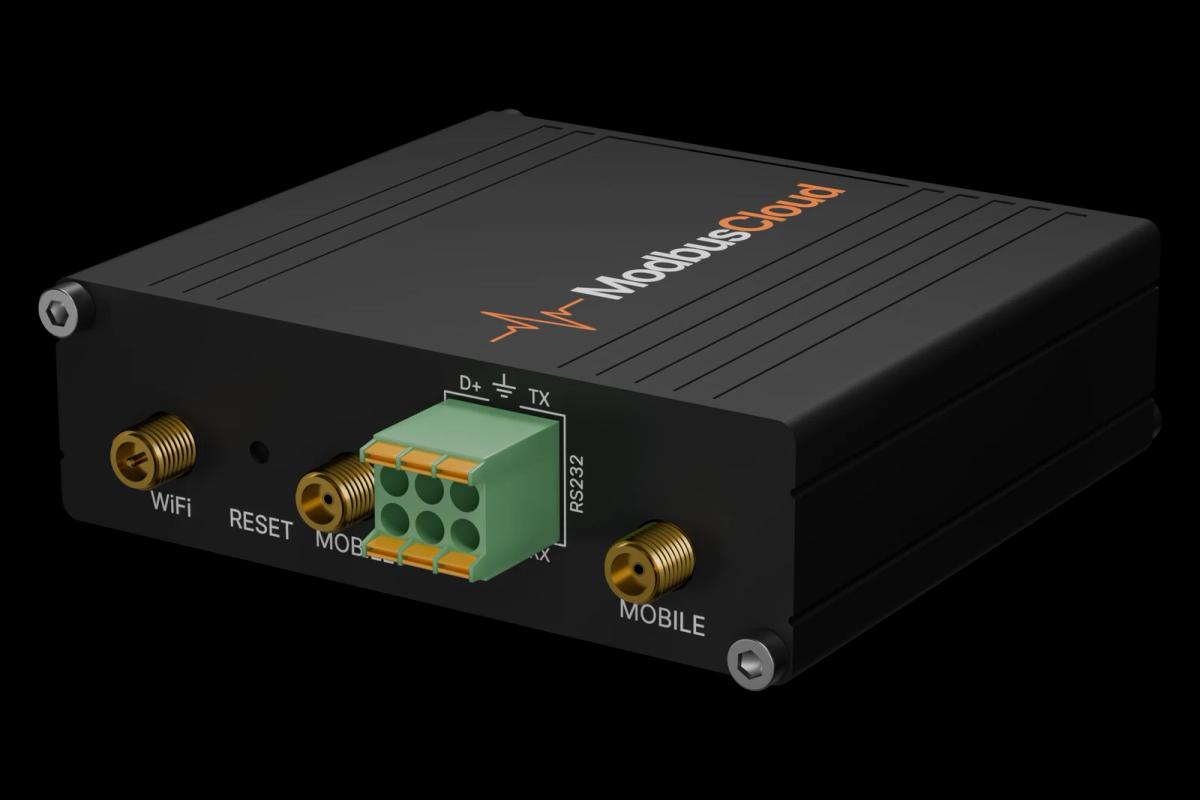
Connect A and B of the meter to the RS485 port of the ModbusCloud Gateway and SG to the cable screen or reference, and terminate both ends of the line.
Set the CT primary and secondary in menu M01 and check the node address, speed and data format in menu M07 (factory 01, 9600 bps, 8 bit, no parity, 1 stop bit).
In ModbusCloud, add a Modbus device (RTU) with that address and these line settings, and import this template.
Check that the phase voltages and the total active power match the meter display.
Things to watch for
The meter does not answer.
Check that P07.05 is set to Modbus-RTU and not Modbus-ASCII, that address, speed and parity match the master, and swap A and B if needed. No two meters on the line may share an address.
Currents and power are far too low or too high.
The meter scales the readings with the CT ratio from menu M01. Set the CT primary and the 1 A or 5 A secondary to match the installed transformers.
The tariff energies stay at 0.
Tariff counters only run when a tariff is active. Select tariff 1 or 2 with the tariff register, or set input P13.01 to TAR-A; the register only works when no input has the tariff function.
A reset command does not seem to work.
Commands are single writes to one register with a value from the command list. After restoring parameters to default, backup or restore, Lovato advises a reboot.
More Lovato templates

Want to see how it works?