



SunSpec Model 127 — Freq-Watt Param
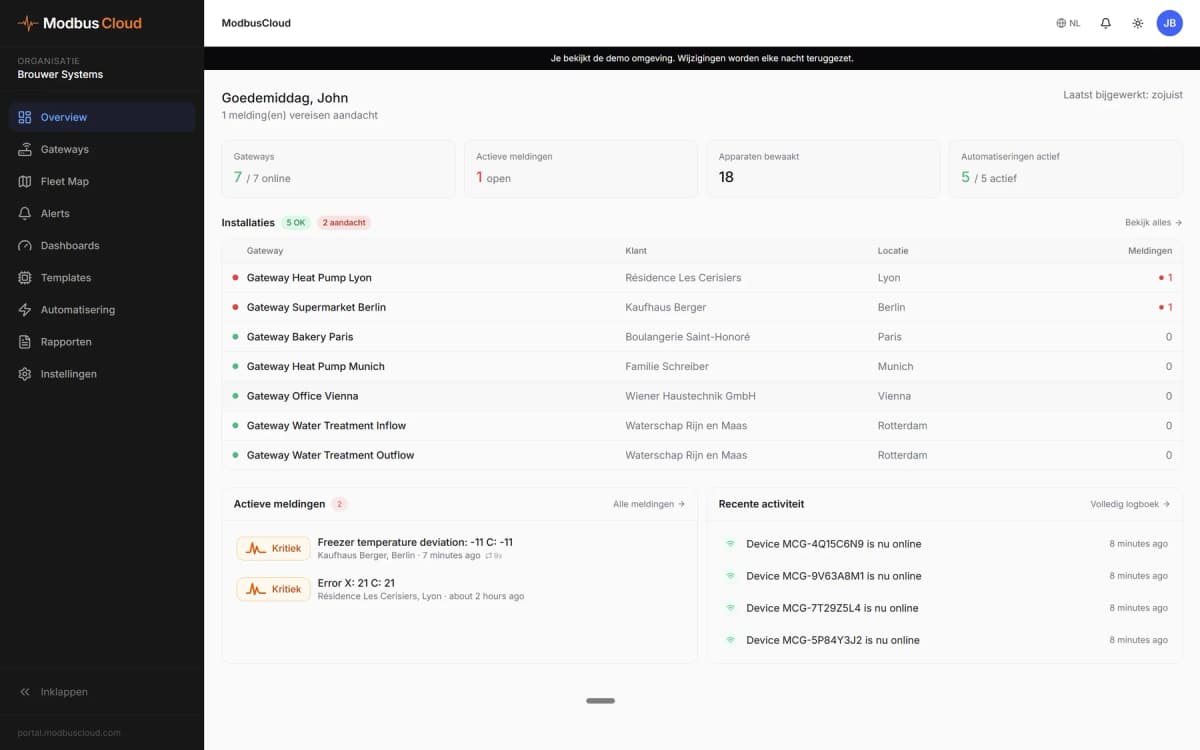
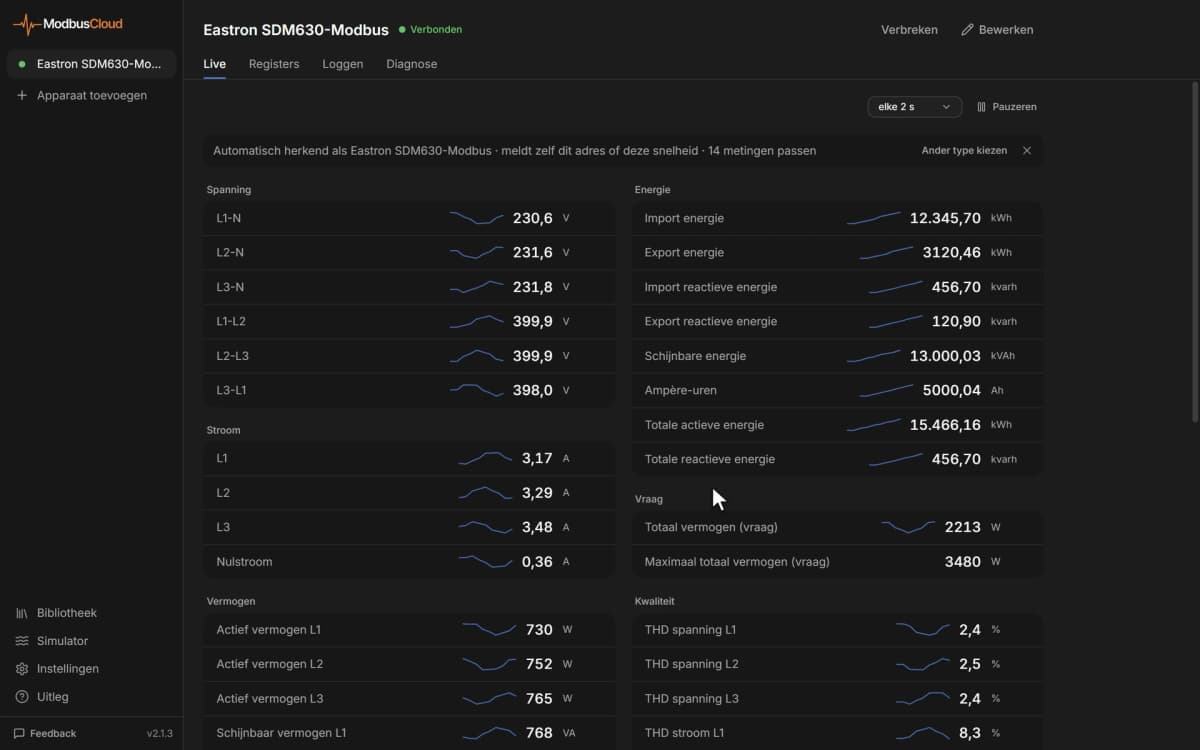
SunSpec Model 127 is a standardised Modbus TCP information model that configures the Frequency-Watt (P(f)) grid-support function on any SunSpec-compliant inverter. When grid frequency rises above the start threshold defined by HzStr, the inverter reduces output at the slope set in WGra. Curtailment lifts once frequency drops back through HzStop, with recovery speed governed by HzStopWGra. The ModEna flag activates the function; HysEna adds hysteresis to prevent rapid oscillation. ModbusCloud reads and writes all control and scale-factor registers, letting you verify, commission, and audit frequency-response settings remotely across your fleet.
- Protocol
- Modbus TCP
- Connection
- Ethernet, Modbus TCP
- Registers
- 11, read and write
- Brand
- SunSpec
- Last updated
Registers (11)
11 read, 6 write
| Name | Unit | Access | Address (Hidden until you enter your email) | Function (hidden) | Type (hidden) |
|---|---|---|---|---|---|
| id | Read | ||||
| l | Read | ||||
| wgra | % PM/Hz | Read and write | |||
| hzstr | Hz | Read and write | |||
| hzstop | Hz | Read and write | |||
| hysena | Read and write | ||||
| modena | Read and write | ||||
| hzstopwgra | % WMax/min | Read and write | |||
| wgra_sf | Read | ||||
| hzstrstop_sf | Read | ||||
| rmpincdec_sf | Read |
Loading registers…
Send your device list
If a device is not in the library yet, we build the template for free as soon as we have the register data.
Use cases
- Verify that WGra, HzStr, and HzStop values match grid-code requirements after every inverter firmware update.
- Monitor ModEna status across a multi-site portfolio to confirm frequency-watt control is active on all units.
- Alert on unexpected changes to the HzStr start-frequency setpoint that could indicate unauthorised configuration edits.
- Compare HzStopWGra recovery ramp rates across sites to ensure consistent post-curtailment power restoration behaviour.
- Audit HysEna and ModEna register states before and after grid-operator compliance inspections to produce a timestamped evidence log.
Installation
Enable Modbus TCP on the inverter under its communication or network settings, set the TCP port to 502, and note the assigned unit ID.
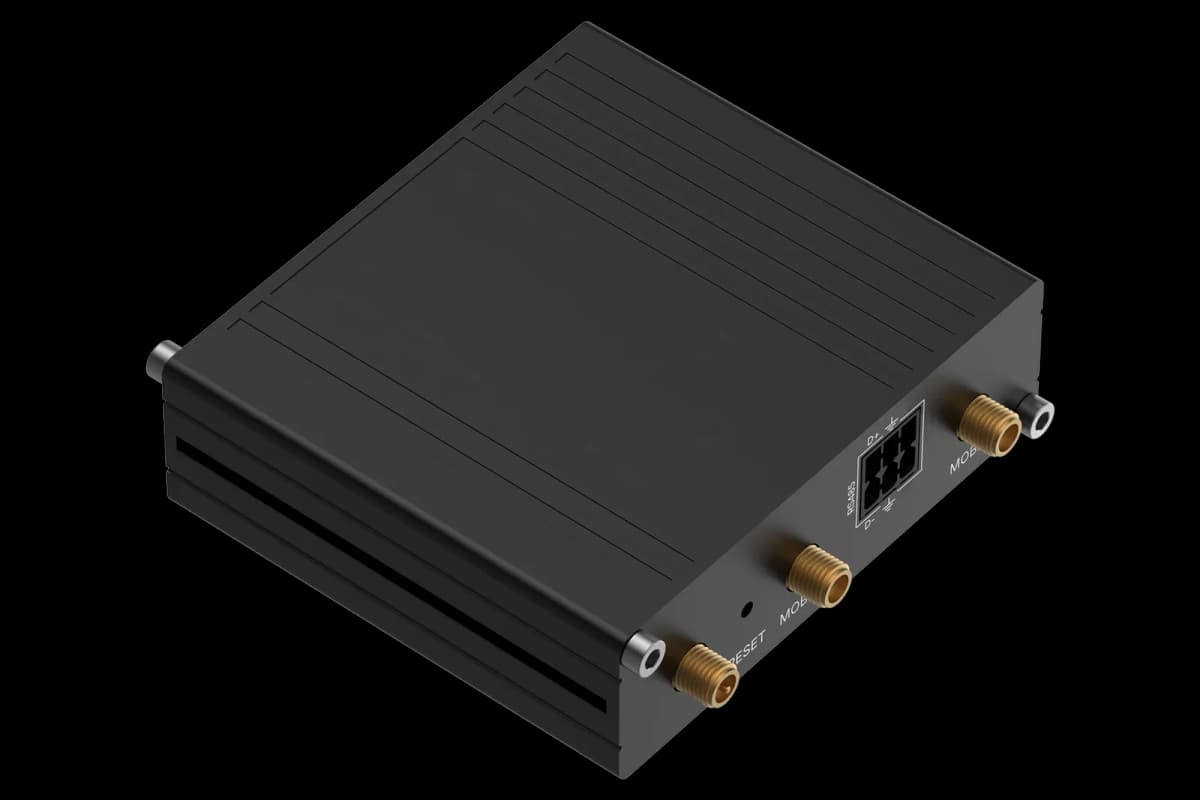
Connect the inverter to the same LAN segment as the ModbusCloud Gateway, or confirm IP reachability if they are on separate subnets.
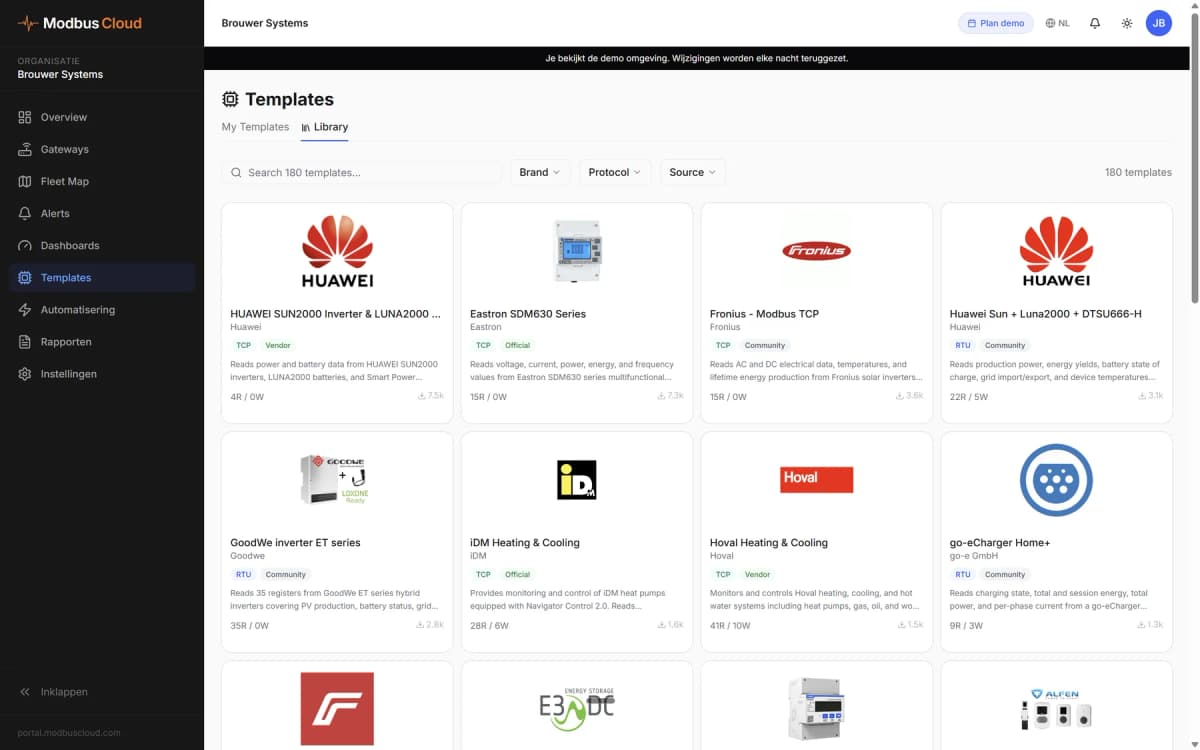
In your ModbusCloud portal, add the Gateway, import the SunSpec Model 127 template, and assign the correct unit ID and base register offset for your device.
Spot-check the id register (address 0): it must return 127, confirming the model block is correctly mapped before writing any setpoints.
Things to watch for
The id register returns a value other than 127. Why?
The base address offset is wrong. SunSpec model blocks are discovered dynamically: the model 127 block does not always start at a fixed absolute Modbus address. Use SunSpec model discovery from address 40001 to locate the actual block start, then set the ModbusCloud template offset to match.
WGra reads a seemingly impossible number. How do I interpret it?
Raw register values must be multiplied by 10 raised to the power of WGra_SF (address 8). WGra_SF is a signed integer scale factor. For example, if WGra raw = 400 and WGra_SF = -1, the actual gradient is 40.0 % PM/Hz. Always read the scale-factor register alongside the data register.
The gateway connects but ModEna stays 0 after I write 1. What now?
Some inverter implementations require a Grid Guard or installer-level authorisation before write access to control model registers is granted. Confirm that Modbus write permissions are unlocked in the inverter configuration, and that the ModbusCloud Gateway is using function code 16 for multi-register writes.
Is it safe to write HzStr and HzStop setpoints remotely during live operation?
Use caution. Changing HzStr, HzStop, or WGra on a live inverter immediately alters its frequency-response behaviour. An incorrect start-frequency value can cause premature curtailment or prevent required grid support, potentially breaching grid-code obligations. Always verify setpoints against the applicable grid code before writing, and test during low-production periods where possible.
Knowledge base articles for this device
SunSpec Modbus: one register map for many inverters
SunSpec Modbus is the open register map SMA, Fronius, SolarEdge and Kostal share. The layout, int+SF vs float, the TCP port per brand and reading a mixed fleet.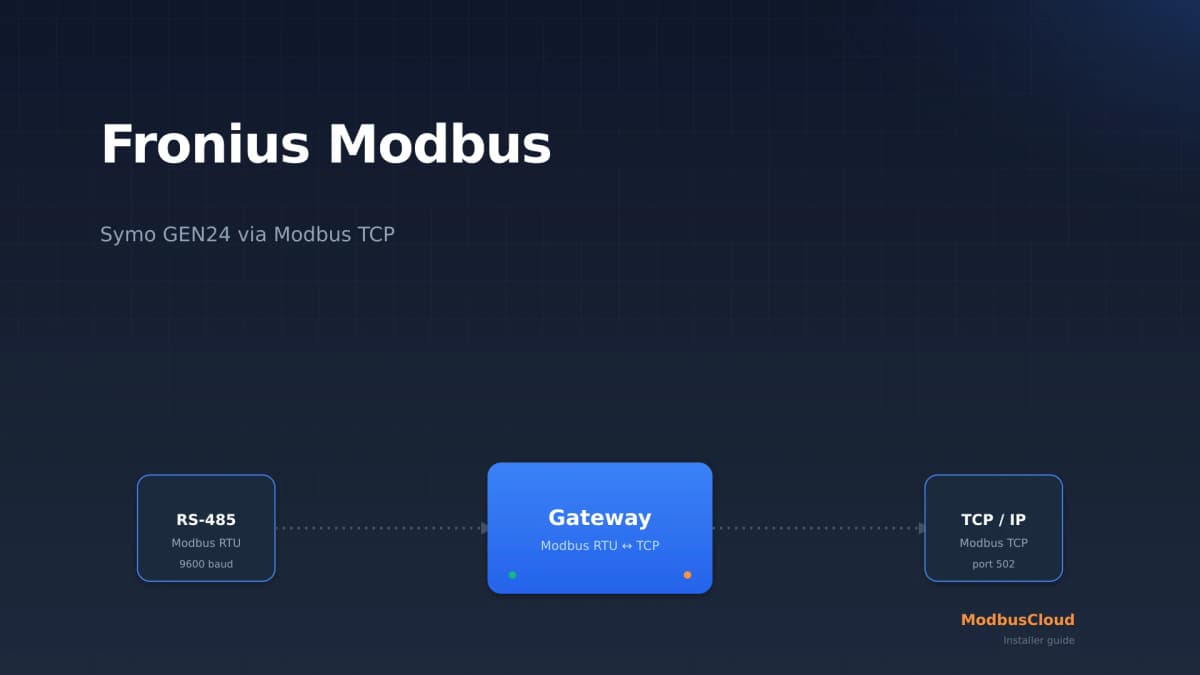
Fronius Modbus: read a Symo GEN24 over Modbus TCP
Fronius Modbus explained: enable Modbus TCP on the Symo GEN24 on port 502, choose between int+SF and float, read the right SunSpec registers and scale them correctly. Practical guide for solar installers.
SMA Modbus: reading a Sunny Boy over Modbus TCP (installers)
SMA Modbus explained: enable the Modbus TCP server on port 502, choose between the SMA profile (unit ID 3) and SunSpec (unit ID 126), read the right registers, and handle the NaN values at night. Practical guide for installers.
Want to see how it works?