

SunSpec Model 808 — Flow Battery Module Model
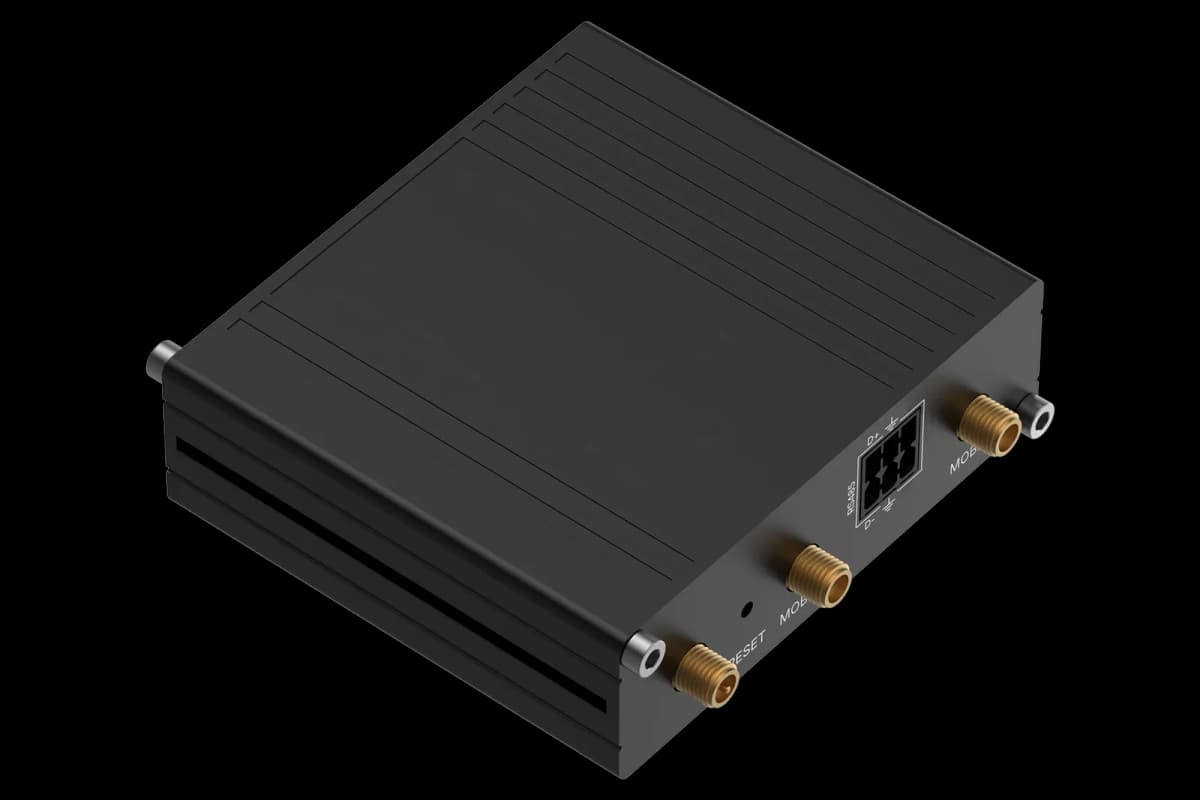
SunSpec Model 808 is the Flow Battery Module Model, a standardized Modbus TCP information model defined by the SunSpec Alliance for monitoring and control of a single flow battery module within a larger energy storage hierarchy. The template exposes the model identifier, model length, and a reserved placeholder point that will be fully specified in a future draft. Deploying this template via the ModbusCloud Gateway lets integrators confirm SunSpec model discovery and verify register-block boundaries on any compliant flow battery module before full instrumentation is available.
- Protocol
- Modbus TCP
- Connection
- Ethernet, Modbus TCP
- Registers
- 3, read only
- Brand
- SunSpec
- Last updated
Registers (3)
3 read, 0 write
| Name | Unit | Access | Address (Hidden until you enter your email) | Function (hidden) | Type (hidden) |
|---|---|---|---|---|---|
| id | Read | ||||
| l | Read | ||||
| moduletbd | Read |
Loading registers…
Send your device list
If a device is not in the library yet, we build the template for free as soon as we have the register data.
Use cases
- Verify SunSpec model discovery by confirming the model ID register returns 808 on a connected flow battery module.
- Monitor the model length register to determine the correct repeating-block count before configuring downstream stack models.
- Alert on unexpected changes to the model length value, which may indicate a firmware update altered the register layout.
- Track when the placeholder register transitions from reserved to a live value after a device firmware upgrade.
- Use the model block as an anchor point when mapping multi-model SunSpec chains across flow battery strings.
Installation
Enable Modbus TCP on the flow battery management system under the communication or Modbus section of its configuration interface, and note the assigned TCP port (typically 502).
Connect the flow battery controller to the same LAN segment as the ModbusCloud Gateway, and confirm network reachability with a ping to the device IP address.
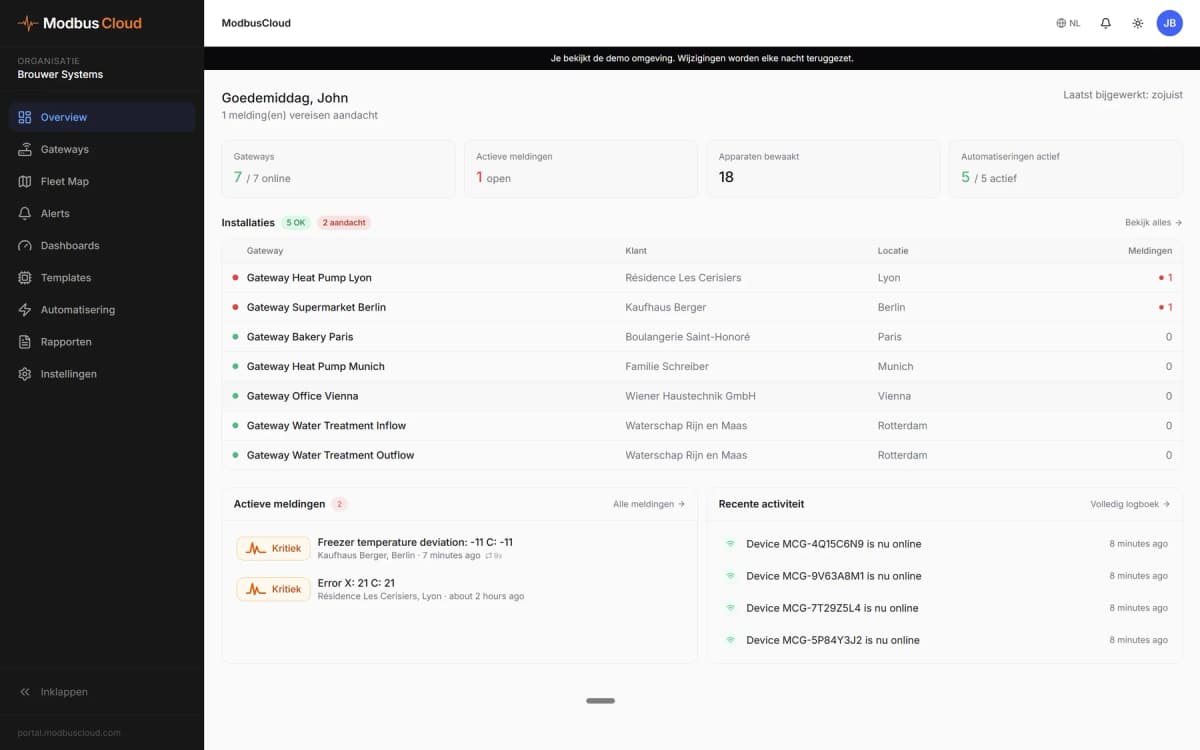
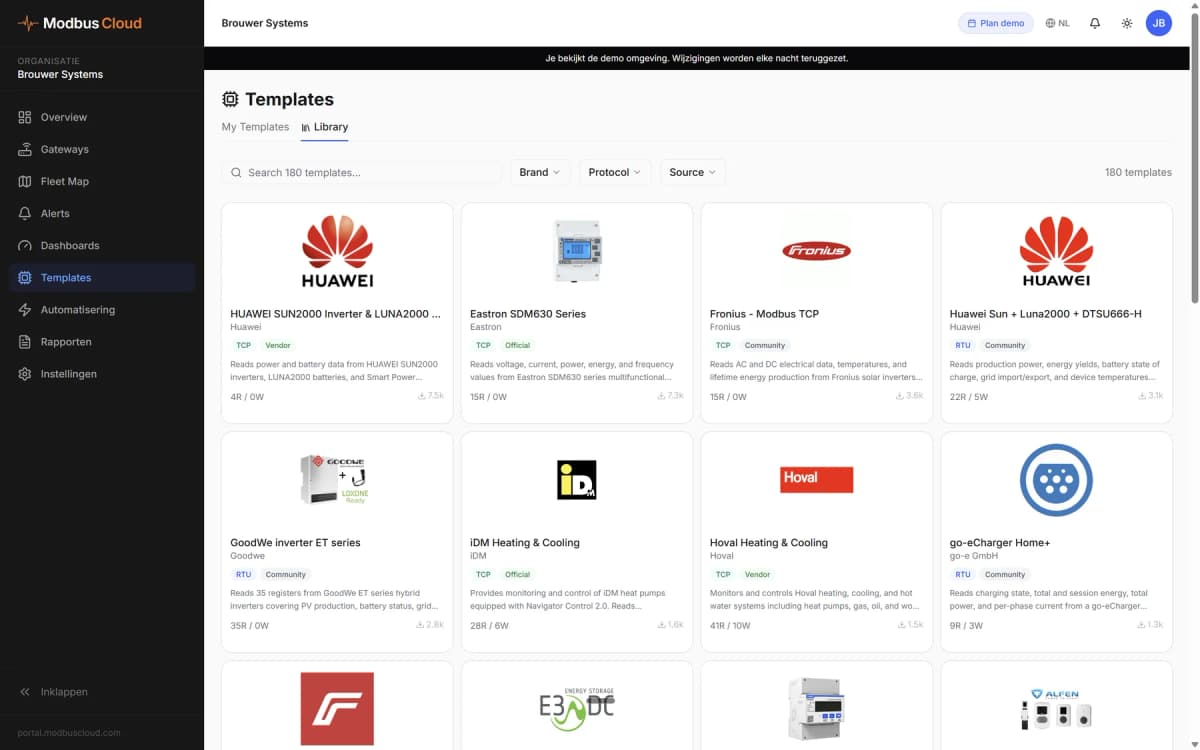
In the ModbusCloud portal, add the Gateway, import the SunSpec Model 808 template, and assign the correct unit ID and base register offset for the SunSpec model chain on the device.
Read register 0 and confirm the returned value is 808, then read register 1 to verify the model length matches the device documentation before relying on downstream reads.
Things to watch for
Register 0 returns a value other than 808. What is wrong?
The Modbus base address offset is likely incorrect. SunSpec models use relative addressing; the absolute Modbus address of register 0 in this model depends on where the device places Model 808 in its SunSpec chain. Use SunSpec auto-discovery or consult the device documentation to find the correct base offset, then update the template assignment in the portal.
The gateway connects but all three registers return null or timeout. Why?
Check that the unit ID configured in the portal matches the Modbus slave ID of the flow battery controller. Also confirm the TCP port (default 502) is open and not blocked by a firewall. If the device uses a non-standard port, update the connection settings in the ModbusCloud Gateway configuration.
The model length register reads an unexpected value. Should I be concerned?
SunSpec model length changes between firmware versions when new points are added to a model block. A value different from what documentation states may indicate a newer firmware with an extended block. Re-read the device release notes and update your register offset calculations for any models that follow Model 808 in the chain.
The moduletbd register always reads zero. Is the device working correctly?
Yes. SunSpec Model 808 is a Draft specification with this point explicitly reserved as a placeholder. A value of zero is the expected behavior until the device manufacturer implements the point in a future firmware release aligned with Draft 5 of the SunSpec Energy Storage Models specification.
Knowledge base articles for this device
SunSpec Modbus: one register map for many inverters
SunSpec Modbus is the open register map SMA, Fronius, SolarEdge and Kostal share. The layout, int+SF vs float, the TCP port per brand and reading a mixed fleet.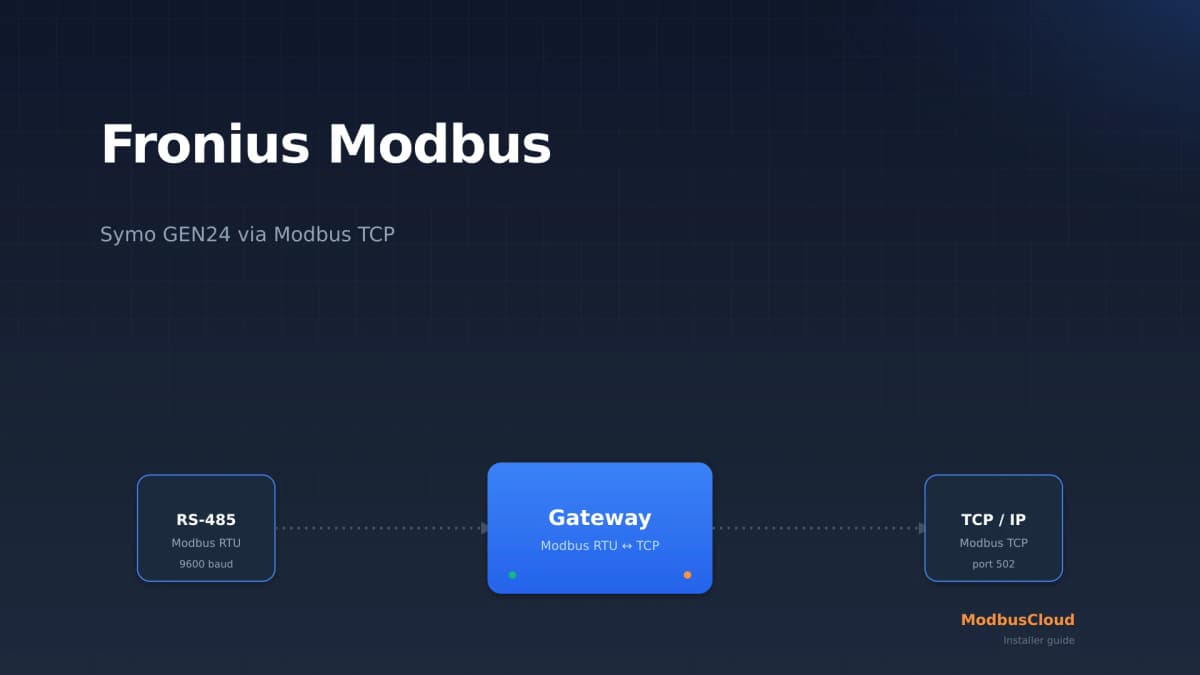
Fronius Modbus: read a Symo GEN24 over Modbus TCP
Fronius Modbus explained: enable Modbus TCP on the Symo GEN24 on port 502, choose between int+SF and float, read the right SunSpec registers and scale them correctly. Practical guide for solar installers.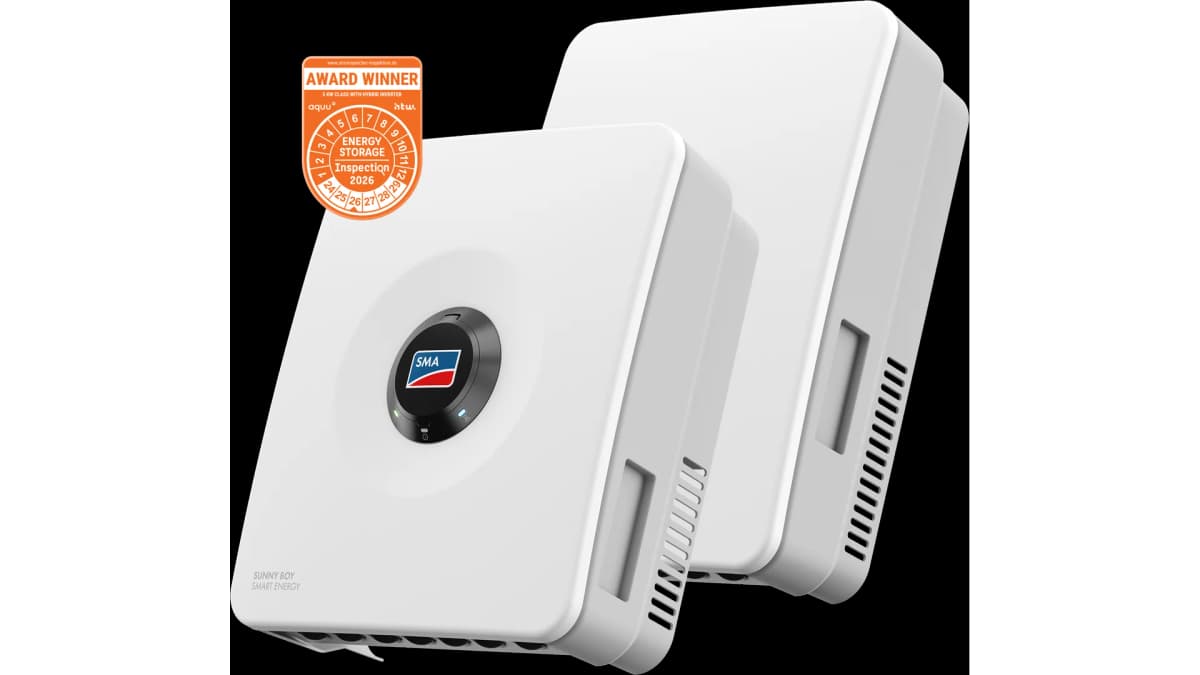
SMA Modbus: reading a Sunny Boy over Modbus TCP (installers)
SMA Modbus explained: enable the Modbus TCP server on port 502, choose between the SMA profile (unit ID 3) and SunSpec (unit ID 126), read the right registers, and handle the NaN values at night. Practical guide for installers.
Want to see how it works?