








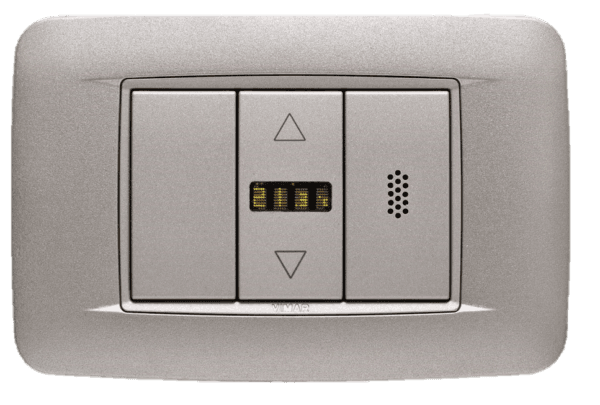
Flush-mounting microprocessor sensors for ambient temperature and humidity measurement with display baud rate 9600
Measures ambient temperature and humidity with setpoint and mode control via Modbus RTU
SETECNA MB-THL-9K6 is a flush-mount microprocessor sensor that measures ambient temperature and relative humidity via Modbus RTU (RS485) at 9600 baud. This template reads live temperature and humidity values, setpoints, calibration offsets, and seasonal limit parameters, and allows remote control of setpoints and operating modes.
- Protocol
- Modbus RTU
- Connection
- RS485, 9600 baud
- Registers
- 10, read and write
- Brand
- SETECNA EPC S.r.l.
- Key readings
- Actual Temperature · Actual Relative Humidity · Actual Set Temperature · Temperature Calibration Offset · Humidity Calibration Offset · Use Winter Limit
- Available commands
- Actual Set Temperature · Summer/Winter Min/Max Limits · Temperature Calibration Offset · Humidity Calibration Offset
- Compatible models
- MB-THL-9K6
- Last updated
Registers (10)
6 read, 8 write
| Name | Unit | Access | Address (Hidden until you enter your email) | Function (hidden) | Type (hidden) |
|---|---|---|---|---|---|
| Actual Temperature | °C | Read | |||
| Actual Relative Humidity | % | Read | |||
| Temperature Calibration Offset | °C | Read and write | |||
| Humidity Calibration Offset | % | Read and write | |||
| Actual Set Temperature | °C | Read and write | |||
| Use Winter Limit | Read and write | ||||
| Summer Minimum Limit | °C | Write | |||
| Summer Maximum Limit | °C | Write | |||
| Winter Minimum Limit | °C | Write | |||
| Winter Maximum Limit | °C | Write |
Loading registers…
Send your device list
If a device is not in the library yet, we build the template for free as soon as we have the register data.
Use cases
- Monitor real-time ambient temperature and relative humidity on a cloud dashboard for each room or zone.
- Adjust temperature setpoints remotely without traveling to the building to operate the local touch buttons.
- Create an alert when relative humidity exceeds a threshold, indicating potential condensation or ventilation issues.
- Log seasonal heating and cooling setpoint limits to verify HVAC system configuration across multiple sites.
- Apply calibration offsets remotely to correct sensor readings after commissioning without opening the device.
- Compare temperature and humidity trends across multiple SETECNA sensors installed in different zones of a building.
Installation
Mount the MB-THL-9K6 sensor flush in a standard 503 box, ensuring it occupies two module positions and is fitted with a compatible civil series frame.
Wire the RS485 A and B terminals from the sensor to the corresponding terminals on your ModbusCloud Gateway, maintaining correct polarity and using twisted-pair cabling.
Set a unique Modbus slave address on the sensor (range 1 to 255) and confirm the communication parameters are 9600 baud, no parity, 8 data bits, 1 stop bit.
In the ModbusCloud portal, add a new Modbus RTU device, select the SETECNA MB-THL-9K6-SXX template, and enter the slave address you configured on the sensor.
Power on the sensor, verify the LED display shows temperature and humidity readings, then confirm that live values appear on the ModbusCloud dashboard.
Things to watch for
The gateway cannot communicate with the sensor. What should I check?
Verify that the RS485 A and B wires are not swapped. Confirm the slave address in the ModbusCloud device configuration matches the address set on the physical sensor. All devices on the same bus must use 9600, N, 8, 1.
Temperature or humidity readings seem offset from a reference instrument. How do I correct this?
Use the calibration offset registers exposed in the template. You can write a positive or negative offset for temperature and humidity directly from the ModbusCloud dashboard to compensate for installation-related deviations.
Can I mix MB-THL-9K6 sensors with other Modbus RTU devices on the same RS485 bus?
Yes, as long as every device on the bus shares the same serial parameters (9600, N, 8, 1) and each device has a unique slave address. If other devices require a different baud rate, use a separate RS485 segment.
How many sensors can I connect on one RS485 bus segment?
The RS485 standard supports up to 32 unit loads per segment. If you need more devices, use a repeater or a second RS485 port on your Modbus gateway.
More SETECNA EPC S.r.l. templates
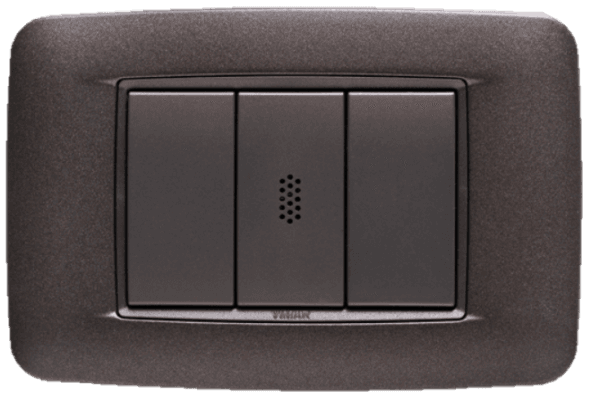 Flush-mounting microprocessor sensors for ambient temperature and humidity measurement baud rate 9600
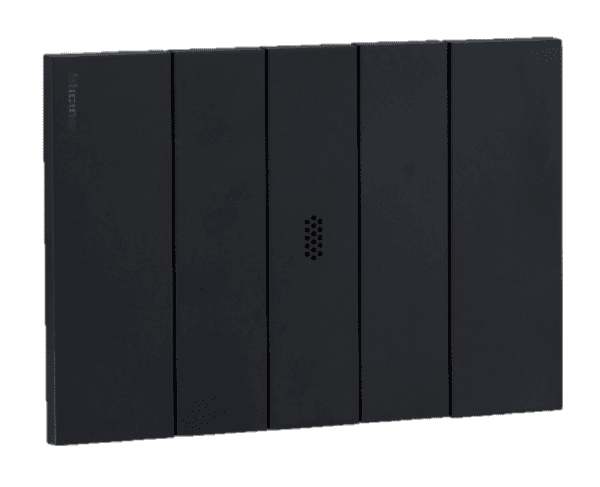 Flush-mounting microprocessor sensors for ambient temperature and humidity measurement baud rate 19200
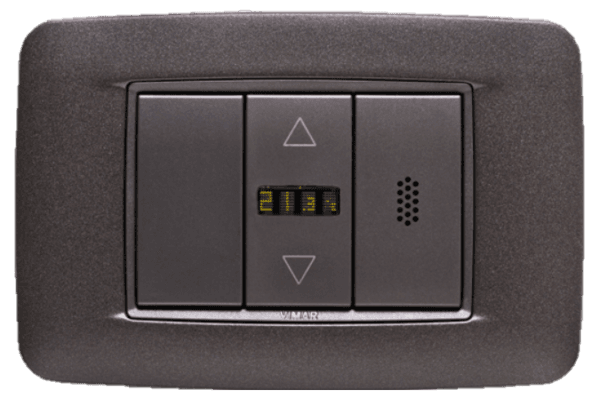 Flush-mounting microprocessor sensors for ambient temperature and humidity measurement with display baud rate 19200
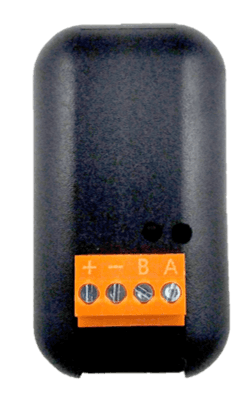 MB-OTG 1-Channel Modbus-to-OpenTherm Gateway
Want to see how it works?
