



All topics
On this page
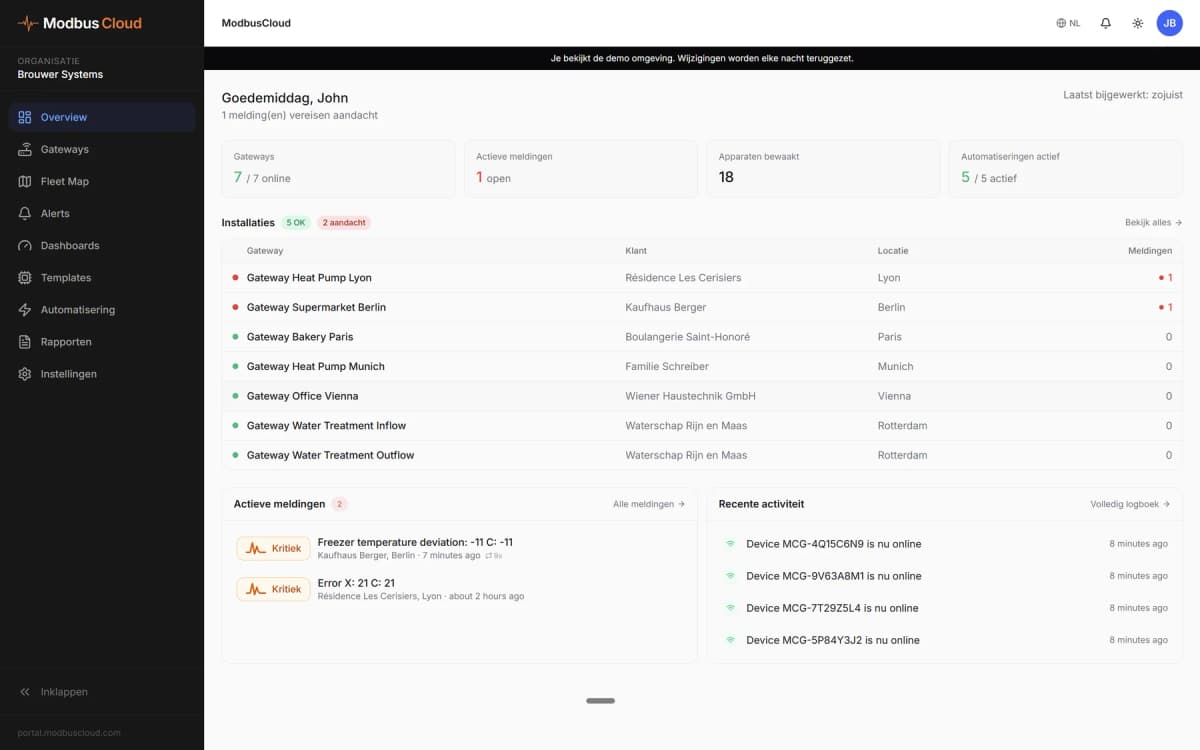
Three parts work together. The gateway sits on site and reads the Modbus devices. The portal at portal.modbuscloud.com shows the values and sends the alerts. A template from the template library describes which registers a Modbus device has.
From Modbus device to portal
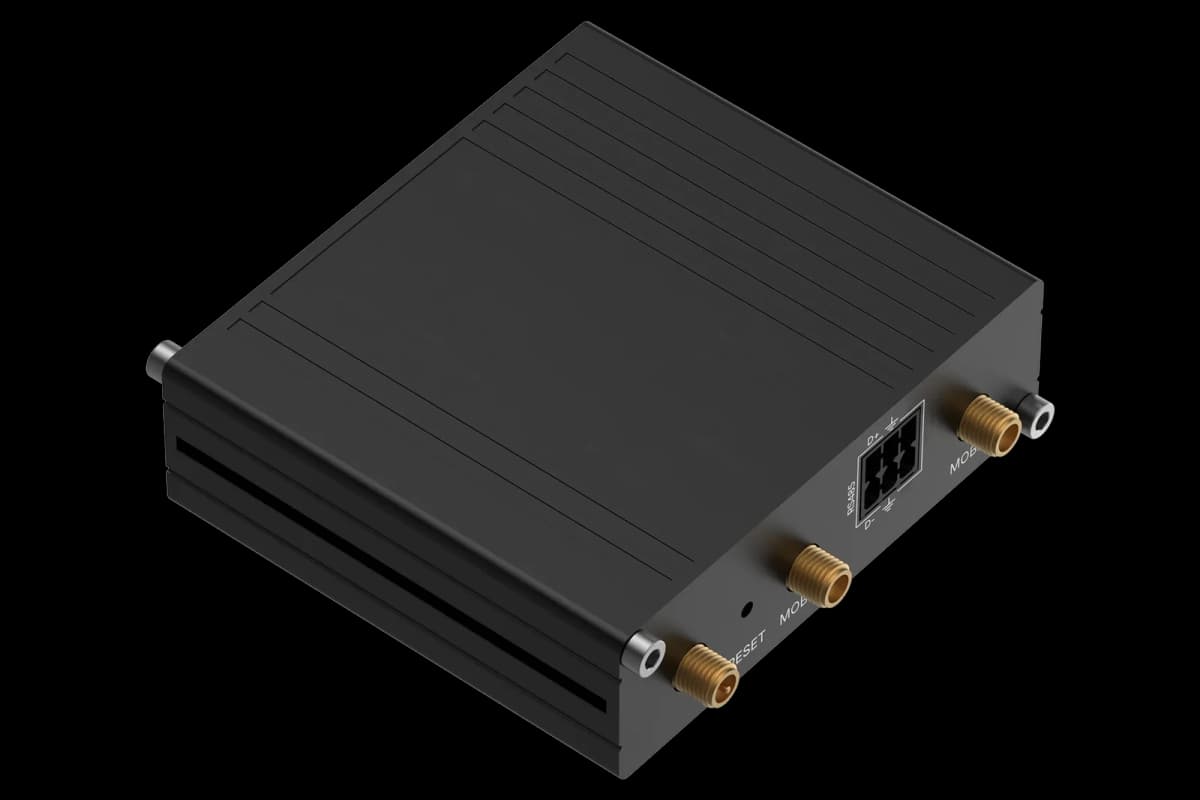
The gateway is the Modbus RTU master on its own RS485 bus, with up to 32 Modbus devices per bus. It reads Modbus TCP devices over the network.
The gateway opens its own outgoing connection, using MQTT over TLS to port 8883 of the broker in Frankfurt. You need no port forwarding and no fixed IP address. The readings are stored in a database in Ireland.
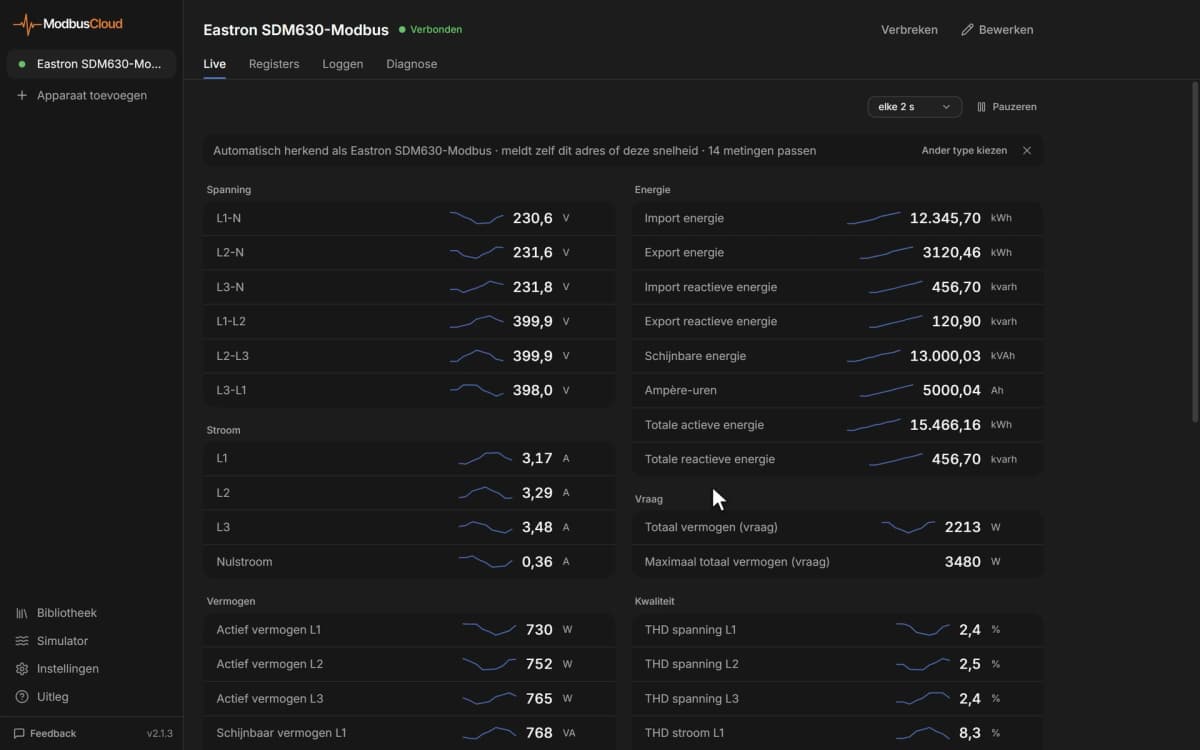
In the portal you see live values and charts. The history keeps one reading per register per minute, for 365 days.
An alert appears in the portal and goes by email to the recipients you set. With a webhook it also reaches your own system. How alerts work explains how this runs.
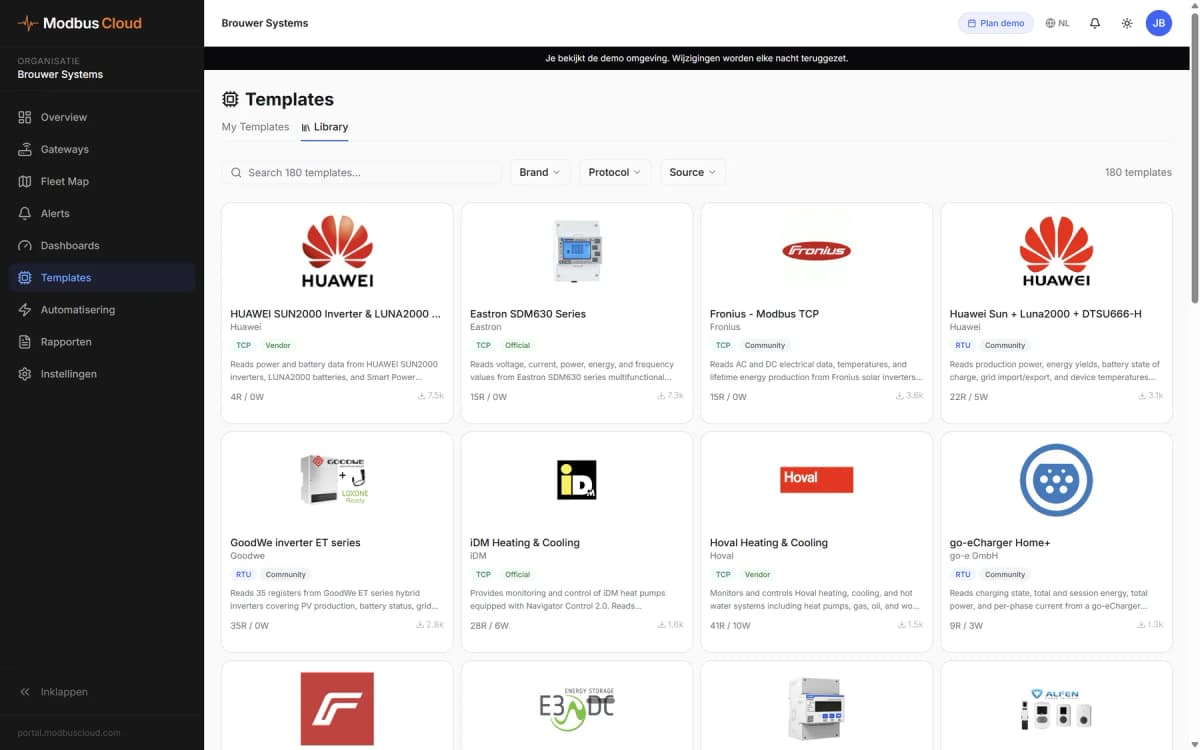
Recognition with the template library
With Automatic search, the gateway searches its own RS485 bus and its own network. It compares what it finds with the template library stored on the gateway. For each Modbus device found, you choose one of the best matching types.
The Automatic search tile only appears if the gateway can search. If the tile is missing, or the gateway does not find a Modbus device, choose a template from the Library or create a Custom template. If a Modbus device is not in the library, ModbusCloud creates the template free of charge as soon as the register data is available. Modbus device is not in the library explains how.
From box to first reading
An installation follows this order.
Sign in to the portal
Sign in to the portal as described in Sign in and create your organisation.
Connect the gateway
Connect the 4G antenna and the cables, and the power supply last, as described in Connect the gateway.
Add the gateway
Add the gateway with its 10-digit serial number, as described in Add a gateway. The status stays Pending until the first message arrives, and then changes to Online.
Add Modbus devices
On the gateway page, add the Modbus devices as described in Add Modbus devices.
Check and hand over
Check the values and hand over the installation as described in Check and hand over the installation.
You can add the gateway before or after connecting it. When you add it, the gateway immediately gets an alert rule that reports when it goes offline, and automatic monitoring.
Over the cable or over 4G
If the WAN port has internet, the gateway sends over the cable. If the network on site fails, the backup SIM takes over. ModbusCloud activates that SIM before dispatch. If there is no cable in the WAN port, the gateway sends everything over 4G.
Over the cable, the gateway reads each Modbus device at its own polling interval, from 1 second. Over 4G, the gateway reads no more often than the SIM interval, 300 seconds (5 minutes) by default. 4G and the backup SIM has more on the SIM. Network requirements for the gateway lists the traffic the firewall must allow.
What is in the box
The box contains the gateway, with the backup SIM inside, and the 4G antenna. You order the power supply and the DIN rail kit for a 35 mm DIN rail separately.
What you need
- A power supply of 9 to 57 V DC, ordered with the gateway or your own supply.
- For Modbus RTU, an RS485 cable with three wires, for A, B and signal ground. Connect the RS485 bus explains how to lay the bus.
- For Modbus TCP or internet over the cable, a network cable.
- An account with the role Owner, Admin or Technician. Other roles cannot add gateways or Modbus devices.
- For each Modbus device, the details from the table below.
Details per Modbus device
The table shows what you note down for each Modbus device before you add it.
| Detail | Modbus RTU (RS485) | Modbus TCP (network) |
|---|---|---|
| Brand and model | Required | Required |
| Address | Slave address 1-247 | Unit ID 1-255 |
| Baud rate, parity and stop bits | Required | Not required |
| IP address and port | Not required | Required, default port 502 |
All Modbus RTU devices on one gateway use the same baud rate, parity and stop bits. Each Modbus device on a gateway has its own address, including two Modbus TCP devices at different IP addresses. Automatic search tries the common settings and addresses, but does not find every setting. The course lesson Baud rate and parity explains what baud rate and parity do.
Updated on 7 October 2026
Still stuck?
Email or call us. Include the serial number of the gateway, so we can take a look straight away.
Go to support